
Introduction
This post introduces Restaurant-Style Classic Lao Main Dishes You Can Recreate at Home. Lao cuisine is renowned for balance, brightness, and care. The dishes we explore show how flavor, technique, and hospitality come together at the table. You’ll discover why these main courses matter in Lao food culture and how to capture their essence in your own kitchen. Expect fresh herbs, bold spices, and precise seasoning that invites conversation and sharing.
The Cultural Value of Lao Main Dishes
In Lao eating culture, a meal is a moment of welcome and connection. Shared plates and fragrant steam draw people together. A Lao main dish often serves as the centerpiece, paired with sticky rice and bright dips or sides. The flavors tell a story of place: rivers and fields, markets and farms, and the care of cooks who balance sour, salty, spicy, and fresh herbal notes.
Culinary craft matters in everyday life. Dishes honor seasonal ingredients and regional pride. Techniques are taught by family and community, passed along with quiet pride. The result is food that feels both simple and deeply rooted in place. Presentation matters too. A well-plated Lao main dish shows respect for the guest and for the flavors that inspired it. This harmony between taste, aroma, and appearance makes Lao meals memorable and inviting.
Signature D dishes You Can Recreate at Home
Below are restaurant-style Lao main dishes you can confidently prepare at home. Each dish highlights a facet of Lao culinary significance and offers practical ways to achieve authentic flavor.
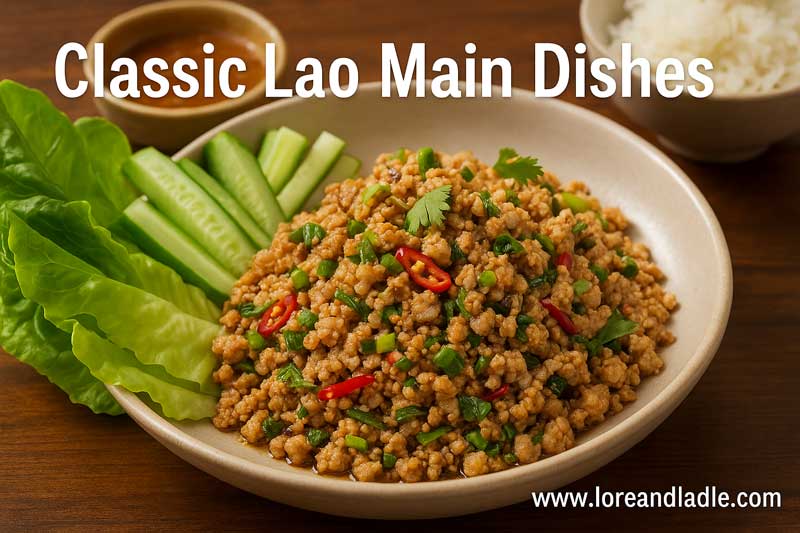
- Larb (Laap)
- Why it matters: Larb is a cornerstone of Lao dining. It centers protein with bright herbs and a tangy, toasted-rice finish. It embodies quick, expressive chopping and fresh, crisp textures.
- What to savor: Minced meat or mushrooms, lime juice, fish sauce, roasted rice powder for texture, and a bouquet of herbs like mint and cilantro.
-
Home-friendly tips: Lightly toast the rice and grind it finely for the signature toasty crunch. Quick-dry any meat with a bit of salt to heighten flavor. Serve with sticky rice and fresh greens for balance.
-
Or Lam
- Why it matters: Or Lam is a warming stew that regions in Laos lovingly guard. It blends meat with chili, lemongrass, dill, and root vegetables for a comforting, layered taste.
- What to savor: A slow simmer that merges meat with aromatic stalks, herbs, and a touch of sweetness from certain roots.
-
Home-friendly tips: Use a sturdy pot or Dutch oven to keep the broth rich. If dill is hard to find, a small amount of fresh cilantro stems provides a similar herbal lift. Include eggplant or sweet potato to echo the traditional texture.
-
Khao Poon
- Why it matters: Khao Poon is a vibrant noodle curry that travels across households with its fragrant coconut base and bright herbs. It showcases how Lao cooks layer spice, acidity, and aroma.
- What to savor: Coconut milk, lemongrass, galangal or ginger, chili, rice vermicelli, and a generous handful of herbs at the end.
-
Home-friendly tips: Simmer the curry base gently to avoid coconut fat separation. Add herbs right before serving to preserve their brightness. Offer fresh lime wedges and chili slices on the side for personal heat adjustment.
-
Mok Pa (Steamed Fish in Banana Leaf)
- Why it matters: Mok Pa is a celebration dish that respects fish as a delicate, nourishing protein. Steaming in banana leaf carries aroma and creates a tender texture.
- What to savor: Fresh fish, herb-packed stuffing (like lemongrass, dill, and chili), and a gentle steam that keeps the fish moist.
-
Home-friendly tips: If banana leaves aren’t available, parchment paper works well. Fold and seal the packet to trap steam and aroma. Use a mild fish sauce for seasoning so the herbs shine.
-
Optional: Gaeng Om or a Light Lao Curry
- Why it matters: Lao curries offer a soulful balance of hot, sour, and fragrant notes. They reveal how Lao cooks coax brightness from chilies and citrus.
- What to savor: A tomato-based broth, a gentle chili kick, herbs, and a protein such as chicken or fish.
- Home-friendly tips: Adjust heat with fresh chilies added at the end. Finish with a squeeze of lime and fresh herbs to lift the dish.
Crafting Restaurant-Style Flavor at Home
To translate restaurant-style Lao flavors to your kitchen, focus on balance and freshness. Begin with a clean mise en place so herbs and aromatics shine. Toast and crush spices for depth, then layer flavors gradually. Taste often, and adjust salt, sour, and heat as you go. Partial substitutions are fine, but aim to maintain the bright herbaceous character that defines Lao dishes.
Technique matters as much as ingredients. A mortar and pestle brings out essential aromatics and textures in dishes like Larb. Gentle simmering builds depth in Or Lam and Khao Poon. Steaming in banana leaves or parchment in Mok Pa preserves moisture and fragrance. Finally, finishing with fresh herbs, a splash of lime, and a final drizzle of fish sauce lets the meal speak with clarity.
Plating and Presentation for Home Cooks
Restaurant-style presentation elevates the dining experience. Use a clean plate with a clear center of focus for the dish. Arrange fresh herbs around the main component to glow with color. A small bowl of a contrasting dip or side can highlight brightness and balance. A touch of sesame seeds or roasted rice powder adds texture and fragrance. Remember: Lao meals are meant to be shared, so present portions that invite diners to take turns serving and tasting.
In Closing
Restaurant-Style Classic Lao Main Dishes You Can Recreate at Home celebrate a cuisine that blends vigor with harmony. The dishes honor farmers, markets, and cooks who have perfected balance for generations. By embracing fresh ingredients, precise technique, and thoughtful plating, you invite Lao flavors into your own kitchen and into your daily table. Enjoy the journey of tasting, learning, and sharing these cherished main courses with care and curiosity.