
A warm introduction to a cultural favorite
Restaurant-Worthy Classic Lao Main Dishes You Can Make Tonight. Lao cuisine offers a thoughtful balance of fresh ingredients, vivid herbs, and mindful technique. This post highlights the cultural value and culinary significance of Lao main dishes you can recreate at Home. You will feel how Lao meals express hospitality, seasonality, and artistry in every bite. The emphasis is on flavor harmony, technique, and the joy of sharing a meal with loved ones.
The flavor philosophy of Lao main dishes
Lao food centers on brightness, aroma, and texture. Dishes combine sour lime, fish sauce, chilies, and herbs with gentle sweetness. Sticky rice often acts as a universal fork and plate. Fresh herbs—mint, cilantro, dill, and basil—pour life into each course. The cooking style prizes quick sears, gentle steaming, and careful pounding in a mortar and pestle. This approach preserves aroma and creates lively depths in every bite. The result is a cuisine that feels both lively and grounded, suitable for everyday meals and special gatherings alike.
What makes Lao mains feel restaurant-worthy
First, technique matters. Quick grilling seals in juice and creates smoky notes. Second, balance shines through. A bright acidity, a savory depth, and balanced heat elevate the dish without overwhelming the palate. Third, ingredients are considered and seasonal. Fresh fish, herbs, and vegetables are prepared with respect and clarity. Finally, presentation invites sharing. Dishes are laid out with color and texture, inviting conversation and connection around the table. These elements combine to make Lao mains feel refined enough for a restaurant and intimate enough for home dining.
Classic Lao mains you can make tonight
-
Mok Pa (steamed fish in banana leaf): A signature method of capturing fragrance. A whole or filleted fish is seasoned with herbs, wrapped in banana leaf, and gently steamed. The result is tender fish with delicate herb aroma that feels celebratory yet simple to recreate at home.
-
Or Lam (Lao-style stew): A comforting, earthy main. It blends meat with mushrooms, eggplant, chilies, and herbs in a fragrant broth. Slow simmering brings depth and a cozy warmth to the table, reflecting everyday Lao hospitality.
-
Khao Poon (Lao vermicelli curry): A hearty noodle dish finished with a coconut-curry sauce and a bright herb topping. It showcases balance between creaminess, spice, and fresh greens. This dish invites layering flavors in a single bowl.
-
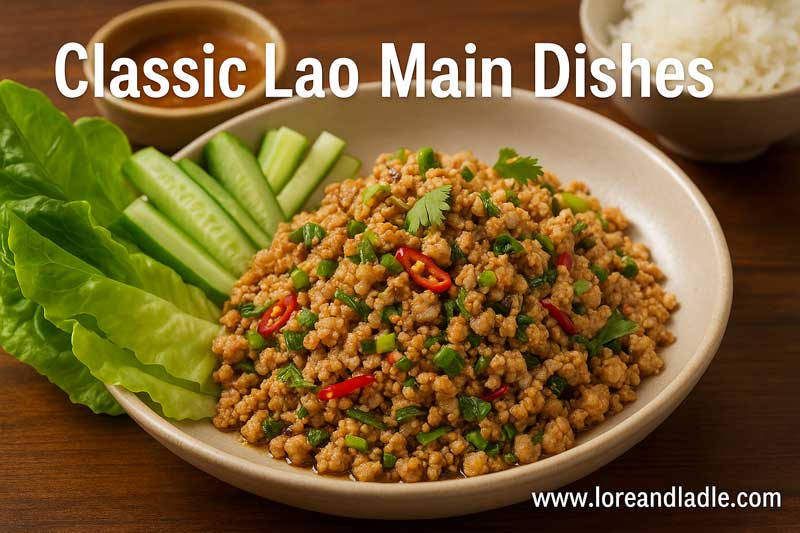
Larb Neua or Larb (minced meat salad): A bright, protein-forward main that features lime, fish sauce, chilies, and toasted rice powder. Fresh herbs lift the dish, making it both lively and satisfying when paired with sticky rice.
Techniques that elevate Lao flavor at home
- Mortar and pestle magic: Crushing herbs and chilies releases essential oils and aroma. Do not rush; a gentle grind builds intensity.
- Fresh herb finishing: Add herbs at the end to keep their brightness. A burst of mint or dill brightens every bite.
- Balanced seasoning: Use lime juice for brightness, fish sauce for depth, and a touch of palm sugar or sugar to soften sharp edges.
- Gentle steaming and grilling: Steam keeps moisture and aroma; grilling adds a subtle smoky note.
- Proper accompaniments: Sticky rice, fresh cucumbers, and herbs provide the perfect counterpoint to rich or spicy mains.
Shopping for Lao flavors and making it accessible
Choose fresh fish or meat, herbs, and coconut products seasonally. Lemongrass, dill, cilantro, mint, and kaffir lime leaves are key aromatic notes. Fish sauce and lime juice are essential for the signature Lao tang. For authenticity, seek banana leaves for Mok Pa and fresh chilies to tailor heat. These ingredients connect your kitchen to Lao culinary practice and allow you to build a restaurant-worthy experience at home.
Serving with care: a cultural moment at the table
Lao meals emphasize shared meals and balanced plates. Serve the mains with sticky rice as the foundation. Offer fresh herbs and vegetables on the side to invite diners to customize bites. The care in plating and the aroma of herbs create a welcoming atmosphere. This shared experience highlights the beauty of Lao cuisine as a living tradition, always ready to welcome new friends to the table.
A closing note on cuisine and culture
These Lao main dishes celebrate a cuisine rooted in freshness, balance, and communal delight. They show how simple acts—pounding herbs, steaming fish, stirring a curry, or serving with sticky rice—carry deep cultural meaning. Making these dishes tonight can connect you with a broader food culture that values clarity, warmth, and seasonal kindness. Enjoy the process, honor the ingredients, and savor the flavorful result.