
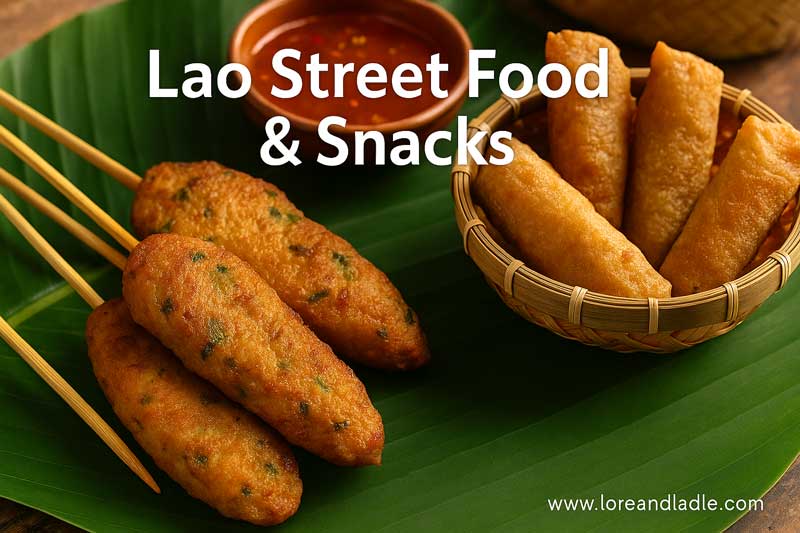
Introduction: A Taste of Lao Street Spirit, Made Tonight
Restaurant-Worthy Lao Street Food & Snacks You Can Make Tonight welcomes you to a kitchen adventure. This is a celebration of Lao culinary spirit. It centers on bright herbs, clean fish-sauce brightness, and the comfort of sticky rice. The dish set is a bridge between storefronts and home tables. It shows how village flavors travel into city kitchens, then circle back to family meals. The goal is clear: honor flavor, technique, and the shared joy of cooking.
A Window into Lao Flavor and Culture
Lao street food speaks softly but with strength. Each bite carries a memory of markets, rivers, and hills. The aroma of grilled meat meets the lift of lime and herbs. Textures come alive: crisp edges, tender centers, and a fresh crunch from herbs. Food here is a daily ritual, not a ceremony alone. It is how neighbors greet each other, how cooks test new ideas, and how tradition stays lively. In this blog, we focus on the cultural value and culinary significance that make Lao snacks restaurant-worthy, while remaining approachable for your kitchen tonight.
Signature Techniques That Define Lao Snacks
The techniques are straightforward and precise. A mortar and pestle wakes aromas by bruising herbs just enough. Charcoal grilling adds a gentle smoke that perfumes the meat and fish. Fresh herbs—mint, cilantro, dill, and lime leaves—lift every bite. Dips and sauces, called jeow, balance heat with acidity and salt. Sticky rice acts as a natural utensil and a flavor anchor. These methods connect Home Cooking to the street stalls where locals first learned to cook. The result is food that feels both ancient and immediate.
A Palette of Dishes You Can Make Tonight
You can assemble a small yet vibrant Lao-inspired menu with these core components:
- Larb: A bright minced meat salad brightened with lime juice, fish sauce, chili, and fresh herbs. It sings when served with a handful of lettuce leaves or sticky rice.
- Sai Ouа (Lao sausage): A home-friendly sausage with pork, garlic, herbs, and a mild spice. It gains character from a quick sear or grill.
- Mok Pa: Fish steamed in banana leaves with fragrant herbs. The aroma of lemongrass and kaffir lime comes through without overpowering the fish.
- Tam Mak Ho (Lao green papaya salad): Shredded green papaya with lime, fish sauce, palm sugar, and peanuts. It offers bright sour-sweet balance and a satisfying crunch.
- Jeow dips: Chili-limestone dips that pair with vegetables, sticky rice, and grilled items. They invite conversation and sharing.
If you prefer a lighter plate, pair grilled skewers with herbs and a small bowl of jeow. If you crave heartiness, add a portion of sticky rice and a slice of mok pa. The combination reveals Lao street food’s elegance: simple ingredients treated with care create depth and harmony.
The Craft of Presentation: Plate Like a Lao Vendor
Presentation matters, even in casual settings. Use small bowls and wooden platters to echo market stalls. Scatter fresh herbs across the plate for color and fragrance. A lime wedge or a few thin cucumber ribbons brighten the scene. Banana leaves or clean greens as a backdrop can elevate the look. The eye and the palate travel together; a thoughtful plate invites the diner to savor each element. In Lao dining culture, balance in presentation mirrors balance in taste.
Shopping for Freshness: Ingredients That Carry Lao Character
Choose fresh, high-quality ingredients to capture Lao flavor at Home:
- Fresh herbs: mint, cilantro, dill, lime leaves
- Citrus: limes for bright acidity
- Pantry staples: fish sauce, palm sugar, chili paste
- Proteins: lean ground pork for larb, small fish for mok pa, or sliced chicken for quick larb
- Grains and sides: sticky rice (khao niaw)
- Dips: a variety of jeow to match your plates
Locally sourced vegetables, in-season produce, and good herbs build the best foundation. When possible, pick vibrant greens and firm, clean fish or meat. The emphasis is on freshness and balance rather than heavy sauces.
Making It Tonight: A Simple Home Menu
Here is a practical plan you can follow in a single evening. It keeps steps clear and outcomes restaurant-worthy.
- Starter: Jeow dip with fresh vegetables. Whisk chilies, garlic, lime, and a splash of fish sauce. Serve with cucumber sticks and herbs.
- Main: Larb with your choice of protein. For a quick version, sauté finely chopped pork or chicken with a touch of oil. Remove from heat while slightly pink for tenderness. Mix in lime juice, fish sauce, a bit of palm sugar, and chopped herbs. Serve with lettuce cups or over a small bed of sticky rice.
- Side: Tam Mak Ho-inspired papaya salad. Shred green papaya or use shredded carrot for a lighter option. Toss with lime, fish sauce, a pinch of salt, palm sugar, and crushed peanuts.
- Snack: Sai Ouа with a quick sear. Slice and grill until edges color. Plate beside a small mound of sticky rice and a sprig of herbs.
- Finish: A small lemon-lime wedge and fresh herbs to brighten the plate.
Tips for success:
– Keep fish sauce and lime juice handy to adjust brightness as you go.
– Taste early and adjust with salt, sweet, and sour to achieve balance.
– Use a hot pan or grill for quick sears to lock in flavors.
The Social Heart of Lao Street Food
Lao street food thrives on sharing. Meals often begin with a variety of small plates that encourage conversation and sampling. Friends and family gather around, tasting and adjusting together. The preparation itself is a social act, with hands helping and voices guiding spice levels. This communal spirit is a core cultural value, emphasizing hospitality, warmth, and a shared table. By cooking these dishes at home, you carry that same sense of welcome to your kitchen.
Honoring Craft, Respecting Flavor
Respect for ingredients, technique, and time matters. Each element has a purpose: the crispness of vegetables, the brightness of citrus, the savor of fish sauce, and the fragrance of fresh herbs. The Lao approach treats meals as a sensory journey: sight, aroma, texture, and taste align to create a moment of nourishment and joy. When you prepare these dishes, you honor the craft that generations of cooks have refined. The result is not merely food; it is a cultural experience that can be shared.
In Conclusion
Restaurant-Worthy Lao Street Food & Snacks You Can Make Tonight offers more than a menu. It presents a living tradition: a kitchen practice that celebrates balance, community, and craft. With simple steps, fresh ingredients, and mindful presentation, you can create dishes that feel both authentic and approachable. This is an invitation to taste Lao culture at home, one plate at a time. Embrace the flavors, the techniques, and the shared joy of a meal well prepared.