
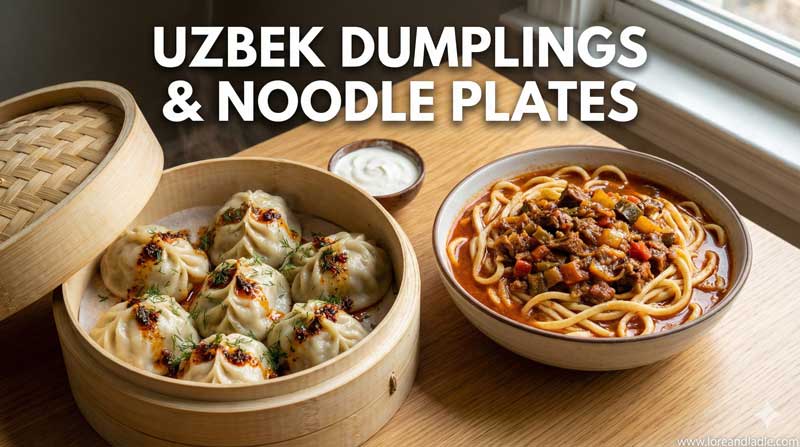
Inspired by Shashlik – Uzbekistani Dumplings & Noodle Plates Flavor You’ll Love
Introduction: A Dish That Tells a Cultural Story
This dish invites you to taste a melody of Uzbek flavors. Inspired by Shashlik – Uzbekistani Dumplings & Noodle Plates Flavor You’ll Love celebrates warmth, craft, and shared meals. It blends dumplings with noodles in a way that honors tradition while inviting curious eaters to discover. The result is a plate that speaks of hospitality, skill, and everyday joy.
The Roots of Uzbek Flavor
Uzbek cuisine is lively and hospitable. Central Asian markets, family kitchens, and village tables shape its spirit. In this tradition, dumplings—often filled with tender meat and onions—showcase patience and care. Noodles, too, appear in beloved dishes, and they mingle with fragrant spices to create comforting textures. Key flavors sing loudly here: cumin, coriander, black pepper, garlic, and bright onion. These notes travel through every bite, linking meat, dough, and greens with a sense of place. The dish at hand draws from these threads, weaving a respectful portrait of Uzbek culinary craft.
Dumplings and Noodle Plates: Techniques That Tie It Together
Dumplings in Uzbek cooking are more than food; they are handmade tokens of effort and time. The wrappers are rolled just thin enough to cradle a savory filling, then steamed to a tender glow. Each dumpling holds a little story of folding, sealing, and careful spacing. Noodles in the same culinary family offer another form of play: a chewy, satisfying backbone that carries sauce and herbs with ease. When these two elements meet, the plate gains depth: the soft bite of manty meets the twirl and bite of noodles, all embraced by a smoky, aromatic layer drawn from shallow sears and careful seasoning. This fusion emphasizes texture as a language—soft and supple, then bright and lively. The result is a harmonious balance that feels both timeless and fresh.
The Shashlik Spirit in a Modern Plate
Shashlik brings a characteristic char and smoky aroma to the table. In this dish, that spirit is felt without being overpowering. Smoky edges on dumplings, a whisper of grilled spice, and a herbal lift from fresh greens echo the grill’s memory. The flavor profile remains respectful to its roots, while the technique is adapted for a contemporary plate. You’ll notice a savory depth that mirrors grilled skewers, yet the dumplings and noodles carry their own gentle, comforting resonance. The dish thus honors a classic method while inviting modern technique and presentation.
Cultural Value: Hospitality and Family
Food in Uzbek culture often centers around gathering. A table becomes a circle where stories and smiles travel as freely as steam from a hot pot. This dish reflects that spirit: it’s designed for sharing, for long conversations, and for a sense of togetherness. The preparation invites collaboration—dough is rolled, fillings are seasoned, and portions are plated with care. When served, it prompts a moment of connection over aromatic steam and a unified, satisfying bite. In this way, the dish embodies hospitality as a living tradition, inviting both cooks and guests to slow down and savor what a table can offer.
Culinary Significance: Texture, Balance, and Craft
Texture plays a central role here. Manty bring a pillow-soft interior that contrasts with a delicate chew from the noodles. The aromatic spice mix travels through meat, onions, and herbs, then lingers as a comforting finish. The dish demonstrates how a few well-chosen ingredients and precise technique can deliver a chorus of flavors: savory meat, sweet onion, warm spice, and fresh greens. The cultural significance is found not only in taste but in method—careful dough handling, precise steaming, and thoughtful seasoning create a well-rounded experience. This is cooking as craft, where each step serves the whole plate.
Serving Suggestions: How to Highlight the Dish
Serve this dish in a wide, shallow bowl to showcase its layers. Garnish with fresh dill, coriander, or chives for a bright finish. A light yogurt sauce or a cucumber-dill dip complements the richness without overpowering it. A drizzle of olive oil or a touch of chili oil can add a gentle sheen and warmth. Pair the plate with a simple salad of tomatoes and cucumbers for contrast, and offer a clean, herbal tea to balance the richness. The goal is to let each component shine while keeping a harmonious balance among textures and flavors.
Plating as a Food-Culture Moment
Plating this dish is an invitation to pause and reflect on tradition. Arrange the manty and noodles with care, then lay fresh greens across the top to echo gardens and markets where ingredients are grown with care. The final presentation should feel welcoming and generous, signaling that the table is ready for connection. In this way, the dish becomes more than a meal—it becomes a small ceremony of shared taste and cultural appreciation.
A Call to Explore and Create
If you’re inspired to recreate this dish at Home, begin with a simple, honest approach. Start with a good dough, a flavorful meat filling, and well-cooked noodles. Emphasize the fragrance of cumin and coriander, then balance it with fresh herbs. Each batch offers a chance to learn and refine, turning kitchen time into a meaningful act of cultural exploration. The dish welcomes curiosity, patience, and respect for the culinary language of Uzbekistan.
Conclusion: A Quiet Celebration of Flavor and Craft
Inspired by Shashlik – Uzbekistani Dumplings & Noodle Plates Flavor You’ll Love invites you into a world where technique meets tradition. It celebrates hospitality, skill, and the sense of belonging that comes from sharing food. Through soft manty, nourishing noodles, and smoky, aromatic accents, the dish stands as a thoughtful portrait of Uzbek culinary significance. It is a meal that warms the heart and invites the senses to linger a little longer, reminding us that food can tell a rich, comforting story about culture, craft, and community.