
Introduction
Inspired by Shashlik – Uzbekistani Rice & Pilaf Specialties Flavor You’ll Love invites readers into a warm kitchen where smoky grilling meets fragrant rice. This dish celebrates the artistry of Uzbek cooking and the joy of sharing a meal with loved ones. It stands as a bridge between two timeless techniques: the char and chill of grilled meat, and the precise simmer of a flavorful pilaf. The result Is a dish that feels both comforting and celebratory, a vivid echo of savory hospitality and everyday ritual.
A touchstone of Uzbek culinary craft
Uzbek cuisine treats food as a form of welcome. The centerpiece often centers on plov, a rice dish that gathers family and friends around a single pot. In this adaptation, the whisper of shashlik—the skewer-grilled meat—lends a gentle smoke and depth to the pilaf base. The marriage is intentional: the meat’s char, the vegetables’ sweetness, and the aromatic rice fuse in a single, harmonious bite. This fusion honors the beauty of regional flavors while remaining accessible to modern home cooks. In every plate, you can sense a cultural value: meals are occasions to connect, reflect, and celebrate togetherness.
Flavor, texture, and technique
What makes this dish sing is its balance. The flame-kissed notes from shashlik echo in a bed of long-grain rice. Carrots add color and sweetness; onions contribute body and depth. Cumin and coriander bring warm earthiness, while garlic and a touch of oil or clarified butter carry the fragrance into the air. The technique centers on layer and release: sear meat to seal in juices, prepare a savory base for the rice, toast the grains lightly to develop nutty flavor, then simmer with just enough liquid to create separate, fluffy grains. The smoke from the grilled element lingers, but never overpowers, allowing the pilaf’s core to shine. The result is a dish with a crisp first impression and a soft, savory finish that invites another bite.
Cultural value in the dining moment
This dish embodies hospitality. In Uzbek culture, sharing a generous plate signals care and respect. Food becomes a language for welcome, gratitude, and celebration. A table set with this dish often becomes a focal point for conversation, stories, and laughter. The act of serving from one large pot or platter reinforces harmony and equality among guests. The dish also reflects culinary memory—an heirloom of techniques passed down through generations, now adapted with modern flavors and home-cooking flexibility. The cultural value lies not only in taste but in the shared experience: the anticipation of the aroma, the ritual of carving meat, the moment when steam reveals a tapestry of spices, and the collective savor that follows.
The heart of the dish: ingredients and their symbolic roles
Each component carries meaning. The meat provides richness and sustenance, a nod to labor and craft. The rice stands for abundance and community, as a shared staple that brings people together. Carrots, bright and sweet, mirror generosity and growth. Spices such as cumin and coriander symbolize warmth and welcome, while garlic anchors the dish in comforting familiarity. Even the cooking vessel—a wide kazan or a deep, heavy pot—emphasizes communal cooking, where flavors mingle and travel from bottom to top, much like conversations around the table. Together, these elements tell a story of place, practice, and shared pleasure.
Accessibility and craft in a modern kitchen
The dish remains approachable for contemporary cooks while maintaining reverence for tradition. Shortcuts can honor technique without compromising character: a good-quality ready-made broth to anchor the pilaf; pre-cut vegetables to save time; and a grill or grill-pan to evoke the shashlik kiss of smoke. Yet even with simplifications, the heart stays intact: toasting the rice, layering in liquid with patience, and letting flavors harmonize through controlled simmering. The beauty of the method lies in its rhythm—an inviting sequence that guides cooks from preparation to presentation with confidence. In this way, the dish serves as a welcoming entry point into Uzbek culinary sensibilities for home kitchens around the world.
Plating, presentation, and the ritual of serving
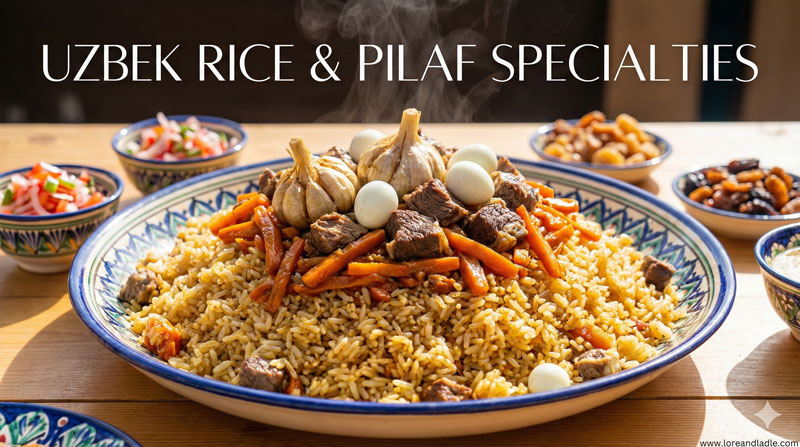
Serving this dish elevates the dining experience. A large shared platter invites everyone to dip in, sort the grains, and savor the contrast between tender meat and fluffy rice. A handful of fresh herbs—dill or parsley—brightens the plate, while a scattering of dried fruits or seeds adds a final whisper of sweetness and texture. The aroma itself acts as an invitation, teasing guests before the first bite. Pairing suggestions lean toward crisp salads, pickled vegetables, or a simple yogurt-based accompaniment that complements the warmth without overpowering it. Presenting the dish with care communicates respect for the ingredients and for the guests who gather to enjoy them.
A bridge between tradition and today
This dish stands at a gentle crossroads: it honors traditional Uzbek flavors and cooking methods while inviting modern cooks to experiment. It encourages mindful attention—the careful toasting of grains, the deliberate layering of ingredients, and the patient simmer that yields tender rice with individual grains. Yet it also welcomes creativity: you can adjust spice levels, swap meats, or add seasonal vegetables to reflect local markets. The core remains the same—a respectful homage to the cultural value of shared meals and the culinary significance of pilaf and grilled meat. In this way, Inspired by Shashlik – Uzbekistani Rice & Pilaf Specialties Flavor You’ll Love becomes more than a recipe; it becomes an invitation to participate in a living culinary tradition.
Conclusion: an invitation to taste culture
If you seek a dish that celebrates communal eating, careful technique, and the warmth of grilled aroma meeting comforting pilaf, this creation offers a bright path. It honors Uzbek culinary roots while speaking to today’s kitchen, inviting you to cook with intention and to share with generosity. With every bite, you taste more than seasonings and steam—you taste a culture that values hospitality, craft, and connection. Welcome this dish into your kitchen, and let its flavors remind you of the joy of gathering, the beauty of well-balanced spice, and the enduring appeal of a well-made, lovingly shared meal.