
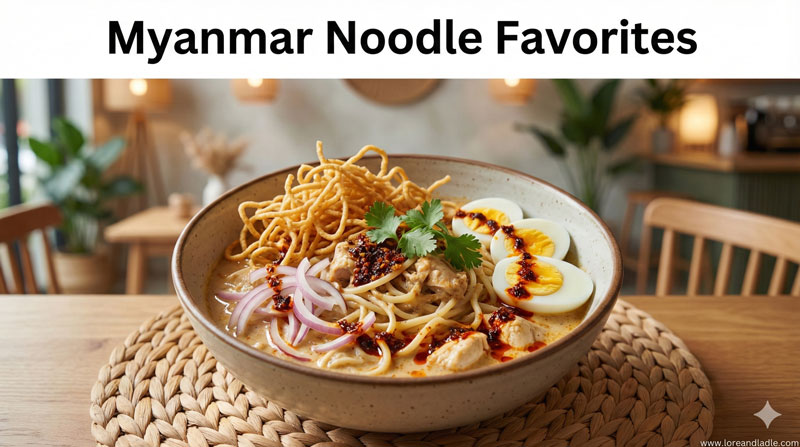
A Welcome to Slow-Cooked Myanmar Noodle Favorites
Slow-Cooked Myanmar Noodle Favorites for Deep, Rich Flavor invites you into a warm, aromatic kitchen ritual. This dish is built on patience, careful technique, and a bright balance of spices. In Burmese homes and bowls of street-side stalls alike, noodles become a canvas for memory, sharing, and everyday delight. The gradual simmer unlocks layers of aroma, turning simple ingredients into a nourishing, comforting experience. It’s a recipe that feels both timeless and freshly inviting.
Noodles as Hospitality and Culture
In Myanmar, a steaming bowl of noodles often signals welcome and care. Noodles appear at casual family meals and festive gatherings alike. They are a versatile stage for flavors that carry the family’s touch: a savory broth, a kiss of fragrant oil, a handful of crisp toppings. This dish elevates that everyday gesture into a moment of connection. The act of preparing and sharing the noodles becomes a small ceremony—one that honors time, kitchen craft, and the generosity of the home.
Core Ingredients and Their Stories
The heart of Slow-Cooked Myanmar Noodle Favorites lies in its thoughtfully chosen ingredients. Fresh noodles or rice noodles provide the soft, slithery base. A rich broth forms the backbone, often made from a light stock that is gently seasoned. Aromatics lead the way: garlic, shallots, and a hint of ginger awaken the pot. Turmeric or a Burmese spice blend adds warmth and a sunny hue. A touch of fish sauce or salt balances sweetness with a savory depth. Dried shrimp or a hint of shrimp paste can lend a distant sea-air note that feels special yet everyday. Finish comes from bright herbs and a few crisp toppings. Each element carries a memory of a pantry, a market stall, or a grandmother’s advice, coming together in one spoonful.
The Art of Slow Cooking
Slow cooking is the heartbeat of this dish. The broth and aromatics simmer low and long, letting fatty and mineral notes unfurl gently. As the flavors mingle, the noodles soak in a velvet richness without losing their bite. The technique rewards patience: small adjustments—more fish sauce for salt, a touch of lime for brightness, a splash of sesame oil for shine—transform the bowl. The result is a depth that reveals itself with every slurp: a rounded, mellow tone that lingers, inviting another bite and another moment of quiet satisfaction.
Regional Flair and Home Kitchen Traditions
Myanmar’s landscape offers a spectrum of noodle flavors. In bustling city kitchens, cooks might layer in a kiss of tangy tamarind or a squeeze of lime to brighten the broth. In quieter homes, a simpler, cleaner profile can sing, letting the noodle texture and the cooking technique take center stage. Across neighborhoods, toppings vary—crisp fried garlic or shallots, crushed peanuts for a gentle crunch, a drizzle of chili oil for warmth, fresh herbs for lift. These variations celebrate local markets, seasonal produce, and the individual touch of each home cook. The dish grows richer when shared, as friends and family add their own final touches, writing a small, personal note into the pot’s final flavor.
Serving Traditions and Social Moments
Serving this dish is an invitation to conversation and calm. A large, shared bowl or a line of smaller bowls helps create an intimate table where every person sees the steam rise and the color deepen. The act of passing forks or chopsticks and offering a ladle of broth becomes a ritual of care. Fresh herbs on top, a squeeze of lime, and a few peppery notes invite guests to tailor their bowls to their moment. In this way, the dish becomes more than food—it becomes a social ritual that honors togetherness, quiet attention to detail, and the pleasure of a well-made meal.
Sensory Pairings and Toppings
Texture plays a crucial role. The noodles should be tender yet firm, the broth soothing, and the toppings crisp. A sprinkle of fried onions adds sweetness and crunch; crushed peanuts offer a soft, nutty bite; fresh herbs give bright, herbal notes. A tiny dollop of chili oil can wake the palate without overpowering the harmony. Aromatics—the scent of garlic oil, the soft perfume of turmeric—create an inviting aroma that lingers in the room. Together, these elements create a balanced, multi-sensory dining moment.
Practical Tips for Home Cooks
- Build your broth first, simmering gently to extract sweetness from aromatics.
- Soak or prepare noodles just before serving to maintain texture.
- Taste as you go: balance salt, acidity, and sweetness to suit your preferences.
- Layer flavors in stages: sauté aromatics, bloom spices in oil, then simmer with the broth.
- Finish with fresh herbs and a light touch of crisp toppings for contrast.
A Dish for Today’s Tables
Slow-Cooked Myanmar Noodle Favorites blend tradition with everyday Home Cooking. The result is a dish that feels intimate, respectful, and deeply satisfying. It honors the care that goes into a well-made meal and the happiness that comes from sharing it together. If you seek a recipe that is comforting, culturally rich, and easy to adapt, this noodle dish offers a welcoming path. It shows how a simple pot of noodles can carry memory, craft, and a sense of belonging into a single, delicious bowl.
If you’re ready to bring this Burmese-inspired favorite to your kitchen, start with a clear plan, choose quality ingredients, and let the slow simmer do the work. You may discover that flavor develops not only in the pot but in the laughter, conversation, and connection that accompany every serving.