
Introduction
Smart Meal Prep with Leftover Myanmar Seafood Specials invites readers to discover a dish that honors both flavor and thoughtful cooking. This creation centers on repurposing seafood from Myanmar markets into a fresh, satisfying meal. It celebrates a coastal culture where bright herbs, warm spices, and bright citrus meet mellow richness. The result is inviting, balanced, and deeply respectful of the ingredients.
Cultural Value in a Glass of Flavor
Myanmar’s seafood heritage grows from busy fish markets, river mouths, and village kitchens. The dish mirrors those roots by highlighting how a single catch can become many meals through care and balance. It shows how tradition can adapt to a modern schedule without losing its heart. Every bite tells a story of seasonal abundance, local produce, and shared tables. The dish invites curiosity about the rhythms of Myanmar cuisine and the delight of keeping flavors vibrant over time.
Culinary Significance and Flavor Philosophy
At its core, the dish blends the sea’s sweetness with bright acidity and gentle spice. Fresh fish or shellfish provides a clean, delicate backbone. Coconut milk adds depth and a mellow sweetness. Lemongrass, garlic, and shallots bring aromatic clarity, while turmeric and chili lend warmth and depth. A splash of lime or a squeeze of lime juice brightens the palate. Fermented fish paste, known to many households in Myanmar, contributes a subtle umami that ties the components together. The result is a dish that feels both comforting and lively, a bridge between everyday cooking and festive flavors.
The Art of Leftovers: A Cultural Practice of Care
Leftovers are not waste; they are resources that deserve reinvention. In Myanmar kitchens, transforming yesterday’s catch into today’s delight honors the effort of the market and the cook. This dish shows how leftovers can gain new character with thoughtful layering of herbs, citrus, and spices. The practice is practical and poetic: respect the ingredients, honor the time spent cooking, and invite fresh energy with each reheated or repurposed bite. In this way, the dish carries a quiet cultural message about mindfulness and gratitude in cooking.
Key Flavors and Techniques
The dish leans on a handful of dependable techniques:
– Quick sauté to wake aromatics, then gentle simmer to blend flavors.
– Layering of tangy and savory notes with lime and a light salt from fish sauce or ngapi.
– Gentle thickening with coconut milk to create a comforting mouthfeel without heaviness.
– Finishing herbs or fresh greens to brighten the plate and add color.
Core ingredients often include: assorted Myanmar seafood (fish, shrimp, or squid), coconut milk, lemongrass, garlic, shallots, turmeric, chili, lime, cilantro, and a touch of ngapi or fish sauce for depth. Fresh herbs and crisp vegetables provide contrast, while rice or a soft flatbread offers a receptive base. The technique emphasizes balance: a bright opening, a warm middle, and a clean finish.
The Role of Bright Aromatics
Aromatics are the storytellers in this dish. Lemongrass offers citrusy lift. Garlic and shallots create a savory foundation. Turmeric adds color and a subtle earthiness. Together, they form a chorus that supports the seafood rather than overpowering it. The result is a harmonious spectrum of scent and taste that reflects Myanmar’s fragrant market culture.
Plating, Texture, and Visual Appeal
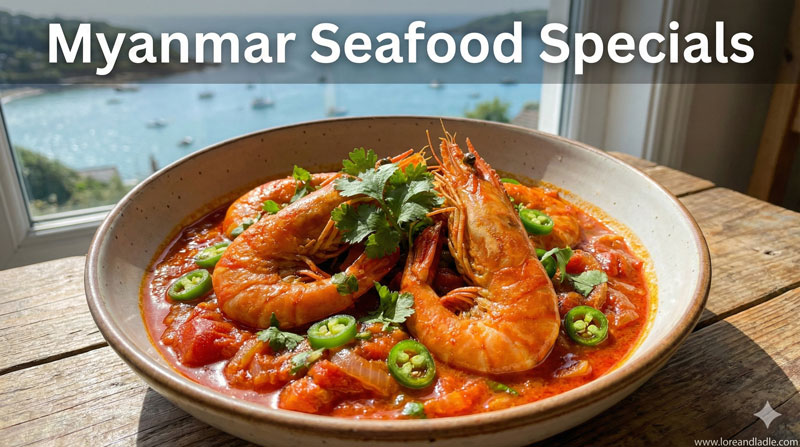
Texture plays a crucial role. A silky coconut-milk sauce contrasts with tender seafood and crisp vegetables. Soft rice or a light grain provides a gentle counterpoint. The plate is often vibrant with green herbs, a yellow-tinted sauce, and the pale pink of shrimp or white fish. This balance of color and texture mirrors the visual appeal found in Myanmar street foods and home-style meals, inviting a slow, attentive bite.
The Meal in Home Cooking and Social Dining
This dish is well suited to shared meals. It welcomes conversations about ingredients and preparation. The act of cooking with leftovers fosters planning and anticipation, which couples well with the social joy of eating together. In homes across Myanmar, similar patterns show how cooks respect resources while creating vibrant, nourishing meals. The dish becomes a link between daily life and culinary craft, inviting appreciation for both depth of flavor and the craft of preparation.
Preparation Path: Smart Meal Prep Steps
1) Gather leftovers and fresh seafood: assess what remains from earlier meals and decide How to refresh it. 2) Prepare aromatics: slice garlic and shallots; bruise lemongrass to release aroma. 3) Start the base: sauté aromatics briefly, then add turmeric and a pinch of chili. 4) Add the protein and liquid: fold in seafood and pour in coconut milk, letting the flavors mingle. 5) Season with lime, fish sauce or ngapi, and a touch of sweetness if needed. 6) Finish with fresh herbs and a squeeze of lime. 7) Serve with rice or a light bread to capture the sauce. Each step supports a practical, flavorful result and keeps the process approachable for weeknights or weekend cooking.
Waste-Not Mindset and Cultural Continuity
Smart meal prep with leftovers is a celebration of resourcefulness. It reinforces a cultural mindset that values time, care, and flavor. By reimagining yesterday’s ingredients, homes build a sense of continuity and pride in everyday cooking. The dish shows how culture can adapt gracefully to modern routines without losing its core spirit: respect for food, balance of flavors, and joy in sharing a meal.
Sensory Journey: Aroma, Taste, and Satisfaction
As the dish returns to the table, the kitchen fills with a welcoming aroma. The coconut, lemongrass, and garlic mingle with sea-salt notes, while lime adds a bright, clean finish. The first bite delivers a gentle warmth, followed by a creamy, light layer from the coconut milk. Fresh herbs lift the dish, inviting another mouthful. This sensory rhythm echoes the care people bring to Myanmar’s regional flavors and bright market produce.
Why This Dish Communicates Cultural Significance
- It honors coastal ingredients that are central to Myanmar’s seafood cuisine.
- It demonstrates a balanced palate that blends sour, salty, spicy, and creamy elements.
- It embodies practical wisdom—turning leftovers into a delicious, nourishing meal.
- It centers on hospitality, encouraging shared meals and conversations around food.
- It preserves a respectful approach to flavor, technique, and seasonality.
Conclusion
Smart Meal Prep with Leftover Myanmar Seafood Specials is more than a recipe. It is a mindful practice that honors Myanmar’s coastal flavors, practical cooking, and the joy of sharing. The dish invites cooks to celebrate the beauty of thoughtful prep, the richness of traditional ingredients, and the delight of repurposed meals. By embracing this approach, you join a culinary tradition that values flavor, balance, and community at the table. Give it a try, and let the aroma guide you toward a meal that feels both familiar and fresh.