
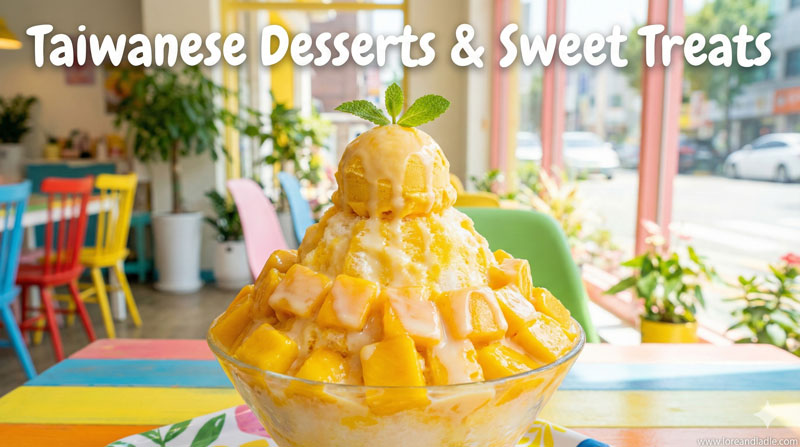
Introducing Best Taiwanese Desserts And Sweet Treats Recipes That Bring Taiwan’s Flavors to Your Kitchen
This post introduces a curated idea: Best Taiwanese Desserts And Sweet Treats Recipes That Bring Taiwan’s Flavors to Your Kitchen. It shines a light on how desserts carry Taiwan’s culinary heartbeat. By exploring textures, ingredients, and simple techniques, you can taste a place’s daily joy at Home. The focus stays on culture, craft, and the beauty of shared sweets.
A Palette of Flavors and Textures
Taiwanese desserts balance softness, chew, and bright sweetness. First, you encounter smooth tofu puddings and silky jellies. Next, cool shaved ice carries vibrant fruit or fragrant syrups. Moreover, chewy taro balls and sesame grains add character with every bite. Finally, the palette expands with refreshing jelly and creamy toppings that invite lingering at the table.
Signature Ingredients That Define the Desserts
- Taro and sweet potato paste bring earthiness and comfort.
- Mung bean, red bean, and lotus seed paste offer mellow sweetness.
- Grass jelly and aiyu jelly provide cool, refreshing notes.
- Tapioca pearls, taro balls, and rice flour mochi add satisfying bite.
- Mango, coconut milk, and pandan occasionally appear for tropical brightness.
These ingredients weave through many recipes, linking street stalls to home kitchens. The result is a rhythm of familiar flavors that feels both nostalgic and fresh.
Classic Taiwanese Desserts and Their Cultural Significance
Douhua, or soft tofu pudding, is a gentle daily treat. It shows how simple ingredients become comforting textures. Grass jelly, lightly sweetened, embodies summer coolness and invites bright syrups. Taro balls and other chewy treats echo traditional textures found in family desserts and festival fare. Aiyu jelly, made from the fruit seeds, offers a light, wobbly delight with a citrusy finish. Mango shaved ice stands out in warmer months, a celebration of seasonal fruit. Pineapple cake, a beloved pastry, marks festive moments and gift-giving with its crisp crust and fragrant filling. Together, these sweets tell a story of balance, seasonality, and shared tables.
Techniques That Shape Taiwan’s Sweet Creations
Texture is king in Taiwanese desserts. First, soft silken tofu is molded with precision for smoothness. Next, jellies use agar or kanten to hold shape without heaviness. Sugar syrups and honey drizzle bring sweetness in harmony with delicate flavors. Simmering red bean or mung bean paste deepens flavor while preserving a gentle finish. Finally, assembling toppings—grains, fruits, and syrups—creates inviting contrasts that invite conversation.
Bringing Taiwan into Your Kitchen: Practical Tips
In addition to authentic ingredients, you can recreate Taiwan’s sweets with pantry staples. Try making a simple douhua-style pudding using silken tofu, a light sugar syrup, and toasted peanuts. For a refreshing treat, prepare aiyu jelly with lemon juice to echo Taiwan’s bright summers. When aiming for chewiness, toast taro powder and mix it with a little starch to form taro balls. If you prefer a cooler experience, layer shaved ice with mango, condensed milk, and jelly for a vibrant dessert cup. Finally, present desserts in small, colorful bowls to evoke the cheerful spirit of Taiwan’s night markets.
Serving, Sharing, and Celebrating
These desserts encourage gatherings and gentle conversation. Serve warm puddings first, then offer cool options to contrast textures. Pair desserts with light teas or oolong to balance sweetness. In any season, these sweets invite appreciation for careful technique and fresh ingredients. By preparing them, you invite a touch of Taiwan’s culinary artistry into your home.
A Gentle Invitation to Taste Taiwan’s Sweet Heritage
The dish concept “Best Taiwanese Desserts And Sweet Treats Recipes That Bring Taiwan’s Flavors to Your Kitchen” honors the care, craft, and communal joy found in Taiwan’s desserts. It celebrates how humble ingredients can become delightful rituals. If you try these recipes, you invite a respectful, flavorful dialogue with Taiwan’s food culture. May your kitchen become a warm space where sweet aromas tell a story of flavor, family, and shared moments.