
A Welcome to Best Taiwanese Noodle And Soup Bowls Ideas That Bring Taiwan’s Flavors to Your Kitchen
This guide invites you to explore a dish whose flavors mirror Taiwan’s warmth and culinary curiosity. The bowls blend careful technique with bright, comforting tastes. By examining broth, noodles, and toppings, we glimpse a culture that values balance, freshness, and community around the table.
The Heartbeat of Broth: Craft and Conversation
Broth is the soul of Taiwanese noodle bowls. It carries layers from simmered bones, roasted aromatics, and soy. Each cook adds a signature touch, creating a living conversation across generations. The result is a warm liquid that welcomes noodles and toppings with a soft embrace. Through patience and care, the broth tells a story of seasonality and respect for ingredients.
Noodles: Texture, Shape, and Skill
Noodles vary by style and preference, and texture matters as much as taste. Some bowls use firm wheat noodles for a satisfying bite; others feature silky rice noodles for a lighter feel. Chefs and home cooks aim for noodles that hold their sauce without turning soggy, a balance achieved through timing and heat control. The noodle becomes a canvas that carries the broth’s aroma and the toppings’ brightness. In this way, texture becomes a language in the bowl.
Toppings that Speak: Meat, Greens, and Bright Accents
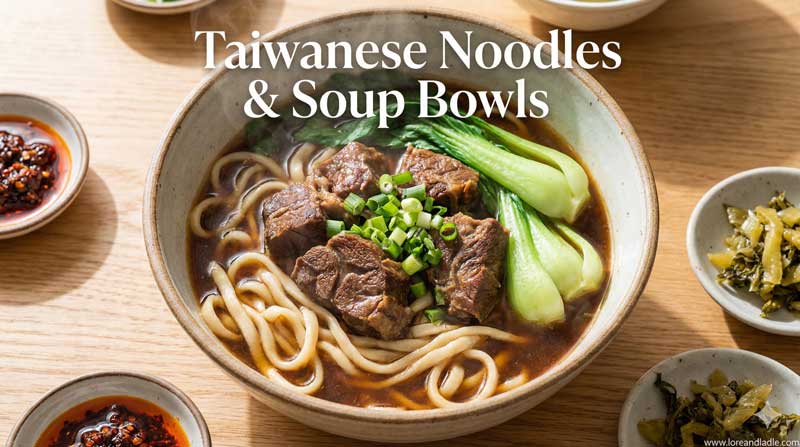
Beef brisket or pork belly provide richness that warms the palate. Pickled greens, scallions, cilantro, and a drizzle of chili oil offer brightness and contrast. Each topping contributes a memory or preference, making the bowl a personalized expression of care. The harmony of fat, salt, sour, and heat reveals the chef’s touch and family tradition. Together, toppings complete the dish’s narrative.
Regional Voices in a Bowl
Taiwan’s noodle bowls vary by city and family tradition. Beef noodles have a bold presence in many urban kitchens, while pork rib and minced pork bowls offer gentler depth. Seafood versions highlight freshness from coastal markets, pairing light broths with delicate flavors. The idea remains consistent: honor seasonality and regional produce while keeping the heart flexible and welcoming. Regional voices enrich the bowl without losing its core identity.
Cooking as Cultural Practice: Time, Patience, and Balance
Patience in simmering, balance in seasoning, and clarity of aroma define the craft. Vendors and home cooks share a rhythm of tasting, adjusting, and presenting. The bowl demonstrates mindful cooking and hospitality, inviting everyone to slow down just enough to savor. This practice connects daily meals with a sense of place. In short, the act of preparing these bowls is a quiet celebration of skill and generosity.
From Market to Table: The Social Rhythm
Night markets and family kitchens shape the dish’s culture. People gather around steaming bowls to enjoy conversation, laughter, and comfort. The dish becomes a thread in social life, linking generations and seasons. Even in a busy modern home, the bowl invites a moment of connection. In this way, culinary craft becomes a shared rite of welcome.
Bringing Taiwan’s Flavors to Your Kitchen: Practical Steps
Start with a clear broth base or a ready-made stock you trust. Choose noodles that suit your broth’s character, and keep toppings fresh and vibrant. Adjust salt, sugar, and acidity to taste, balancing savory, sweet, and tangy notes. Use fresh herbs or greens for color and fragrance. This approach makes the dish adaptable for Home Cooking while preserving its cultural essence and spirit of hospitality.
A Gentle Note on Appreciation: The Beauty of Taiwan’s Noodle Culture
Respect for ingredients, craft, and time deepens every bite. These bowls remind us that food can carry memory, place, and care. By exploring the flavors, you honor the hands that prepared similar dishes across kitchens and seasons. The experience invites curiosity, gratitude, and delight in everyday cookery. In embracing Taiwan’s noodle bowls, you weave a small, lasting thread of cultural appreciation into your own kitchen.