
Introduction
Welcome to a thoughtful introduction of the dish Best Taiwanese Noodle And Soup Bowls Recipes for Family Dinners in America. This guide celebrates the warmth, craft, and cultural value behind Taiwanese noodle bowls. The bowls blend fragrant broths, springy noodles, and fresh toppings into comforting meals that families can share around the table. In many American kitchens, these bowls become a yearly rhythm—a familiar sign that dinner can be both simple and spellbinding. The focus here is on flavor, technique, and the social beauty of gathering to enjoy a well-made bowl together.
The Heart of Taiwanese Noodle Bowls
Taiwan’s noodle bowls are more than sustenance; they are expressions of care and hospitality. The aroma of simmering broth invites everyone to come closer. Chewy noodles provide a satisfying bite, while bright greens and pickles add color and brightness. The experience centers on balance: a broth that tastes round and confident, noodles that hold their own, and toppings that offer contrast in texture. This balance makes each bowl feel complete, inviting long, relaxed meals with family and friends.
Core Components: Broth, Noodles, and Toppings
A successful Taiwanese noodle bowl rests on three pillars:
- Broth: The soul of the dish. Common foundations include deep, slow-simmered pork bone or beef-based broths, often enriched with aromatics like ginger, garlic, onion, star anise, and soy. A touch of sweetness from tomato or a hint of rice wine can enhance the roundness without overpowering the palate.
- Noodles: The backbone that carries the broth. Noodles range from thin and springy to slightly wider varieties. The goal is chewiness that remains firm when submerged in hot broth, so every bite feels satisfying.
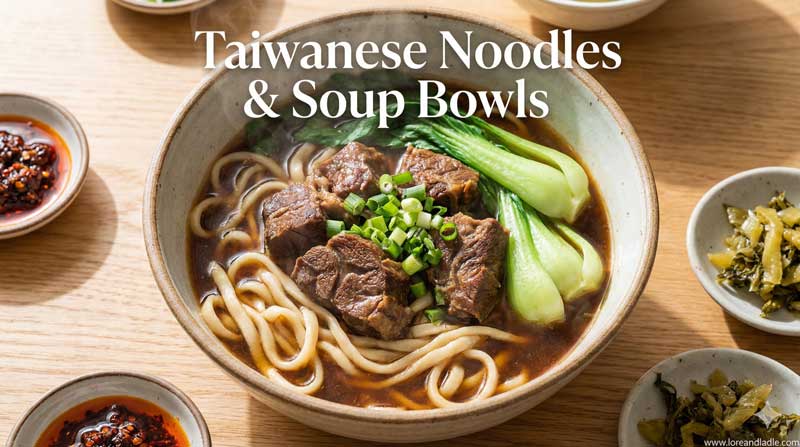
- Toppings: Toppings provide texture, color, and brightness. Think tender slices of braised meat, crisp greens, chopped scallions, cilantro, and pickled vegetables. A dash of chili oil or black sesame can finish the bowl with warmth or aroma.
In America, cooks often adapt toppings to local preferences while preserving the core idea of a balanced bowl. This adaptability preserves the dish’s spirit while inviting new flavors to the table.
Techniques That Elevate Flavor
Several techniques help these bowls shine:
- Build flavor in layers: Start with a gentle sauté of aromatics, then simmer the broth to release deeper notes. This layering yields a cleaner, more complex taste.
- Respect the noodles: Cook noodles to the right bite, then rinse or drain as needed so they do not become soggy in the broth.
- Balance salt and sweetness: Add soy and salt gradually; a touch of sweetness from tomatoes or a small amount of sugar can balance rich ingredients.
- Finish with brightness: Fresh herbs, a squeeze of citrus, or a splash of vinegar can lift the dish just before serving.
- Mindful garnishing: Fresh greens and crisp pickles provide contrast in texture and color, making the dish more inviting on the plate.
These techniques support a delicious, cohesive bowl that remains approachable for home cooks.
Regional Flair in Noodle Bowls
Taiwan’s noodle bowls show regional flavors in delicate ways. Two broad shapes appear in many homes:
- Beef-forward bowls: Rich, meaty broths with tender beef slices. These bowls emphasize depth and umami, often with tomatoes or star anise to round the palate.
- Pork-forward bowls: Lighter, yet deeply savory, sometimes featuring braised pork pieces and aromatic greens. These bowls highlight balance and a comforting, homey feel.
Within each style, home cooks and chefs add personal touches—be it a hint of sesame oil, a tangy pickled topping, or a fresh herb—to reflect family taste and seasonal ingredients.
The Family Table: Bringing Taiwan to American Kitchens
In American homes, these bowls become a ritual of togetherness. They invite shared meals that are neither rushed nor formal. The act of ladling broth, gathering noodles, and arranging toppings becomes a small ceremony that honors time spent cooking and talking. This social dimension makes the bowls more than a dish; they become a memory in the making. The familiar routine of family dinners is enriched by the comforting scent of simmering broth and the visual appeal of colorful toppings.
Ingredient Spotlight
A few ingredients show why Taiwanese noodle bowls feel so special:
- Noodles: Choose those with good bite and elasticity. Fresh or dried varieties both work well, depending on the recipe and available time.
- Broth base: Pork bone or beef bones provide depth. Aromatics such as ginger, garlic, scallions, and peppercorns lift the broth.
- Protein: Thinly sliced beef or braised pork are common, each contributing distinct texture and richness.
- Vegetables: Bok choy, napa cabbage, or leafy greens add freshness and color.
- Toppings: Pickled mustard greens, cilantro, green onions, and chili oil create bright contrasts and aroma.
- Condiments: A drizzle of sesame oil, a touch of vinegar, and a pinch of sugar can fine-tune balance.
Choosing ingredients with care helps the dish showcase its cultural nuances while remaining accessible in American kitchens.
Creating a Balanced Menu for Family Dinners
For a family dinner, consider a small menu built around the main noodle bowl. For example:
- A beef noodle bowl with a tomato-forward broth for depth.
- A pork-based bowl with lighter broth and crisp greens.
- A vegetarian option using mushroom or tofu as the centerpiece.
- A light side dish like cucumber salad to refresh the palate between bowls.
This approach keeps the meal varied without sacrificing the core concept of a comforting noodle bowl. It also makes it easier for different family members to find a bowl they love.
Cultural Values of Sharing Style
Sharing bowls around one table fosters conversation and connection. The practice emphasizes hospitality, generosity, and attention to others’ tastes. Passing condiments, arranging toppings for each bowl, and taking turns serving the broth create a shared dining rhythm. This social fabric makes the meal feel like a celebration of everyday togetherness—one that welcomes friends and family to pause, savor, and listen to each other.
Practical Tips for Home Chefs
- Start with a clear plan: Decide on the broth base and noodle type first, then assemble toppings that harmonize with the chosen style.
- Keep flavors fresh: Use bright herbs and crisp vegetables to balance rich broths.
- Cook in batches: If you are feeding a family, prepare broth and components in stages so everyone can assemble bowls quickly at serving time.
- Respect texture: Ensure noodles stay firm enough to hold up in the broth without becoming mushy.
- Plate with care: A neatly arranged bowl invites tasting and appreciation.
These practical tips help home cooks deliver bowls that feel thoughtful and restaurant-worthy, while staying approachable for Busy weeknights.
Final Thoughts
Best Taiwanese Noodle And Soup Bowls Recipes for Family Dinners in America celebrates more than flavor. It honors technique, balance, and the joy of sharing a well-made bowl with loved ones. The bowls offer a bridge between culinary heritage and everyday family meals, inviting cooks to honor tradition while welcoming creativity. By focusing on broth, noodles, and toppings, and by embracing a spirit of hospitality, these bowls enrich dinner time with warmth, aroma, and a sense of belonging. Whether you are an experienced cook or trying Taiwanese flavors for the first time, these bowls invite you to slow down, taste deeply, and feast with family.