
Introduction
Welcome to Best Recipes for Tandoor Bread – Uzbekistani Rice & Pilaf Specialties Flavor You’ll Love. This dish sits at the heart of everyday meals and festive gatherings alike. It blends the warmth of a clay oven with the harmony of rice, vegetables, and fragrant spices. The result is more than food; it is a reflection of shared tables, careful craft, and a long tradition of hospitality.
The Tandoor as a Time-Honored Hearth
The tandoor oven is more than a tool. It is a living part of the kitchen, a heat source that ties cooks to the land. In Uzbek cuisine, the tandoor creates a signature aroma and a crust that crunches with tenderness. Its glow invites conversations, moments of preparation, and the anticipation of tasting bread hot from the walls. The oven’s rhythm shapes the day, guiding bakers as they time the dough, shape disks, and layer flavor into every loaf.
The Bread: Non and Its Craft
Non, the round, sesame-speckled bread baked in the tandoor, holds a central place at the table. The dough balances flour, water, salt, and a gentle rise. Bakers knead with steady hands, portioning discs that are then slapped onto the inner wall of the hot oven. As they pivot and rotate, the crust forms a toasty kiss while the crumb stays soft and pliant inside. The bread’s texture and aroma set the mood for the meal, inviting guests to break bread together with ease and warmth. Each loaf is a small work of communal art, shaped by skill and patience passed from one generation to the next.
Uzbek Rice & Pilaf: The Harmony of Grain and Flavor
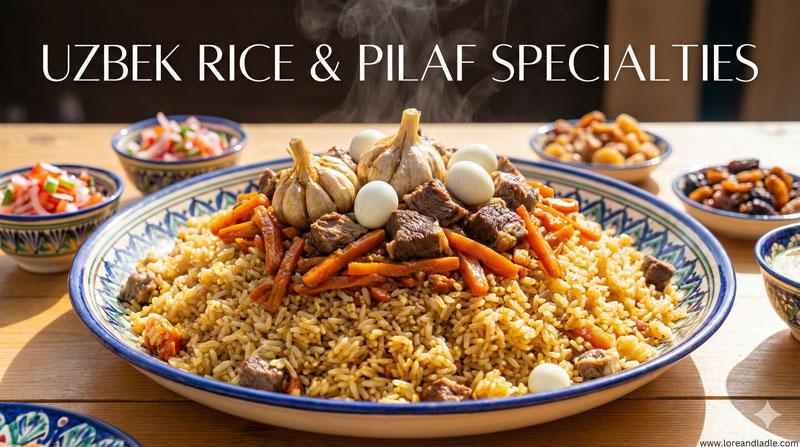
Pilaf, or plov, is a cornerstone of Uzbek dining. The rice takes center stage, gently toasted in oil to seal in flavor before simmering with tender carrots, onions, and sometimes lamb or beef. Cumin, coriander, and garlic bloom in the pot, creating a fragrant, comforting base. The rice’s grains separate cleanly, each bite offering a balance of sweetness, savory depth, and a hint of smokiness from the cooking pot. When served alongside warm non, the dish becomes a complete experience of textures and aromas. The pairing speaks to a tradition of careful pacing and shared portions, where every guest enjoys their fair share of color, fragrance, and warmth.
Cultural Value: Table, Hospitality, and Shared Flavor
This combination embodies hospitality. A table set with non and plov invites conversation, laughter, and connection. The bread acts as a universal utensil, perfect for scooping up meat, vegetables, and rice. The act of sharing reinforces mutual respect and care for guests. In markets and kitchens across Uzbekistan, cooks celebrate seasonal produce and the simple joy of a well-made loaf. The dish preserves memory, reminding communities of long, quiet mornings and lively gatherings alike. It is a language spoken through crust, steam, and the soft sigh of steam escaping from a freshly opened loaf.
The Craft: Skill, Rhythm, and Generation
The preparation of tandoor bread and plov is a craft learned over years. Bakers study dough hydration, fermentation times, and oven temperatures. They read the signs of the dough’s rise and the tandoor’s glow. The rhythm of preparation becomes a daily ceremony, shaping character and pride. These skills travel from elder bakers to younger hands, ensuring the dish remains vibrant and true to its roots. The craft is not simply technique; it is a living tradition that honors time, place, and the people who share its fruits.
Serving Mindfully: Experience Over Attention
Serving this dish invites mindful enjoyment. Present the round bread warm, sliced with care, and placed beside a steaming pot of pilaf. Offer slices for each guest to break and dip, building a sense of generosity. Encourage conversations about the aroma—the quick crackle of crust, the scent of toasted rice, and the spices that linger in the air. A well-set table enhances the experience, allowing everyone to savor the balance of textures and flavors in a calm, appreciative mood.
A Taste of Place: Why It Resonates
The Best Recipes for Tandoor Bread – Uzbekistani Rice & Pilaf Specialties Flavor You’ll Love captures a region’s love for seasonality, community, and simple pleasures. It celebrates how careful cooking can elevate everyday meals into moments of gratitude. The dish stands as a reminder that food carries stories of fields, ovens, and families, woven together in a steady, comforting thread. Appreciating it means recognizing the beauty of daily life expressed through food, tradition, and shared meals.
Conclusion: Invite to Explore
If you seek a dish that blends technique with warmth, this Uzbek combination offers a welcoming invitation. Taste the crust’s kiss, the plov’s comforting depth, and the sense of togetherness that comes with a shared table. The dish invites you to explore a culture through aroma, texture, and hospitality—an enduring reminder that good food connects people with place, memory, and joy.