
Introduction
Taiwanese desserts tell a story of seasonal ingredients, careful technique, and shared moments of joy. They invite curiosity, satisfy the sweet tooth, and honor a sense of hospitality. This post introduces the collection titled “Top 15 Taiwanese Desserts And Sweet Treats Recipes for New Home Cooks in the U.S.”. The focus is on cultural value and culinary significance. Each item is a window into Taiwan’s kitchen wisdom and street-food charm. The ideas work well in a U.S. home kitchen, blending familiar comfort with new flavors.
Why Taiwanese Desserts Matter
Taiwanese desserts celebrate balance. They pair soft textures with crisp bites, coolness with warmth, and light sweetness with fragrant notes. They reflect seasonal fruit, local legumes, and carefully prepared syrups. Many desserts are shared in family meals or small gatherings, turning a simple treat into a moment of connection. The collection below highlights that spirit and offers approachable ways to honor tradition while cooking at Home.
The Top 15 Desserts: A Cultural Tour
1) Douhua (豆花) – A silky tofu pudding. It feels light yet satisfying, often served with brown sugar syrup or a fragrant soy-based sauce. It teaches restraint and delicacy in flavor and texture.
2) Aiyu Jelly (愛玉冰) – A refreshing jelly made from fig seeds. It finishes with a squeeze of lemon and a touch of honey. It embodies cooling comfort on warm days.
3) Grass Jelly Dessert (仙草冰) – Herbal jelly with syrup and fruit. Earthy and smooth, it demonstrates how plants and syrups create harmony in a dessert.
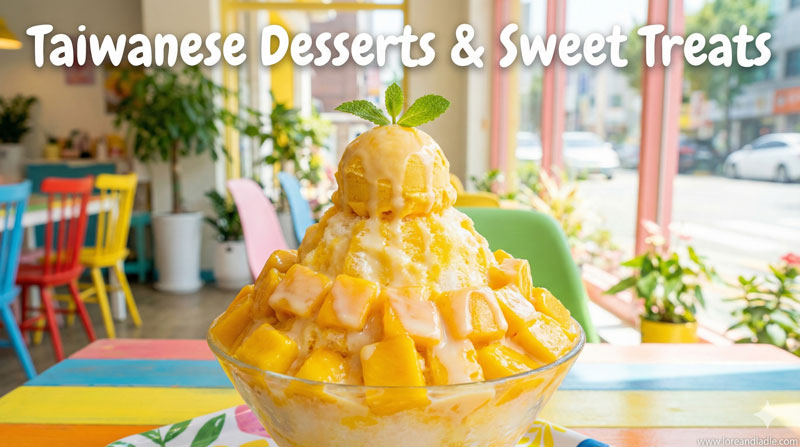
4) Mango Shaved Ice (芒果冰) – Shaved ice topped with ripe mango and sweet milk. This bright treat celebrates summer fruit and bright contrast in texture.
5) Baobing (刨冰) – A versatile shaved-ice base. Toppings vary, from fruit to beans and condensed milk. It shows how simple ingredients can layer into a rich experience.
6) Red Bean Soup (紅豆湯) – Sweet red beans in a light broth, sometimes with small pearls. It’s comforting and heartwarming, a reminder of homey flavors.
7) Taro Balls (芋圓) – Chewy taro dumplings in sweet soups or shaved ice. They highlight the joy of chewy textures and seasonal starches.
8) Green Bean Cake (綠豆糕) – A delicate mung-bean cake with a soft, gentle sweetness. It reflects classic craft in legume-based confections.
9) Pineapple Cake (鳳梨酥) – A buttery pastry with tart pineapple filling. It blends bright fruit with a tender crumb, a gift-worthy favorite.
10) Sun Cake (太陽餅) – A flaky pastry with malt filling. This Taichung specialty reveals regional character and timeless pastry technique.
11) Sesame Seed Balls (芝麻球) – Deep-fried glutinous rice balls coated with sesame. Filled with red bean or lotus seed paste, they celebrate nutty aroma and crackly crust.
12) Sweet Potato Balls (地瓜球) – Golden, crispy exterior with a soft interior. They are a beloved street snack that combines crunch and warmth.
13) Glutinous Rice Cakes (糯米糍) – Soft rice cakes often filled with peanut or red bean. They exemplify the chewy comfort of rice-based sweets.
14) Peanut Candy (花生糖) – Crunchy peanut brittle with toasted aroma. It shows how a single ingredient can carry deep flavor through simplicity.
15) Bubble Tea Desserts (珍珠奶茶) – Tea-based drinks with chewy tapioca pearls. A modern favorite, they merge beverage culture with dessert charm.
Techniques and Textures: A Culinary Signature
These desserts showcase a few enduring techniques: making silky soy-based or nut-based puddings, preparing flavorful syrups, and achieving the right chew in balls and mochi. Shaved ice needs careful topping balance to avoid watering down flavors. Jellys rely on natural gelling agents and gentle heat. Pastries use precise folding and butter for a tender bite. Together, these methods reveal a shared love for texture, seasonality, and mindful sweetness.
How to Enjoy These Desserts in the U.S.
Begin with familiar textures, then add a Taiwanese twist. Try Douhua with brown-sugar syrup as a comforting starter. Serve Aiyu Jelly with a splash of citrus to brighten the palate. Build a small Baobing plate with fresh mango, red beans, and a drizzle of condensed milk. Pair teas with a light dessert bite to keep the experience balanced. These desserts are approachable; they welcome home cooks to experiment while honoring traditional flavors.
Getting Started: Tips for New Home Cooks
- Start with essential ingredients: smooth tofu base for Douhua, canned or fresh mango, mung beans, sesame, and good quality tea.
- Use simple syrups: brown sugar or honey with citrus adds depth without overpowering the core flavors.
- Respect texture: aim for silky puddings, chewy balls, and crisp pastries. Texture is the heart of these sweets.
- Practice with small batches: it’s easier to learn technique and timing when you begin with modest portions.
Conclusion
This collection invites new home cooks in the U.S. to explore Taiwanese desserts as living culture. Each item offers more than taste; it offers a chance to connect with the artistry of Taiwan’s kitchens. Enjoy the journey, savor the textures, and share the experience with friends and family. The result is a kitchen filled with color, aroma, and a respectful celebration of a beloved dessert tradition.