
Top 9 Taiwanese Desserts And Sweet Treats Recipes for Taiwanese Food Lovers in America
Introduction
Taiwan’s dessert culture shines with brightness, balance, and a playful touch of creativity. Each treat here tells a small story about seasonal ingredients, comforting textures, and careful technique. The following nine desserts showcase how simple components like seeds, beans, fruit, and rice can become beloved treasures. They invite curiosity, celebrate careful craftsmanship, and reward curious cooks with delicious results. Read on to discover how these desserts fit into Taiwan’s culinary fabric and why they remain favorites across kitchens and bowls.
Aiyu Jelly
Aiyu jelly begins with tiny seeds from the fig plant. When soaked and strained, they yield a smooth, jelly-like texture. It cools the palate and brightens the senses. People often add honey or lemon juice to lift its delicate sweetness. This dessert rewards patient preparation and simple ingredients. Its appeal lies in refreshment, balance, and the way a clear jelly can carry a burst of bright flavor.
Douhua
Douhua, or silky tofu pudding, feels almost feather-light on the tongue. It can be served warm or chilled, with a drizzle of syrup or a sprinkle of roasted peanuts. Some toppings add texture and depth, such as red beans, sesame seeds, or mung beans. Douhua embodies the idea that gentle, smooth textures can carry comforting sweetness. It invites mindful preparation and thoughtful plating, turning humble soy curd into a poised dessert.
Grass Jelly Dessert
Grass jelly, known for its dark, cool cubes, offers a clean, subdued flavor. It’s often served with a sweet syrup and sometimes pearls or fruit. The contrast between the soft jelly and the syrup creates a refreshing bite. This dessert emphasizes cooling textures and versatile pairings. It’s a favorite for hot days and for savoring a calm, dessert-driven moment.
Taro Balls in Sweet Syrup or with Shaved Ice
Taro balls are chewy, violet morsels made from taro and tapioca flour. They appear in warm desserts or as part of shaved ice bowls. The taro brings a gentle sweetness and a comforting earthiness. Chewy texture, subtle color, and flexible pairing with syrups and other toppings show how Taiwan’s desserts balance comfort with playfulness. They highlight root vegetables’ culinary value in sweet forms.
Mango Shaved Ice
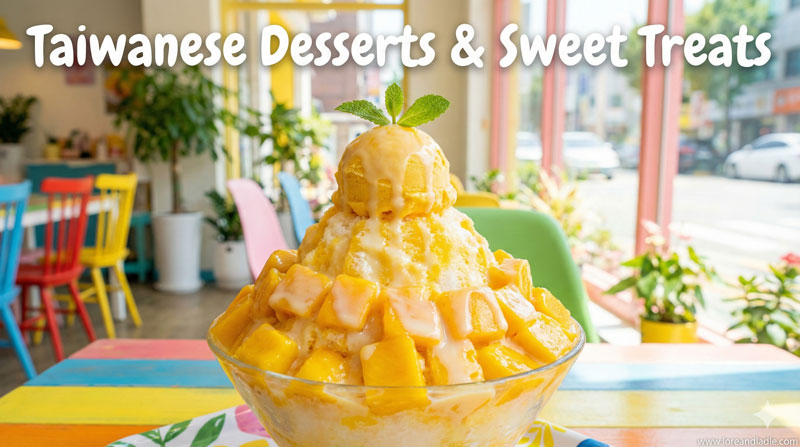
Mango shaved ice gleams with bright, ripe fruit and a mountain of ice. Fresh mango chunks crown a bed of finely shaved ice, often with a touch of condensed milk. This dessert captures the generosity of tropical fruit and the skill of shaving ice to a delicate snow-like texture. It’s a celebration of seasonal mango and the joy of sharing a cool, fruity treat on a warm day.
Mango Sago with Coconut Milk
Mango sago blends mango purée, chewy tapioca pearls (sago), and silky coconut milk. The result is a creamy, fruity dessert with lively texture. It shows how Taiwan’s flavors harmonize tropical richness with soft, pillowy textures. This dessert demonstrates balance: sweetness from fruit and milk against the neutral backdrop of tiny pearls.
Red Bean Soup with Lotus Seeds
Red bean soup is a gentle, comforting sweet soup. Red beans soften into a velvety base, while lotus seeds add a delicate bite. Some versions include goji berries or shaved coconut for extra fragrance. This dessert embodies a warm, nurturing vibe and reflects a tradition of ending meals with a nourishing bowl of sweetness. Its simple elegance lies in the harmony of beans, seeds, and subtle aromatics.
Pineapple Cake
Pineapple cake, or fengli su, is a beloved pastry with a buttery crust and a fragrant pineapple filling. Its bright aroma and crumbly texture make it a perfect gift and a memorable tasting experience. Pineapple cake embodies Taiwan’s harvest abundance and the joy of sharing a finely baked treat. It celebrates pastry craft alongside fruit sweetness in a compact, elegant form.
Black Sesame Soup
Black sesame soup is a thick, nutty puree that glows with deep aroma. When warmed, its toasty sesame flavor envelops the senses. It’s a dessert that invites slow sipping and appreciation for roasted sesame’s depth. This dessert showcases how a single seed can create a rich, comforting finish to any meal. Its smooth texture and pronounced flavor make it a memorable end note.
Cultural Value and Culinary Significance
These nine desserts reveal core ideas in Taiwanese cooking: respect for seasonal ingredients, a love of texture variety, and a calm, precise approach to sweetness. They emphasize balance—cooling versus warming textures, light versus rich flavors, and soft versus chewy experiences. Each dessert is more than a recipe; it’s a small ritual that invites sharing, conversation, and appreciation for craftsmanship.
Texture plays a starring role. The crisp bite of shaved ice, the silky kiss of tofu pudding, the chewy bite of taro balls, and the smoothness of sesame soup all teach that contrast elevates flavor. Ingredients are chosen for how they feel on the palate as much as for their taste. This attention to texture turns everyday components into refined experiences.
Flavor in these desserts often hinges on natural sweetness. Rather than relying on heavy syrups, many treats use the fruit’s own sugars, roasted seeds, nuts, or fresh syrups to create depth. This approach highlights ingredients at their best and respects their intrinsic character.
Craftsmanship also matters. The artistry appears in how chefs and Home Cooks balance flavors, textures, and temperatures. Aiyu jelly benefits from precise seed handling; douhua requires a delicate tofu curd; grass jelly gains personality through thoughtful toppings. Pineapple cake showcases pastry technique, while red bean soup and sesame soup celebrate simmering patience and careful seasoning. The result is a family of desserts that feels both familiar and specially crafted.
In essence, these desserts celebrate Taiwan’s culinary imagination. They honor the land’s fruit, seeds, and grains and invite cooks to discover gentle, sophisticated sweetness. They are accessible yet refined, simple yet full of character. Embrace them as part of a shared kitchen tradition that values care, balance, and delight in every bite.