
Introduction
Welcome to the exploration of the collection titled “Best Classic Taiwanese Main Dishes Dishes for Taiwanese Food Lovers in America.” This post highlights the cultural value and culinary significance of four iconic Taiwanese main dishes. The focus stays on the beauty of flavor, technique, and shared meals. Each dish speaks to a tradition of care, balance, and hospitality that flavors many tables in America, where these foods find new life in homes and welcoming eateries. By appreciating the textures, aromas, and storytelling behind each dish, readers can savor how Taiwanese cooking honors seasonality, clarity, and generosity.
Core Qualities of Classic Taiwanese Main Dishes
Taiwanese main dishes excel in balance and harmony. They often combine savory depth with a gentle sweetness, and they favor layered aromatics like garlic, ginger, scallion, and star anise. A hallmark is texture contrast: tender meat or noodles paired with crisp edges, silky fats, or chewy bites. These dishes invite sharing, fostering conversation and connection at the table. In addition, seasonal ingredients and practical techniques—braising, simmering, quick stir-fries, and careful broth crafting—shape a comforting yet vibrant culinary language. The result is food that feels at once familiar and exciting, rooted in home cooking while inviting curious diners to explore.
Dishes in the Collection
Here are four classics that exemplify Taiwanese main dishes, each celebrated for taste, technique, and cultural resonance.
-
Beef Noodle Soup (Niu Rou Mian)
This dish centers a rich, clear broth built from beef bones, aromatics, and slow simmering. Tender beef shoulder or brisket accompanies chewy noodles, with toppings like pickled mustard greens and scallions. The aroma is inviting, and the broth delivers warmth and depth without heaviness. Beef Noodle Soup stands as a comforting emblem of hospitality and family meals, inviting diners to gather around a steaming bowl and share the moment. -
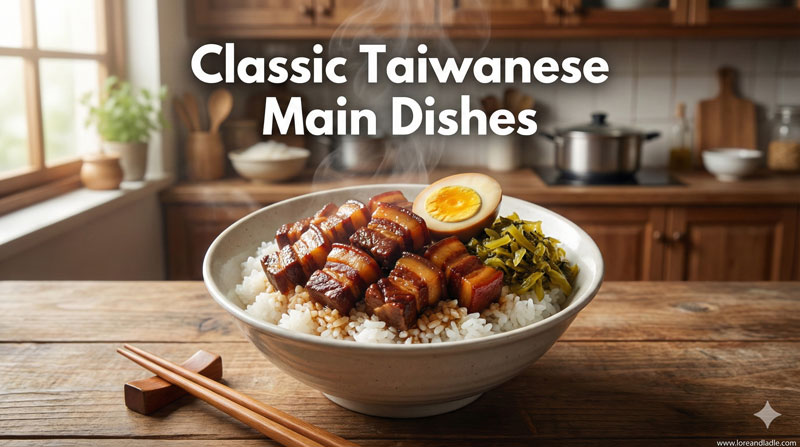
Lu Rou Fan (Braised Pork Rice)
Braised pork belly melts into a glossy sauce of soy, sugar, and aromatics, then rests atop fluffy steamed rice. The balance between savory soy and a hint of sweetness reflects a thoughtful approach to daily meals. In Taiwan, Lu Rou Fan embodies home cooking and everyday richness, offering a satisfying centerpiece that feeds conversation as much as appetite. The dish invites careful attention to timing—the pork should be tender, the sauce enveloping the rice just right. -
San Bei Ji (Three-Cup Chicken)
Named for the three essential liquids—soy sauce, rice wine, and sesame oil—this dish braises chicken in a fragrant, lacquered glaze. Garlic and ginger perfume the kitchen as the sauce reduces, coating the meat with a glossy sheen. Cooked in a clay or heavy-bottom pot, the dish delivers a warm, aromatic finish that pairs well with steamed rice. Three-Cup Chicken showcases how precise proportions and slow reduction create depth and a comforting, almost nostalgic, aroma. -
Oyster Omelette
A harmonious blend of briny oysters, eggs, and a starch-based batter yields a dish with crisp edges and a soft, custardy center. Chives or greens add color and freshness, while a tangy-sweet sauce provides a bright counterpoint. This omelette is a favorite street-food main that embodies texture play and bright balance. It’s a vivid example of how Taiwan’s cooking thrives on contrasts that excite the palate and spark memories of market stalls and shared bites.
Bringing these Dishes to American Tables
In America, these classics travel well to home kitchens and neighborhood eateries. Ingredients like beef cuts, soy sauce, rice wine, star anise, ginger, garlic, and starches are commonly available in supermarkets and Asian markets. Home Cooks can adapt simmer times to fit a busy schedule, while maintaining the essential flavors: a clear, fragrant broth for beef noodle soup; a glossy, well-seasoned braise for Lu Rou Fan; a lacquered glaze for Three-Cup Chicken; and a crisp, delicate batter for Oyster Omelette. These dishes encourage skill-building in techniques such as proper braising, broth clarity, and batter cohesion, offering cooks a satisfying sense of mastery. Sharing bowls, plates, and sauces with family and friends helps these flavors travel beyond borders, enriching American dining culture with Taiwanese culinary craftsmanship.
Conclusion
The collection “Best Classic Taiwanese Main Dishes Dishes for Taiwanese Food Lovers in America” invites readers to celebrate the cultural value and culinary significance of four enduring dishes. Through clear technique, balanced flavors, and textures that delight, these dishes illuminate how Taiwanese food honors tradition while inviting new interpretations. Whether enjoyed at a crowded table or in a quiet, single-cossa moment, these meals reveal the beauty of communal cooking and the joy of savoring good food together.