
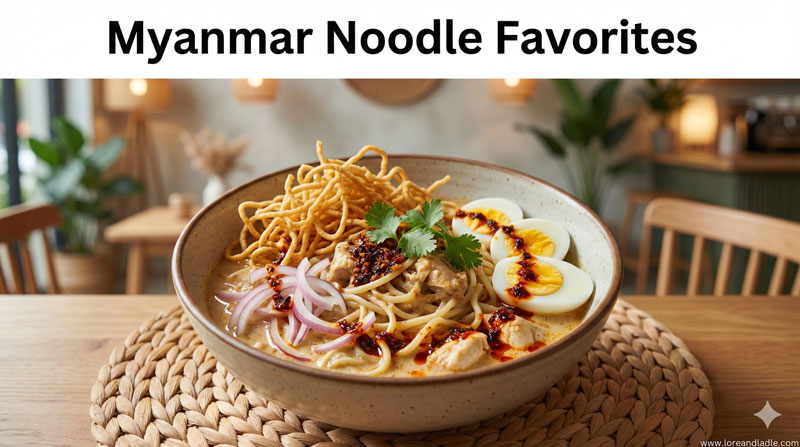
Introduction: Healthy Myanmar Noodle Favorites for Lighter Meals
Myanmar’s noodle bowls are more than meals. They are daily invitations to Share flavors, stories, and comfort. In many markets and homes, a simple bowl can reflect a region’s harvest, a family’s routine, and a community’s love of fresh herbs. This post explores healthy Myanmar Noodle favorites that feel light on the palate while staying rich in culture and tradition. You will read about how broth, herbs, and textures come together to create balanced meals. The goal is to honor the beauty of these dishes and their place in Burmese food culture.
The Quiet Craft Behind Burmese Noodle Bowls
Burmese noodle bowls showcase a careful balance of taste, texture, and aroma. Noodles vary from thin rice vermicelli to broader strands, each soaking up broth in a distinct way. Light soups rely on clear stocks and bright herbs, while salads highlight crisp vegetables and tangy dressings. Across regions, cooks adapt with local fish, lean meats, and fresh produce. The common thread is respect for ingredients and a preference for freshness over heavy sauces. These bowls celebrate seasonal greens, citrus, and a chorus of herbs, inviting a gentle, mindful eating experience.
Light and Bright: Principles of Lighter Noodle Dishes
What makes a noodle dish feel lighter? A clear broth or tomato-based base, lean proteins, and generous vegetables. Minimal oil, smart use of aromatics, and bright finishing touches help maintain balance. Common elements include:
– Fresh herbs such as coriander, mint, and sawtooth herb
– Zesty citrus like lime or calamansi
– Crisp vegetables for texture
– A light sauce or dressing that enhances rather than overwhelms
– Rice noodles that provide satisfying chew without heaviness
These principles help every bowl stay nourishing and easy to digest, while still delivering authentic Burmese flavors.
Mohinga Light: Fish Noodle Soup for Everyday Tables
Mohinga is a beloved staple that resonates from morning stalls to family kitchens. A lighter Mohinga emphasizes a clear fish broth enriched with delicate aromatics rather than a heavy, oily base. Key ideas:
– Use lean white fish or broth with a gentle infusion of lemongrass, ginger, and turmeric
– Add a generous toss of fresh herbs and sliced shallots
– Serve over thin rice noodles with cucumber ribbons and lime wedges
– Keep ngapi paste optional or in a small side so the broth stays bright
This approach honors the dish’s culture—the harmony of sea-scented broth, tangy citrus, and the crisp bite of noodles—while offering a lighter, everyday version.
Shan Noodles: Tomato Brightness and Fresh Herbs
Shan noodles offer a different pathway to lighter meals, often featuring a tomato-forward profile with herbs and tender meat or tofu. A lighter Shan noodle bowl can include:
– A tomato-based broth or sauce that carries natural sweetness and acidity
– Lean proteins like chicken or tofu, sliced thin
– Plenty of herbs, scallions, and shredded cabbage for texture
– A dusting of roasted garlic oil and a squeeze of lime for brightness
Shan cuisine blends river and garden flavors, and a tomato-tresh approach keeps the dish vibrant without heaviness. The result is a fragrant, comforting bowl that respects tradition while inviting lighter eating.
Meeshay and Noodle Salads: Fresh, Lean, and Flavorful
Meeshay and noodle salads are among the most flexible and refreshing Myanmar noodle options. They showcase interaction among textures—soft noodles, crisp vegetables, and a tangy, sometimes nutty dressing. For lighter meeshay-style bowls:
– Use shredded chicken or tofu for lean protein
– Load with cucumber, bean sprouts, herbs, and scored lettuce
– Dress with a light mix of lime, fish sauce or soy, and a touch of sesame or peanut
– Finish with chopped peanuts or sesame seeds for crunch without oiliness
Noodle salads in Myanmar reflect communal meals and street-side gatherings, where balance and freshness sit at the heart of flavor.
The Heart of Flavor: Herbs, Acids, and Aromatics
Herbs and acids are the soul of lighter Burmese noodles. They create lift, clarify flavors, and connect the dish to its local landscape. Common elements include:
– Coriander leaves for brightness
– Sawtooth herb for a distinct, peppery aroma
– Mint and dill for cool notes
– Lime or lemon juice to sharpen the flavors
– A touch of fresh chilies for gentle heat
The aromatics are not just garnish; they are essential seasoning that elevates the entire bowl. When these components are balanced, the dish feels lighter yet deeply satisfying, a true reflection of Burmese culinary philosophy.
Home Kitchen Tips: Crafting Lighter Myanmar Noodle Plates
Bringing these ideas home is easy with a few practical steps:
– Start with a clear broth base: simmer fish, ginger, lemongrass, and a dash of turmeric.
– Choose rice noodles wisely: vary widths to suit the dish and keep portions moderate.
– Lean proteins first: chicken breast, tofu, or seafood offer protein without heaviness.
– Load up on vegetables: cucumber, bean sprouts, cabbage, and herbs add crunch and color.
– Finish with fresh acids and herbs: lime, coriander, and mint brighten every bite.
– Keep sauces light: use a simple blend of lime juice, a splash of fish sauce, and a hint of sesame or peanut for texture.
– Balance is key: aim for a bowl that feels refreshing, savory, and comforting all at once.
This approach keeps Burmese noodle bowls cozy and culturally rich while remaining suitable for lighter meals.
In Closing: A Tasty, Timeless Expression of Burmese Culture
Healthy Myanmar Noodle Favorites for Lighter Meals celebrate a culture that values balance, freshness, and shared meals. Each bowl is a small journey through markets, family kitchens, and regional gardens. By focusing on clear broths, lean proteins, and abundant herbs, these dishes honor traditional flavors while inviting modern, lighter eating. Whether you are new to Burmese cuisine or revisiting it with a lighter lens, these noodle options offer a respectful, inviting way to experience the beauty of Myanmar’s food culture—one bright, nourishing bowl at a time.