
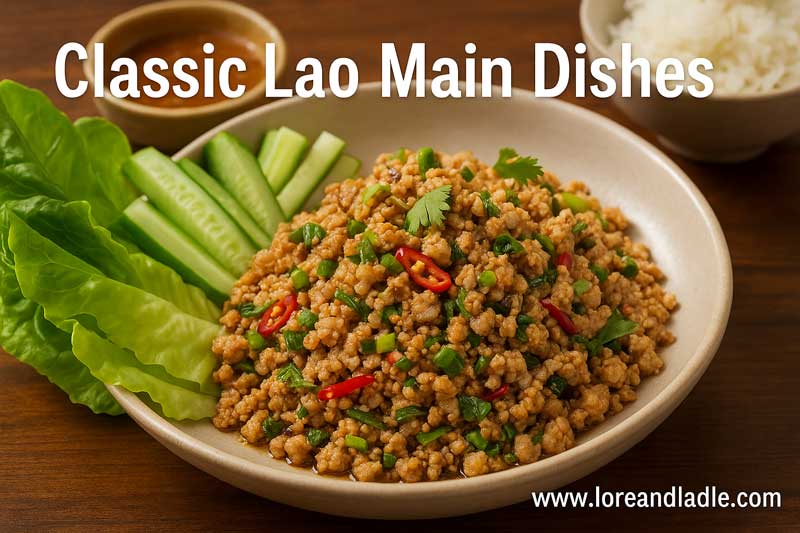
Introduction: Best Classic Lao Main Dishes for Meal Prep Sundays
Sundays in Lao homes are a time to honor flavor, family, and careful preparation. The Best Classic Lao Main Dishes for Meal Prep Sundays invites you into a thoughtful week of meals built on balance, aroma, and texture. Lao cuisine centers on fresh herbs, bright citrus, and clean, satisfying proteins. These dishes travel well, layer beautifully, and pair with the culture of shared meals. They celebrate the beauty of simple ingredients elevated through technique and heart.
Sticky Rice and the Balance of Lao Flavor
Sticky rice anchors Lao meals. It is more than a side; it is a vehicle for flavor. When you plan for meal prep Sundays, consider steaming the rice to a glossy, pliant finish. Its slightly chewy texture holds sauces and salads beautifully. The grain invites you to scoop, dip, and combine with main dishes like larb, mok pa, or Or Lam. A well-prepared batch of sticky rice keeps its texture, so you can reassemble plates with ease. The cultural rhythm around sticky rice emphasizes shareable, mindful eating and a sense of belonging at the table.
Larb: The Bright, Fragrant Main
Larb is a cornerstone Lao dish that shines as a main when paired with sticky rice. Ground meat—pork, chicken, or beef—meets toasted rice powder, lime juice, fish sauce, and a chorus of herbs. Fresh mint, cilantro, and scallions lift the mix with a lively brightness. The dish is quick to prepare, yet deeply flavorful, showing how a few ingredients can create a vibrant, balanced plate. Larb carries a sense of communal tasting; each spoon offers a chorus of textures—crisp herbs, succulent meat, and the warm bite of spice. For meal prep, portion larb in compact containers and keep herbs fresh for peak aroma on day two or three.
Mok Pa: Fish Steamed in Banana Leaves
Mok Pa is a fragrant celebration of steam and herb-forward cooking. Finely chopped fish is mixed with lemongrass, dill, lime, and a touch of fish sauce, then wrapped in banana leaves and steamed. The banana leaf seals aroma, keeps moisture in, and yields a delicate, citrusy finish. This dish embodies Lao finesse: simple components transformed by technique. It travels well in a compact container and remains tender after reheating. Mok Pa teaches patience and precision: the best results come from gentle steaming, not rushing the wrap or the timing.
Or Lam: Hearty Lao Stew with Herbs
Or Lam is a comforting, herb-rich stew that embodies Lao warmth. It blends meat (often beef or pork) with eggplant, long beans, mushrooms, and dill. Lemongrass, chili, and a touch of palm sugar balance the savory depth. The cooking method invites slowly merging flavors, building a deep, nourishing profile. Or Lam carries a sense of lineage in every spoonful, as if each ingredient contributes to a shared memory of family meals. For meal preppers, Or Lam shines because it tightens its flavors overnight, making leftovers feel even more harmonious.
Moo Ping and Sai Oua: Grilled Delights for Weeklong Flavor
Grilled meats are a vivid thread in Lao main dishes. Moo Ping, pork skewers marinated with garlic, coriander root, fish sauce, and pepper, bring sizzling, caramelized notes. Sai Oua, a fragrant Lao sausage, bursts with herbs like lemongrass, kaffir lime, and shallot. Both find a home on Sunday prep boards because they maintain texture and aroma when stored. Serve Moo Ping and Sai Oua with fresh herbs and lime wedges to refresh the palate as the week unfolds. These grilled stars demonstrate how heat, smoke, and herbaceous brightness define Lao meat dishes.
Meal Prep Sundays: Practical Tips to Keep Lao Dishes Fresh
- Plan variety: combine a bright main (larb), a steamed main (mok pa), and a stew (or lam) for balance.
- Batch the staples: cook sticky rice in a large, even layer and keep portions ready for quick reheating.
- Layer flavors: store sauces and herbs separately to preserve brightness until serving.
- Use fresh herbs: mint, dill, cilantro, and Thai basil lift flavors when added at serving time.
- Cool before sealing: permit foods to cool slightly to avoid condensation, which can dilute flavors.
- Reheat gently: use gentle heat or steam to keep textures intact, especially for mok pa and Or Lam.
- Keep containers consistent: choose airtight, opaque containers to protect color and aroma.
Cultural Value: The Heart of Lao Culinary Identity
These dishes capture a core value in Lao cooking: harmony through balance. Sour, salty, spicy, and herbaceous notes mingle in each plate, creating a well-rounded meal that satisfies the senses. The emphasis on fresh herbs mirrors a respect for seasonality and the land. The pratice of sharing meals, especially on Sundays, binds families and neighbors together. Each dish offers a story—how dill brightens a stew, how lime lifts a larb, how rice and greens become more than the sum of their parts. The culinary value lies in the way Lao cooks honor ingredients and technique to produce meals that feel both grounded and generous.
Culinary Significance: Techniques as Language
Lao cooking communicates through technique. Steaming in banana leaves preserves moisture and aroma in Mok Pa. Toasting ground rice powder adds a toasty, pearly texture to Larb, delivering a familiar crunch. Slow simmering in Or Lam extracts the depth of herbs and meat without masking delicate notes. Grilling Moo Ping and Sai Oua builds a smoky aroma that signals celebration and hospitality. Each method is a language, teaching patience, balance, and respect for ingredients. When you prepare these dishes for meal prep Sundays, you practice a dialogue between heat, herb, and time that echoes through Lao kitchens.
Final Thoughts: The Beauty of Lao Main Dishes in Everyday Meals
These classic Lao main dishes illuminate why Lao cuisine is treasured for its simplicity and depth. They honor the week’s rhythms, invite shared meals, and celebrate the abundance of fresh herbs and honest preparation. By choosing to weave larb, mok pa, or or lam into Sundays, you honor a culinary tradition that prizes balance, aroma, and texture. The result is meals that feel like a warm welcome—to yourself, your family, and your kitchen. Enjoy the beauty, the care, and the enduring culture embedded in every Lao main dish.