
Welcome to the Ultimate List of Lao Noodle Favorites to Explore in the U.S.
This post celebrates Lao noodle dishes as living art. Each bowl carries memory, craft, and a shared sense of home. You will find balance in aroma, texture, and color. Most important, these bowls invite conversation, curiosity, and delight. in the United States, a growing scene welcomes Lao noodle favorites with care and hospitality. The result is a savory bridge between tradition and local ingredient kindness. Read on to discover why these dishes matter and how they enrich food culture.
Khao Piak Sen: The Heartbeat of Lao Noodle Comfort
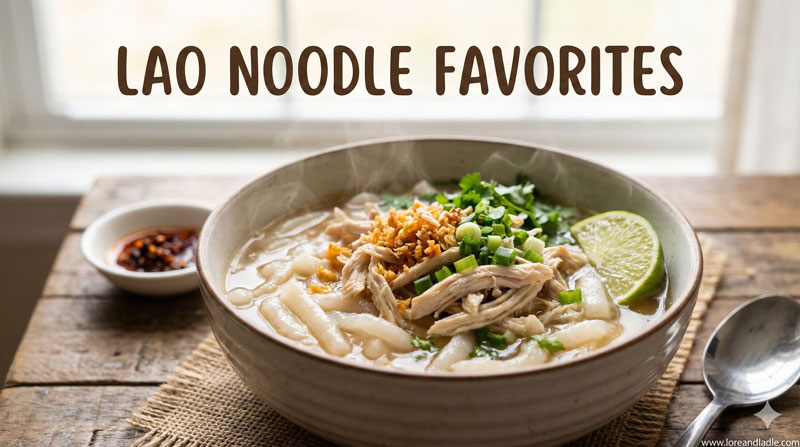
First, meet Khao Piak Sen, a beloved Lao noodle soup. The broth is cloud-soft and comforting, often simmered with gentle chicken stock and a hint of aromatics. The noodles are broad and tender, offering a subtle chew that blends with the broth. Cabbage, herbs, and a squeeze of lime arrive like careful punctuation marks. This dish speaks of family kitchens, early morning markets, and meals shared around a table. The cultural value lies in its generosity: a warm bowl that welcomes all to gather, talk, and slow down for a moment. The culinary significance is the way the broth carries savory depth while remaining bright enough to invite herbs and citrus. It is a quiet celebration of patience, family, and the craft of simmering.
Khao Poon: A Layered, Coconut-Scented Vermicelli Soup
Next, explore Khao Poon, a vibrant vermicelli-based soup with a coconut-forward depth and a chili lift. The spice profile is layered, with lemongrass, kaffir lime, and galangal often playing a gentle chorus beneath the coconut cream. The dish arrives with a rainbow of fresh herbs and vegetables—mint, cilantro, bean sprouts, cabbage, and sometimes crisp lettuce. Each bite blends soft noodles with crisp greens, creating texture and balance. The cultural value of Khao Poon lies in its communal presentation: a bowl that invites customizing with toppings and greens according to season and taste. Culinary significance rests in how this dish demonstrates Lao finesse with heat, sweetness, and acidity all at once, turning a simple soup into a festival of aroma and harmony. When enjoyed in the U.S., it shows how Lao cooking adapts while preserving core flavors and methods.
Vermicelli Bowls and Herb-Centered Freshness
Additionally, many Lao noodle favorites highlight vermicelli bowls and herb-forward salads. These bowls emphasize freshness and balance. Thin rice vermicelli provides a delicate base, while herbs—like mint, cilantro, dill, and Thai basil—bring bright fragrance. A light dressing of fish sauce, lime, sugar, and chili ties everything together, yet never overwhelms the greens. The cultural value here is the farmers-market spirit: a dish built to celebrate seasonal herbs and quick assembly. The culinary significance is in the textural contrast—soft noodles meeting crisp vegetables, with a tangy-sour note that brightens the palate. In the U.S. scene, these bowls become a canvas for local produce, inviting Home Cooks and professional chefs to honor Lao flavors with regional ingredients.
The Craft of Lao Noodles: Technique and Sense
Moreover, the magic of Lao noodles rests in technique and balance. The best bowls show restraint: broth clear and fragrant, noodles cooked just right, and toppings arranged with care. Hot chilies, lime wedges, fried shallots, and fresh herbs are added in a way that respects each component. The cultural value is the emphasis on harmony—no single note dominates. Instead, cooks seek a chorus where aroma, temperature, and texture mingle gracefully. The culinary significance is the pedagogy in simple acts: simmering slowly, testing salt, and tasting with patience. Across restaurants in the U.S., you can sense this philosophy in every spoonful, guiding both new tasters and seasoned fans toward a deeper appreciation of Lao noodle craft.
Savoring Lao Noodles Across the U.S.
In the United States today, Lao noodle favorites appear in cities large and small. In markets and cozy eateries, cooks share recipes with care, inviting guests to observe and learn. The experience is not only about flavor but about presence: a bowl that signals welcome, shared space, and cultural exchange. The cuisine travels well, because its core is universal—fresh herbs, balance of tastes, and comforting warmth. As you explore, you may notice regional twists: stronger citrus brightness, sweeter coconut layers, or crisper vegetable textures. Each version adds to the broader tapestry of Lao noodle culture and helps visitors understand how tradition adapts while staying true to its heart.
How to Experience Them Respectfully and Fully
Finally, approach these bowls with curiosity and respect. Start with a light, mindful bite to detect the broth’s soul. Observe the herbs and their scents rising from the bowl. If you share, listen to recommendations from the server or cook about heat and toppings. Pair your noodles with a simple side of fresh herbs or a squeeze of lime to finish as you like. Most importantly, enjoy the moment: a pause in a busy day, a chance to savor balance, and a doorway into Lao culinary memory.
A Gentle Close: The Beauty of Lao Noodle Culture
In sum, the Ultimate List of Lao Noodle Favorites to Explore in the U.S. offers more than meals. It presents culture in edible form: recipes that honor family, markets, and mindful cooking; dishes that teach patience, balance, and generosity. By tasting Khao Piak Sen, Khao Poon, and vermicelli bowls, you enter a world where aroma, texture, and harmony shape daily life. The dishes remind us that food can be a welcoming art, a shared ritual, and a bridge between kitchens across the United States. Enjoy the journey, one comforting bowl at a time.