
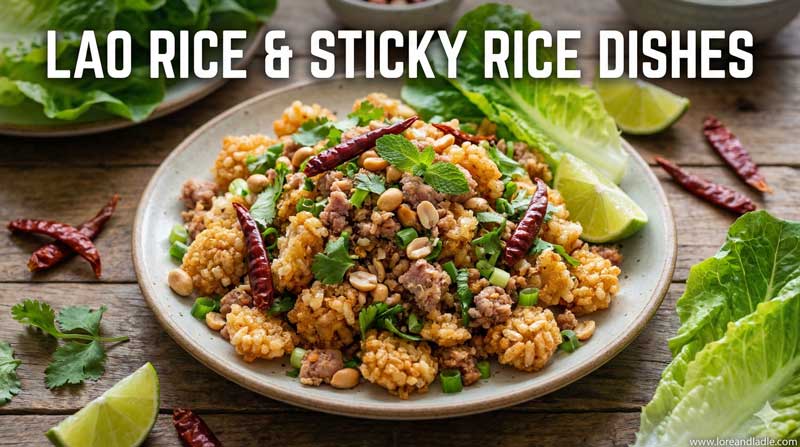
Introduction: Why Lao Rice Dishes Shine in the U.S. This Year
This year invites a savory exploration of Lao rice and sticky rice dishes across the American dining scene. The dishes we celebrate here are valued for their harmony of texture, aroma, and bright herbs. Lao cuisine places Rice at the center of the table, shaping both meals and memories. When you savor a plate built around khao niaw, you taste a culture that cherishes balance, community, and thoughtful preparation.
The Heart of Lao Rice: Sticky Rice and Its Shared Table
Sticky rice, known as khao niao, is more than food; it is a daily ritual. It is steamed until the grains are tender and slightly clingy, ideal for gathering with fingers. This rice forms the anchor for sauces, dips, and grilled meats. In Lao meals, a small fistful of sticky rice often carries a bite of tangy larb or a spoonful of jeow, creating a single, satisfying mouthful. The texture invites slow, mindful tasting, encouraging conversation and connection around the table.
Core Lao Dishes Centered on Rice
Lao cooking celebrates rice in many forms, but these core dishes showcase how rice meets flavor, texture, and freshness:
-
Larb with Sticky Rice: A bright minced meat salad brightens the plate with lime, herbs, and chili, then rests on a bed of sticky rice. The rice softens the tang and balances heat, making each bite complete.
-
Mok Pa: Steamed fish wrapped in banana leaf, seasoned with herbs and spices, often served with a helping of sticky rice. The aroma of the leaf and warm spices invites a comforting, seasonal savor.
-
Or Lam or Herb-Forward Stews: These dishes blend greens, meat, and roots with aromatic herbs. They pair beautifully with sticky rice, inviting the palate to move from fresh to heartier notes in a single meal.
-
Jeow Dips: Lao jeow dips, such as eggplant or chili-based blends, offer a spicy-sour counterpoint that shines when scooped with sticky rice. They highlight the way sauces carry the rice’s quiet sweetness.
-
Tam Mak Hoong (Lao Papaya Salad): A vibrant, crisp salad that balances heat and brightness. When enjoyed with sticky rice, the dish feels lighter and more playful, like a celebration of textures.
These dishes aren’t just meals; they are a dialogue between rice, herbs, and seasonings. Each combination reveals a respect for balance and a love of fresh, clear flavors.
Dishes to Seek in the U.S. This Year
If you are exploring Lao rice and sticky rice dishes in the United States, look for these flavor profiles and serving styles:
-
Sticky rice served with larb and a bright jeow dip. The contrast of cool herb notes with tangy meat creates a memorable duo.
-
Mok Pa or similar steamed fish plates that pair well with a mound of sticky rice, allowing the aroma to shine.
-
A fragrant stew (Or Lam style) that recommends a warm, comforting bite with rice on the side.
-
A tasting platter featuring multiple jeow dips alongside several bites of sticky rice, inviting you to compare textures and heat levels.
-
A Lao-style papaya salad shared with portions of sticky rice, turning a zesty dish into a gentle, social experience.
In American eateries, these experiences are enhanced by fresh herbs, lime, and the careful balance of salt and heat. The result is a kitchen where rice acts as a bridge between flavors.
How to Enjoy Lao Rice At Home or On the Fly
- Take small portions of sticky rice and shape them to scoop sauces or bites of larb.
- Taste a dip with rice before moving to the next bite; the sequence helps you notice the evolving flavors.
- Pair a steamy Mok Pa or Or Lam with a cool, crisp herbal note from fresh herbs such as cilantro or mint.
- Share plates when possible. The beauty of Lao meals often lies in the communal feel and the chance to explore multiple textures together.
The Cultural Value and Culinary Significance
Rice binds Lao culinary practice to daily life. It carries memory, technique, and care from kitchen to table. The act of preparing and sharing sticky rice reflects a tradition of hospitality, patience, and generosity. Dishes built around rice express a philosophy of balance—bright acidity, fragrant herbs, and soft, comforting textures all in one meal. In the U.S., these dishes become bridges: they connect curious eaters with a region’s flavors, textures, and seasonal ingredients, inviting appreciation for Lao culinary artistry.
Closing Thoughts: A Year of Rich Lao Rice Experiences
As you explore Lao rice and sticky rice dishes in the United States this year, you’ll find more than meals. You’ll discover a culture that prizes shared nourishment, careful flavor pairing, and the beauty of a simple grain transformed through skill and heart. Whether you dine at a Lao restaurant or prepare a light home tasting, the rice-centered dishes offer a welcoming invitation to slow down, savor, and celebrate the richness of Lao cuisine.