
Welcome to the Ultimate List of Lao Vegan & Vegetarian Dishes to Explore in the U.S.
This collection invites you to savor Lao plant-based cooking as it shines in the United States. It centers on bright herbs, crisp vegetables, and comforting staples like sticky rice. Each dish here highlights cultural care, seasonal ingredients, and a craftsmanship that makes Lao flavors feel both fresh and timeless. The goal Is a friendly guide you can use to taste, learn, and share.
The spirit of Lao plant-based cooking
Lao vegan and vegetarian dishes honor balance. They trust the harmony of sour, spicy, salty, and herbal notes. They celebrate ingredients grown nearby—fresh peppers, herbs, leafy greens, and ripe vegetables. They invite cooks to taste, adjust, and welcome guests to the table. In this way, meals become a quiet celebration of care, family, and the daily craft of preparation.
Core techniques and ingredients you’ll notice
- Fresh herbs take center stage. Mint, cilantro, dill, and Thai basil lift flavor and aroma.
- Aromatics are layered. Garlic, shallots, lemongrass, and kaffir lime leaf bring brightness.
- The mortar and pestle plays a guiding role. Pounding releases oils and aroma, shaping texture and depth.
- Sticky rice anchors the meal. It pairs with dips, salads, and stews, offering sweetness and balance.
- Sour notes come from lime or tamarind. They brighten vegetables and herbs without heaviness.
- Plant-based substitutes stand in for fish sauce and meat. Soy-based products and mushroom sauces carry savory depth.
The list in practice: Lao vegan dishes to explore in the U.S.
- Tam Mak Hoong (Green Papaya Salad), vegan version
-
This is a vibrant, crunchy dish. Shredded green papaya, green beans, and chilies meet lime and peanuts. A vegan rendition preserves the zing while letting fresh herbs sing. It’s often shared as a bright, everyday centerpiece that feels both festive and everyday at once.
-
Or Lam (Herb and Vegetable Stew), fully plant-based
-
Or Lam is a fragrant stew built on vegetables, mushrooms, and greens. It shows how Lao cooking layers herbs and spices into a comforting bowl. The result is a dish that carries woodland, herbaceous notes with a warm, nourishing finish.
-
Laap with mushrooms or tofu (Larb Veggie)
-
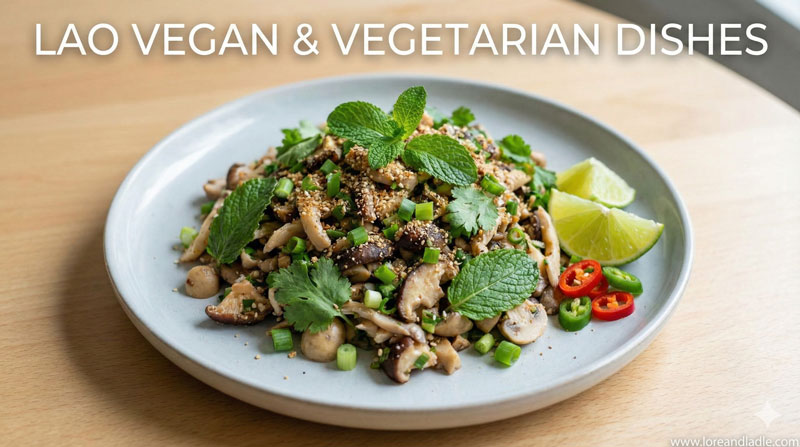
Laap honors texture and herbality. When made with mushrooms or tofu, it becomes a lively, protein-forward salad. It celebrates mint and lime, offering a crisp, herb-forward bite that remains lighter and bright.
-
Nam Prik with vegetables and sticky rice (Chili Dip Platter)
-
Nam Prik is a family-style chili dip. Served with fresh vegetables and sticky rice, it becomes a communal experience. A vegan Nam Prik emphasizes peppers, garlic, and herbs, inviting dipping and sharing.
-
Khao Piak Sen (Rice Noodle Soup), vegan broth
-
A comforting noodle soup built on a clear, fragrant vegetable broth. It’s soothing and nourishing, with soft noodles and crisp greens. In a vegan version, the soup highlights the natural sweetness of vegetables and the warmth of herbs.
-
Vegetarian versions of sticky rice meals
-
Sticky rice is more than a side; it’s a binder for flavors. Vegetarian plates built around sticky rice showcase how Lao cuisine blends textures—from soft rice to crisp vegetables—to create balanced plates that feel light yet satisfying.
-
Fresh herb salads and pickles
- Beyond the big dishes, Lao cooking embraces crisp salads, herb-forward picks, and tangy relishes. These accompany main dishes and invite guests to savor contrasts in flavor, aroma, and texture.
How to explore these dishes in the United States
- Seek Lao-owned eateries and restaurants that feature plant-forward menus. Ask about vegan options or vegetarian adjustments.
- Look for menus that highlight Tam Mak Hoong, Or Lam, Laap, Nam Prik, and Khao Piak Sen variants. If a dish isn’t marked vegan, many kitchens will adapt with vegetable stock and plant-based toppings.
- Try a tasting sampler. A small plate of Tam Mak Hoong, a bowl of Or Lam-inspired vegetables, and a dip platter with Nam Prik can reveal how Lao flavors interact across courses.
- Pair with sticky rice and fresh herbs. The rice base anchors flavors and creates a cohesive experience that mirrors Lao dining etiquette—sharing, balance, and care.
The cultural value of Lao vegan and vegetarian dishes
- Community meals and shared plates. These dishes are often enjoyed together, fostering conversation and connection.
- Seasons and freshness. The emphasis on fresh herbs and vegetables mirrors harvest cycles and regional produce.
- Respect for balance. The careful mix of sour, spicy, salty, and herbal notes reveals a philosophy of harmony in daily life.
- Craft and tradition. The mortar and pestle, the quick chop, and the precise mix reflect skill handed down through families and cooks.
- Accessibility and hospitality. Plant-based Lao dishes offer approachable flavors that welcome many palates while keeping the integrity of Lao taste.
Practical tasting tips
- Start with Tam Mak Hoong to feel the bright, crisp side of Lao flavors.
- Move to Or Lam for depth and warmth, then finish with Nam Prik and vegetables for a refreshing contrast.
- Listen for the balance in each bite: lemony sour, chili heat, earthy herbs, and a gentle saltiness.
- Pair with cold water or a light herbal tea to cleanse the palate between bites.
- If you’re cooking at home, gather fresh herbs and a small mortar and pestle to experience the scent and texture that define Lao vegan dishes.
A respectful invitation to explore
The Ultimate List of Lao Vegan & Vegetarian Dishes to Explore in the U.S. is an invitation to discover cuisine that honors plant-based ingredients, family kitchens, and shared meals. It celebrates how Lao cooks shape plates with clarity, rhythm, and warmth. Whether you’re new to Lao flavors or revisiting them, this collection offers a thoughtful path to appreciating cultural richness through food.
Closing thought
Food carries memory and meaning. Lao vegan and vegetarian dishes in the U.S. show how simple ingredients become expressive plates. They invite you to taste carefully, to observe the balance of flavors, and to share the experience with others. Welcome to a journey of flavor, craft, and connection.