
Introduction
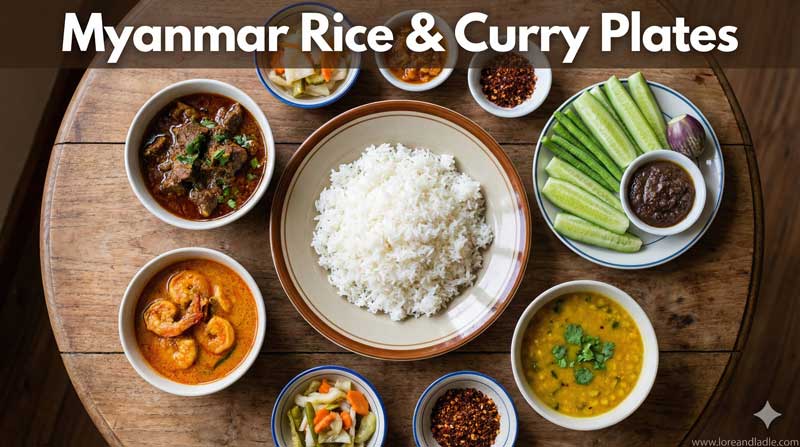
This post introduces the dish Best Myanmar Rice & Curry Plates Loved in the U.S. Right Now. The plate centers on a steaming bed of jasmine rice, paired with a quartet of curries and bright accompaniments. In the United States, diners are discovering its balance of comforting texture and lively spice. The dish offers more than sustenance; it speaks to careful preparation, seasonal ingredients, and the joy of sharing a well-rounded meal.
Core Elements of the Plate
A Burmese rice and curry plate typically presents several components that work in harmony:
- Htamin, the rice: Fluffy, fragrant jasmine rice forms the foundation. It invites gentle soaking up of sauces and gives a neutral canvas for bold flavors.
- Curry varieties: Chicken, fish, beef, or vegetable curries appear in separate bowls. Each curry is rich with aromatics such as onion, garlic, ginger, and spices, sometimes brightened with lemongrass or lime. Some curries lean toward a coconut-enhanced finish, while others stay lean and savory.
- Lentil or legume curry: A dal or lentil curry adds protein and a comforting, earthy note that grounds the plate.
- Vegetables and greens: A stir-fry or simmered vegetable dish brings color and crunch, balancing the softness of rice and curries.
- Pickles and relishes: Small bright condiments, pickled vegetables, or a tangy relish wake the palate between bites.
- Flavor boosters: A touch of fish paste or fermented seasoning can deepen the savor, while fresh herbs and a squeeze of lime finish the plate.
- A light salad or fresh sides: Cucumber rounds, tomato slices, or herbaceous garnishes provide cooling contrasts.
These elements are assembled with care, so each spoonful can shift from creamy warmth to crisp brightness.
Flavor Palette and Culinary Techniques
The plate showcases a thoughtful balance of flavors and textures:
- Savory and aromatic: The curry bases build depth with onions, garlic, turmeric, and other spices.
- Bright and tangy: Fresh herbs, lime, and pickles brighten the plate, preventing heaviness.
- Mild heat to gentle warmth: Chiles or pepper sauces add lift without overpowering the dish.
- Textural variety: The tenderness of curry meets the bite of vegetables and the softness of rice, with occasional crisp pickles for contrast.
Culinary technique centers on layering: bloom spices in oil, slow-simmer sauces to develop depth, and finish with fresh elements for lift. The result is a plate that feels both comforting and lively, inviting repeated tasting.
Cultural Value on the Table
This dish embodies everyday dining as an art of balance. It emphasizes:
- Variety in one plate: A medley of proteins, vegetables, and sauces mirrors a well-rounded diet.
- Everyday hospitality: Preparing a plate with several small components shows care and generosity.
- Seasonal freshness: Markets supply a rotating array of vegetables and herbs, keeping the plate vibrant through seasons.
- Shared eating experience: Even when served individually, the plate reflects an ethos of abundance and community.
The beauty lies in how colors, aromas, and textures converge to tell a story of home cooking and regional ingenuity, all in a single, satisfying meal.
The Plate in the United States Today
Across the United States, Burmese rice and curry plates are finding enthusiastic audiences. Chefs highlight bright herb notes, delicate curries, and the comforting appeal of a well-balanced meal. In many cities, restaurants present the plate with careful plating that showcases color and variety, inviting guests to explore different curried Flavors in one sitting. The enduring appeal comes from its accessibility—simple, legible components that come together with warmth and care.
How to Enjoy a Myanmar Rice & Curry Plate
To fully appreciate the experience, try this approach:
- Begin with a inhale of the aroma from the rice and curries. Observe how spices mingle with herbs.
- Taste a bite of plain rice, then a bite with a single curry. Notice the contrast in texture and intensity.
- Mix small portions of vegetables and pickles with each bite to keep flavors bright.
- Add a squeeze of lime or a dab of a salty relish to shift the balance as you go.
- End with a spoon of dal or a lighter curry to round out the meal.
This sequence helps you savor the harmony between comfort and brightness that defines the plate.
Home Variations to Try
If you want to recreate a Myanmar rice and curry plate at Home, keep these ideas in mind:
- Start with good rice: Rinse, soak briefly, and cook until each grain remains separate and fragrant.
- Choose two curry bases: One meat or fish curry for protein and one vegetable or lentil curry for texture.
- Add a bright side: A cucumber salad or tomato slices with a light dressing prevent fatigue in the palate.
- Include a tangy accent: A small amount of pickled vegetables or lime juice wakes the plate.
- Finish with herbs: Fresh cilantro or chopped scallions provide a fresh note just before serving.
These steps yield a balanced, inviting plate that is easy to adapt to available ingredients.
Conclusion
Best Myanmar Rice & Curry Plates Loved in the U.S. Right Now celebrate balance, color, and hospitality. The dish invites you to slow down, savor each bite, and appreciate how diverse ingredients come together to form a cohesive, comforting meal. By highlighting rice as a canvas and curries as character, the plate becomes a bridge between kitchens and markets, between family meals and restaurant menus. If you are curious about Burmese flavors, this plate offers a welcoming and delicious introduction.