
Introduction
Taiwanese cuisine shines through bright flavors, precise technique, and a spirit of sharing. The collection Best Taiwanese Chicken And Pork Favorites Dishes That Are Trending Right Now highlights dishes that center on chicken and pork, while celebrating cultural craft. This post invites you to explore how these plates reflect everyday life, seasonal ingredients, and the joy of gathering around a table. Each dish offers a window into Taiwan’s food culture, where comfort and craft meet in approachable, vibrant bites.
Cultural Value in Taiwan’s Chicken and Pork Dishes
These dishes reveal a culinary philosophy built on balance, aroma, and technique. The cooks weave soy, rice wine, sugar, garlic, and spices to create layers of savor and warmth. Flavors are deliberate, not loud, so every bite carries a sense of place. Equally important is the shared nature of the meals: plates are passed, bowls are refilled, and conversations flow as freely as the steam rising from the pan. The street and the home meet in these favorites, showing how skilled hands transform humble ingredients into comforting rituals. In this tradition, texture matters as much as taste—crisp husks, tender braises, and silky sauces all play a role. Finally, the dishes echo a respect for seasonality and provenance, with fresh pork, chicken, and greens often guiding the day’s simplest yet most satisfying meals.
Dishes That Define the Trend
Below are the standout favorites in the collection, each with its own cultural note and culinary signature. These dishes exemplify how Taiwan’s cooks celebrate chicken and pork through technique, aroma, and sharing.
Three-Cup Chicken: A Balancing Act
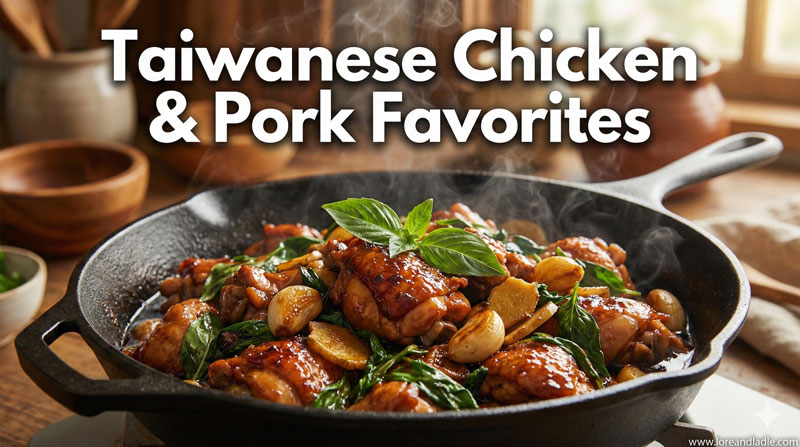
Three-Cup Chicken is a hallmark of Taiwanese Home Cooking. It braises chicken in equal parts of soy sauce, rice wine, and sesame oil, with garlic and a handful of basil. The result is a glossy, fragrant dish where savory depth meets a bright finish from the fresh herb. The method invites slow, patient simmering, letting flavors meld until the meat is tender and the sauce clings to every piece. This dish speaks to a philosophy of harmony—richness from the sesame oil and soy, warmth from the rice wine, and a fresh lift from basil. It’s comfort with a confident, well-seasoned backbone.
Lu Rou Fan: Comfort in a Bowlof Braised Pork
Lu Rou Fan, or braised pork over rice, is a beloved everyday classic. Pork belly is gently braised in a soy-sugar blend, often with aromatics like star anise and a touch of sugar to caramelize the glaze. The result is pork that is deeply flavorful yet silky, served over steaming rice so the sauce soaks in with every bite. This dish embodies homey generosity: simple ingredients elevated through careful simmering and patience. It also represents a shared kitchen tradition, where families learn the rhythm of braising and the joy of feeding others with warmth and care.
Gua Bao: A Pillowed Bun of Shared Pleasure
Gua Bao, the Taiwanese pork belly bao, is a celebration of texture and balance. A soft, steamed bun cradles tender braised pork, crisp pickled greens, cilantro, and crushed peanuts for a pop of crunch. The pork often carries soy and spice, offering a savory backbone that contrasts with bright pickles and fresh herbs. Gua Bao showcases how a single snack can become a canvas for flavor contrast and personal customization. It is a favorite for gatherings, street stalls, and cozy meals alike, inviting everyone to build their own bite by bite.
Taiwanese Popcorn Chicken: Crisp, Fragrant, and Social
Taiwanese Popcorn Chicken, a staple at night markets and snack stalls, celebrates bite-size crunch and aromatic seasoning. Pieces of chicken are marinated with soy, garlic, and five-spice, then dusted and fried until crisp. Fresh basil or fried basil leaves add an herbal lift. The dish’s popularity rests on its immediacy and shareable nature: hot, fragrant morsels passed around a table or shared among friends on a stroll. It captures the lively spirit of casual, social eating that animates Taiwan’s street food scene.
Sweet and Sour Pork: Bright, Tangy, and Family Favorite
Sweet and Sour Pork, or Gu Lao Rou, presents a sunny balance of crisp pork, tangy glaze, and a playful mix of textures. The pork is battered and fried, then slicked with a glossy sauce that carries a gentle sweetness tempered by tart notes. This dish resonates as a family favorite, a dish that travels well from kitchen to table and from casual meal to celebratory spread. It highlights how Taiwan’s cooks fuse sweetness and acidity to produce a bright, comforting finish that remains easy to share.
The Craft of Balance: Flavor, Texture, and Aroma
What ties these dishes together is a shared pursuit of balance. The chefs layer salty, sweet, sour, and umami to create a chorus of flavors. Texture plays a starring role—from crackly crusts to tender braises and luscious sauces. Aromatics like garlic, ginger, and basil weave through the dishes, carrying fragrance that wakes the senses before the first bite. These elements show how technique and restraint can transform familiar ingredients into memorable experiences.
Social Eating and Presentation
In Taiwan, food is inherently social. Dishes are designed to be shared, whether at a busy night market or a quiet family table. Visual appeal matters too: glossy sauces, a hint of green from herbs, and a careful balance of colors make the plates inviting. Packaging and service in casual settings emphasize approachability—these foods invite conversation, curiosity, and a sense of welcome. The presentation reinforces the idea that good food should be both beautiful and accessible.
Conclusion
The Best Taiwanese Chicken And Pork Favorites Dishes That Are Trending Right Now collection offers more than delicious bites. It presents a living tapestry of culture, technique, and community. Each dish reflects a careful craft that honors humble ingredients while inviting everyone to participate in a shared meal. If you seek a window into Taiwan’s food culture, these chicken and pork favorites offer warmth, character, and a lasting sense of belonging at the table.