
A Warm Welcome to Taiwanese Desserts for Family Dinners in America
This post explores the Best Taiwanese Desserts And Sweet Treats Ideas for Family Dinners in America. It highlights how these treasures express culture through texture, flavor, and care. Each dish invites sharing, conversation, and a sense of togetherness at the table.
The Art of Texture, Aroma, and Balance
Taiwanese desserts delight with contrasts. Silky tofu puddings meet bold syrups. Chewy taro balls pop against smooth soups. Crisp pastry meets soft fillings. These textures come from careful technique and seasonal ingredients. The result is dessert that feels comforting, refined, and inviting.
A Short List of Iconic Desserts
- Douhua (silken tofu pudding) with brown sugar syrup and sesame toppings. Its pale smoothness pairs with a syrup that sings of caramel notes. This dish teaches balance between gentle flavor and a sweet finish.
- Ai-yu jelly with honey or lemon syrup. Made from fruit jelly, it stays cool and bright. It refreshing the palate on warm days and with fruit, it shines.
- Grass jelly with syrup and pearls. The herbal coolness offers a calm counterpoint to richer foods. It showcases simplicity done well.
- Red bean soup (hong dou tang). A creamy, earthy sweetness that feels cozy. It invites slow enjoyment and pairs nicely with a subtle salt snack.
- Taro balls in sweet soup or shaved ice. Chewy bites of warm root flavor brighten the bowl. They add color and texture to the dessert course.
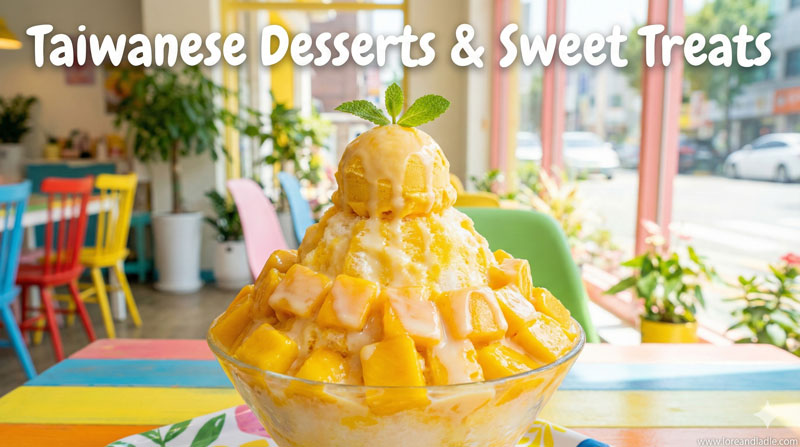
- Mango shaved ice (bao bing) with fresh mango. A sunny, fruit-forward experience. The shaved ice carries a delicate milk note that complements the mango.
- Pineapple cake (pineapple pastry). A buttery crust with bright pineapple filling. It is a beloved gift and a familiar taste of home comfort.
- Sun cake (taiyanggao). A flaky crust around a maltose filling. Crisp edges and a mellow center show the craft of Taiwan’s pastry tradition.
- Nian gao (sticky rice cake). Soft, chewy, and subtly sweet. It speaks to celebrations, yet it’s enjoyed year round in homes as well.
- Mochi and mochi-inspired treats. Glutinous rice dough with various fillings or coatings. Chewy texture and gentle sweetness make it a versatile finish.
How to Enjoy These Desserts at American Family Dinners
- Serve in small, tasting portions. This invites everyone to try several flavors and textures.
- Pair with a light tea or a mild coffee. The warm drink balances the sweetness and accents delicate aromas.
- Offer toppings on the side. Syrups, sesame seeds, or fruit bits let guests customize their bowls.
- Present a small platter of two or three options first. Then offer a second round with a new texture or color to keep table conversation lively.
- Keep ingredients fresh and visible. Clear bowls and neat toppings show care and hospitality.
Cultural Value and Culinary Significance
These desserts communicate care, season, and craft. They honor simple ingredients kept pure, and techniques honed over time. Sharing these sweets at a family table in America creates a moment of connection, where flavor becomes a bridge between everyday life and cherished traditions. The emphasis on texture, aroma, and balance reflects a philosophy of restraint and refinement. In every bite, there is a story of careful preparation, family-minded sharing, and an appreciation for bright, comforting flavors.
Conclusion: A Sweet Bridge Between Cultures
The Best Taiwanese Desserts And Sweet Treats Ideas for Family Dinners in America celebrate warmth, craft, and community. They invite families to explore new flavors while preserving familiar joys. With thoughtful preparation and mindful serving, these desserts become a welcoming centerpiece for memories in the making. Enjoy the beauty and culinary significance as you welcome sweetness to the table.