
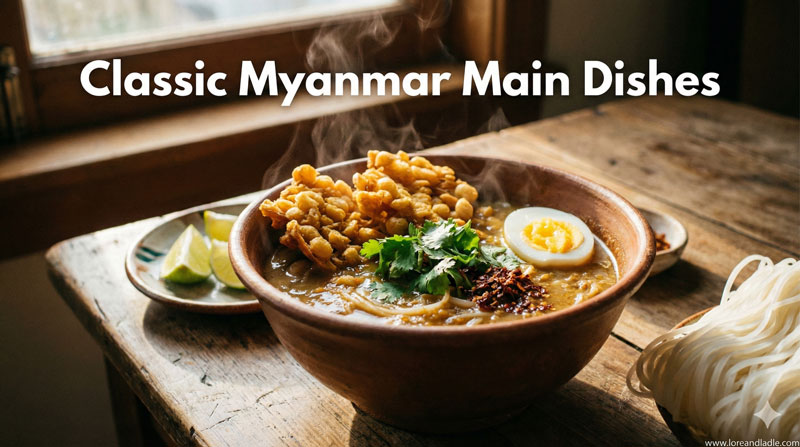
Introduction to the dish
Today we explore the dish “Trending Classic Myanmar Main Dishes Dishes in the U.S. This Year.” This name reflects a year of lively home cooking and restaurateur interest that brings Myanmar’s main-course traditions to American tables. The dish stands as a bridge between regional flavors and everyday meals. It invites cooks to celebrate fragrant ingredients, balanced spice, and thoughtful technique. In this post, we look at its cultural value and culinary significance, separate from trends and headlines, and focus on what makes it special in the kitchen and at the table.
The core flavors and the cooking craft
This dish centers on a harmony of aromas. Fresh lemongrass, garlic, shallots, and a carefully prepared spice paste lead the way. Ginger and turmeric add warmth, while coconut milk lends a gentle creaminess. The cooking method often blends pounding, simmering, and careful reduction. Each step builds depth without masking brightness. The technique honors patience and precision, two qualities that guide many Myanmar kitchen traditions. The result is a main course with clean, vibrant notes that invite second helpings and thoughtful savoring.
Cultural value in everyday life
In Myanmar kitchens, meals are moments of gathering and care. A main dish like this is rarely just sustenance; it is a shared experience. Families cook together, teaching younger cooks How to balance salt, sour, and sweet. The dish also reflects respect for seasonal ingredients and regional varieties. It demonstrates hospitality—how guests are welcomed with a dish that feels both familiar and new. The dish thus serves as a thread—linking generations, families, and communities in a common, comforting culinary language.
Culinary significance and technique mastery
Culinary significance shines through technique. The spice paste often carries a rhythm of pounding and blending that unlocks the dish’s fragrance. The use of coconut milk provides body, while acidity from lime or tamarind brightens the palate. Texture matters: tender meat or fish, with vegetables or noodles, contrasts with a silky sauce. This balance of texture, aroma, and hue makes the dish a showcase for a cook’s skill, timing, and understanding of harmony in flavor. In the U.S., chefs emphasize accessibility—yet they preserve the core technique, proving that authenticity can travel without losing its essence.
Ingredient stories and regional echoes
Key ingredients tell stories of place. Lemongrass and shallots bring a fresh, clean sweetness. Garlic offers bite, and galangal lends a citrus-ginger note. Fish, chicken, or vegetables provide a versatile canvas for the sauce. Fermented fish paste or shrimp paste sometimes appears in the background, adding a savory depth that is deeply Myanmar in character. Coconut milk rounds out the richness, linking coastal and inland influences. The dish celebrates how diverse ingredients can come together, each contributing a distinct voice to the whole.
Serving traditions and pairings
Serving ideas underscore cultural hospitality. A bright, citrusy squeeze at the table heightens the dish’s aroma. Mild pickles or fresh herbs can accompany the main plate, offering crisp contrast. Side elements like steamed rice or flat noodles often anchor the meal, letting the main dish shine. Some households finish with a touch of chili oil for heat, while others prefer a gentle, warm spice only. The result is a plate that feels complete and inviting, ready to be shared among family and friends.
How to enjoy this dish at home
For home cooks in the U.S., approachable substitutions keep the spirit intact. Use fresh lemongrass, garlic, and shallots; blend them into a fragrant paste. If a traditional paste is hard to find, a well-made spice blend with turmeric, coriander, and a hint of chili works well. Coconut milk is widely available and blends smoothly with stock or water to achieve the sauce’s body. Simmer slowly to develop depth, then finish with a bright citrus touch. Serve with jasmine rice or your preferred grain for a balanced meal.
An invitation to explore and appreciate
The dish “Trending Classic Myanmar Main Dishes Dishes in the U.S. This Year” is more than a meal. It is a gateway to Myanmar’s culinary language, a celebration of shared kitchens, and a testament to how cooking can travel with care and authenticity. It invites readers to explore flavors with curiosity, to honor culinary craft, and to enjoy a dish that speaks softly of place, family, and seasonal abundance. By savoring it, you join a warm, respectful thread in the tapestry of global food culture.