
Introduction
This Year brings a comforting wave of aroma and color to American tables through the spotlight on Trending Myanmar Chicken Recipes Dishes in the U.S. This Year. The collection honors Burmese culinary traditions while inviting Home Cooks to explore delicate balance, bright herbs, and slow-simmered depth. The dishes honor everyday hospitality, shared meals, and the quiet joy of kitchen creativity. Above all, they celebrate the cultural value of Burmese cooking: a language of flavor that speaks warmly to the senses and to the heart.
The Heart of Burmese Chicken Cooking
Burmese chicken cooking centers on harmony. Fresh herbs meet warm spices, and bright citrus joins earthy roots. Common flavors include garlic, shallots, turmeric, and ginger, layered with lemongrass and chilies for gentle heat. Fish paste or fish sauce add a savory depth, while lime juice or tamarind brings a touch of tang. Coconut milk can soften richness, and a handful of cilantro or Thai basil finishes the dish with a bright finish. This combination creates a balanced profile that is both comforting and refreshing. The result feels accessible to home kitchens in the United States while preserving a distinct cultural voice.
Signature Dishes and Their Allure
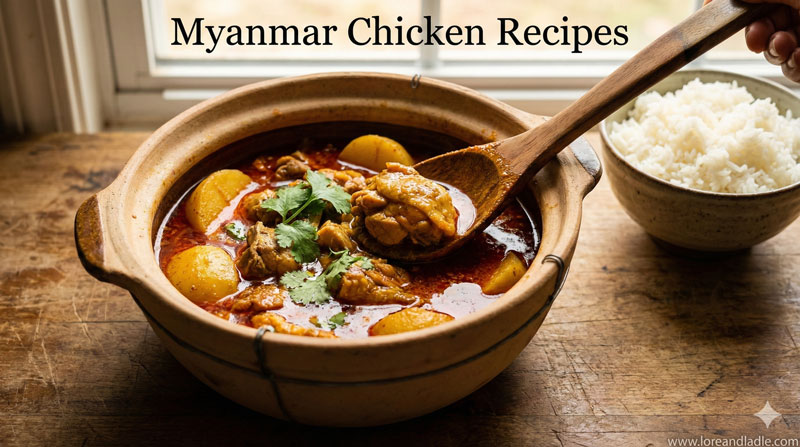
The trend showcases a few core forms that frequently appear in Burmese Home Cooking. First, aromatic chicken curries simmer gently in a fragrant sauce, letting turmeric and spices bloom without masking the chicken’s sweetness. Next, grilled or pan-seared chicken dishes highlight the aroma of lemongrass and citrus, offering crisp texture and a clean finish. Additionally, herb-rich salads and light chicken preparations provide cool counterpoints to warmer curries, emphasizing fresh vegetables and bright herbs. Across these variations, soft textures, layered seasonings, and careful timing create dishes that feel familiar and exotic at once. This year’s trend in the U.S. loves thoughtful marinades, patient simmering, and careful balance between salt, sour, and heat—key markers of Burmese culinary artistry.
Techniques that Elevate Burmese Flavor
Equally important are the techniques that bring these dishes to life. Marination is common, allowing garlic, ginger, turmeric, and lime zest to permeate the meat. Slow simmering unlocks depth, while quick sears seal in juices and introduce a caramelized edge. Fresh herbs are added at the end to keep brightness intact. In practice, a simple plan works well: marinate briefly, then brown the chicken for texture, finish with a bright sauce, and rest before serving. These methods emphasize patience, respect for ingredients, and a thoughtful approach to heat, all of which resonate with cooks seeking authentic yet approachable meals.
Cultural Value and Culinary Significance
The dishes highlighted in this trend carry cultural value beyond taste. They reveal stories of everyday life, family meals, and shared recipes passed down through generations. Burmese cooking often centers on balance and hospitality. A meal is not just sustenance; it is an invitation to connect, to slow down, and to savor every bite with friends and loved ones. In addition, the flexibility of Burmese chicken dishes—how they adapt to available ingredients, seasons, and personal preferences—speaks to a culture of resourcefulness and creativity. This year’s popularity in the United States reflects a growing appreciation for these qualities: warmth, balance, and a sense of place in every plate.
Pairings, Presentation, and Serving Traditions
Traditionally, Burmese chicken dishes shine beside steamed rice or fluffy jasmine rice, which acts as a perfect canvas for the sauce. Fresh herbs such as cilantro, mint, or basil brighten the plate, while pickled vegetables add a crisp, sour note. Slices of lime or wedges invite personal adjustment at the table, reinforcing the idea that meals are shared, customizable experiences. Plating often emphasizes color contrast: pale chicken, deep golden sauces, vibrant greens, and ruby chilies. This attention to presentation reinforces the cultural value of hospitality and care in every dish.
Bringing Burmese Flavor to Your Table
Home cooks in the United States can honor these dishes with simple steps. First, stock a small core of ingredients: garlic, shallots, turmeric, lemongrass, chilies, fish sauce, lime, and coconut milk. Next, choose a cooking approach that fits your schedule: a quick skillet version for weeknights or a slow-simmer curry for weekends. The key is balance: taste and adjust salt, sour, and heat gradually. Finally, celebrate with fresh herbs and a bright squeeze of lime. With these elements, you can recreate the essence of Burmese chicken cooking and enjoy it in your own kitchen, while keeping the experience respectful of its cultural roots.
How to Appreciate the Cultural Significance
Appreciation grows when we explore the background of flavors with curiosity and kindness. Encourage conversations at the table about ingredients, textures, and aromas. Try variations using locally available produce while preserving the core idea of harmony in seasoning. By focusing on technique, balance, and hospitality, you honor the cultural value embedded in Burmese chicken dishes. The result is a shared culinary moment that respects tradition and invites personal expression.
Practical Tips for Beginners
- Start simple: a fragrant chicken curry with turmeric and garlic.
- Use fresh herbs near the end for maximum brightness.
- Balance flavors slowly; you can always add more salt or lime.
- Pair with plain white rice to let the sauce shine.
- Experiment with garnishes like cilantro, sliced chilies, or a splash of coconut milk.
Conclusion
Trending Myanmar Chicken Recipes Dishes in the U.S. This Year showcase a flavorful bridge between Burmese culinary heritage and contemporary home cooking. The focus on fragrance, balance, and hospitality makes these dishes welcoming and enduring. They remind us that food can be a quiet celebration of culture, skill, and shared meals. By exploring these recipes, you join a tradition that values warmth, care, and the beauty of simple, well-crafted flavors. Embrace the journey, savor the aroma, and let Burmese chicken cooking enrich your table with grace and joy.