
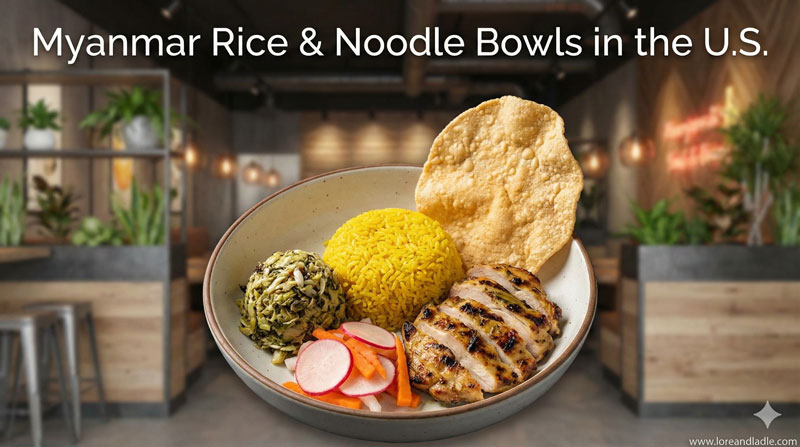
Trending Myanmar Rice & Noodle Bowls in the U.S. This Year
Myanmar rice and noodle bowls have found a bright spot on modern menus. They welcome diners with bold aromas, warm textures, and bright balance. This post highlights their cultural value and culinary significance, inviting you to savor the craft behind each bowl.
Core Elements of the Bowls
These bowls center on harmony. The base usually features rice or rice noodles, giving a soft, comforting foundation. Flavors rise from a careful blend of sour, salty, spicy, and umami notes. Common elements include fish sauce, ngapi (fermented shrimp paste), lime or tamarind for brightness, and turmeric for warmth. Fresh herbs bring lift, while toasted garlic, onions, and peanuts add texture. A finishing drizzle or crunch ties the bowl together.
- Rice or rice noodles as the stage for flavor.
- A flavor backbone built from ngapi or fish sauce, along with citrus or sour notes.
- Aromatic herbs and crisp toppings for contrast.
- A gentle, thoughtful spice level that invites exploration rather than overwhelming.
- A balance of smooth broth or sauce with chewy noodles and tender grains.
These bowls honor technique as much as taste. Chefs layer ingredients to reveal different textures in every bite. The result is a bowl that feels both comforting and exciting.
A Gallery of Variations You May See
In U.S. kitchens and restaurants, these bowls adapt to local tastes while keeping Burmese roots intact. Expect combinations such as:
- A comforting coconut-curry base poured over rice or wide noodles.
- A light, bright broth enriched with lime, herbs, and a touch of aromatic spices.
- Toppings like fried garlic, crushed peanuts, and fresh cilantro that add crunch and fragrance.
- A balance of warm, silky elements with crisp, fresh accents.
Each variation celebrates a different facet of Burmese cuisine, yet all share the same heart: a bowl that welcomes conversation and slows the moment to savor.
Techniques that Elevate the Dish
The beauty of these bowls lies in technique as well as ingredients. Chefs pay attention to:
- Texture: achieving both tender noodles and crisp toppings.
- Depth: layering ngapi or fish sauce with citrus to create a bright baseline.
- Freshness: using herbs and vegetables at their peak for color and aroma.
- Simplicity: letting a few strong flavors shine without overcrowding the palate.
By guiding these elements with care, chefs transform simple components into a memorable dining experience.
Cultural Value: Hospitality, Tradition, and Everyday Joy
These bowls embody a spirit of hospitality. They welcome people to gather, share, and enjoy a meal without ceremony. The bowls reflect everyday life—market produce, home kitchens, and small eateries where flavor is the main language. They celebrate seasonality, local ingredients, and the joy of balancing flavors that feel both timeless and contemporary.
In addition, the bowls offer a respectful window into Burmese culinary artistry. They honor slow, deliberate cooking methods and the art of layering flavors. Diners leave with a sense of warmth and curiosity—a quiet invitation to explore more about Burmese food culture.
How to Enjoy These Bowls
- Savor the aroma before the first bite; take small tastes to notice balance.
- Mix slowly to appreciate how toppings, broth, and noodles interact.
- Pair with a light tea or a citrus beverage to mirror the dish’s brightness.
- Notice how herbs lift the dish and how a touch of heat elevates the finish.
These practices help you experience the full spectrum of flavors and textures.
Tips for Home Cooks
Try these practical steps to bring a Myanmar-inspired bowl to your table:
- Start with a simple base: rice or noodles, then build the sauce with small amounts of ngapi or fish sauce.
- Keep citrus at the ready for bright pops of flavor at the table.
- Toast nuts and garlic for texture, but add them just before serving to stay crisp.
- Use fresh herbs generously; they transform the bowl with fragrance and color.
- Adjust heat gradually to suit your preference, while preserving the dish’s balance.
With patience and curiosity, you can recreate the spirit of these bowls at Home.
Final Thought: A Bright Thread in Modern American Food Culture
Trending Myanmar rice and noodle bowls add a bright thread to contemporary dining. They bring grace, texture, and a thoughtful balance of flavors that elevate everyday meals. As more kitchens explore these bowls, they become celebrations of craft, hospitality, and shared enjoyment. Open your palate, try a bowl, and let the flavors guide you through a small but meaningful journey into Burmese culinary heritage.