
5 Indonesian Soups & Stews to Try If You Love Bold Indonesian Flavor
Indonesia offers a vibrant pantry of soups and stews. This collection celebrates five iconic bowls and potages. Each dish reveals culture through ingredients, craft, and shared meals. They show how regional pride and household skill shape flavor. Explore these bowls to taste the heart of Indonesian cooking.
Soto Ayam: A Bright Start to Bold Flavors
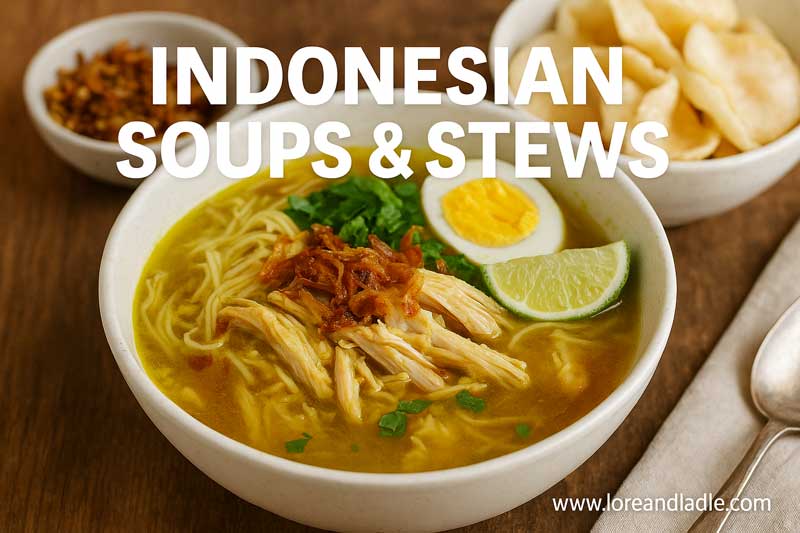
Soto Ayam opens the palate with clarity and warmth. The broth balances turmeric, lemongrass, and lime leaves. Garlic and shallots build a gentle depth. The soup comes alive with a squeeze of lime and a sprinkle of fried shallots. It is typically served with steamed rice, a halved boiled egg, and fresh herbs. Vendors and families tune the recipe to local markets, creating comforting variations. Soto Ayam embodies daily life, quick meals, and the care cooks invest in a fast, fragrant bowl.
Rawon: The Black Broth That Speaks of East Java
Rawon is famous for its dark, glossy broth. The color comes from kelu seeds, not soy or soy sauce. Beef or sometimes brisket is simmered until tender. The broth carries garlic, coriander, and a hint of dark sweet spices. It is usually enjoyed with rice, bean sprouts, and emping crackers. A side of sambal adds heat to the profile. Rawon centers East Java’s culinary voice, where markets and home kitchens share the same beloved recipe. Each spoonful carries a sense of place and tradition.
Soto Betawi: Creamy Jakarta Comfort
Soto Betawi echoes the city life of Jakarta with a creamy touch. Coconut milk hydrates a balance of spices and stock. Beef, offal, or a mix of both offer a hearty base. Tomatoes brighten the bowl, while aromatic herbs lift the aroma. The texture is silky, yet the flavors stay bold and clean. It is a favorite for family dinners and festival stalls alike. Across neighborhoods, vendors adapt the recipe with local tricks, keeping the dish fresh while honoring its Betawi roots. Soto Betawi shows how urban cooking can honor tradition with modern comfort.
Rendang: A Slow-Cooked Crown of Spice
Rendang is a rich, slow-cooked beef stew that deepens with time. Coconut milk and a bold spice blend mingle with lemongrass, galangal, turmeric, and chili. The meat becomes tender, almost lacquered, as flavors concentrate. The cook’s patience is visible in the kitchen as the sauce reduces slowly. This dish is a centerpiece at festive meals and family gatherings. It travels through homes via shared recipes and careful technique. Rendang showcases craft, texture, and aroma, proving how depth grows with time and care. It embodies pride in regional spice artistry and the joy of a deliberately prepared feast.
Sup Buntut: Oxtail Soup of Comfort and Craft
Sup Buntut offers a hearty, comforting finish to the set. Oxtail braises slowly with onions, garlic, and a chorus of spices. Carrots and potatoes join the pot, giving body and sweetness. The broth fills the room with warm scent as it thickens. Lime and fresh herbs finish the bowl, brightening every bite. This soup appears in both homes and restaurants, celebrating hospitality and shared meals. It highlights the skill of layering flavors through long simmering. Sup Buntut honors the Indonesian habit of turning simple ingredients into a soulful, satisfying meal.
Conclusion
Together, these five soups and stews reveal how Indonesian flavor grows from place, practice, and people. They show regional pride in every spice, herb, and pairing. They invite cooks to gift time and technique to a bowl. With accessible ingredients and patient methods, these dishes welcome you to taste Indonesia’s bold, balanced food culture.