
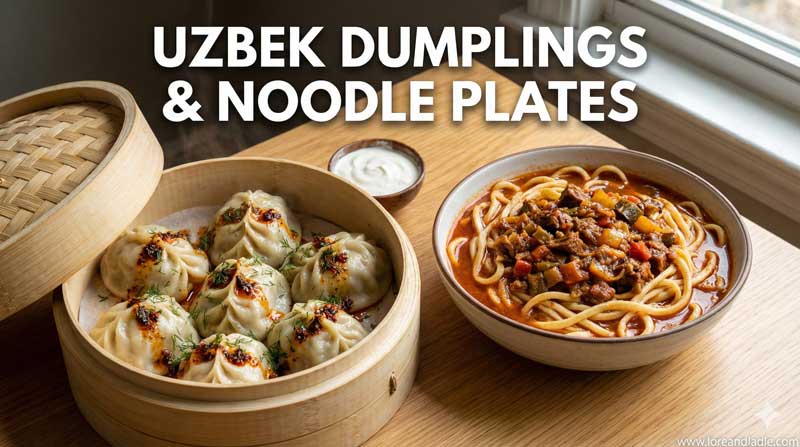
Introduction: A Dish Born from Uzbek Flavor
Inspired by Tukhum Barak – Uzbekistani Dumplings & Noodle Plates Flavor You’ll Love is more than a plate. It is a warm invitation to Uzbek cuisine’s heart. The dish brings together dumplings and noodles in a single, joyful presentation. You taste tender wrappers, savory fillings, and softly textured noodles. The result is comforting, bright, and deeply connected to everyday kitchens and festive gatherings.
The Spirit of Tukhum Barak in a Modern Plate
Tukhum Barak evokes a kitchen where craft and care meet. In this inspired dish, that spirit lives in each bite. Dumplings, filled with meat and fragrant onions, meet noodles that carry a gentle bite and a sheen of flavored oil. The plate becomes a conversation between two familiar textures and shapes. It celebrates balance—soft yet firm, mellow yet vivid—much like Uzbek meals that welcome all at the table.
Cultural Value: Food as Hospitality and Family
Uzbek cuisine thrives on hospitality, and this dish mirrors that ethic. Families learn dough is made together, fillings are seasoned with love, and the steaming pot or spooned broth becomes a shared moment. Children watch adults shape dumplings, then dip pieces into yogurt or broth. Elders impart memory through spices, guiding hands with dill, cumin, and garlic. The dish thus carries stories of home, seasonal markets, and the pride of well-made food passed from one generation to the next.
Culinary Significance: Techniques, Taste, and Texture
The dish highlights key culinary ideas in Uzbek cooking. Dumplings bring a delicate wrapper that becomes almost silky when steamed or boiled. The meat filling offers depth with onions, herbs, and ground spices. Noodles add a contrasting bite—slightly springy, with a whisper of nutty flour. Herbs such as dill and a hint of cilantro brighten the plate, while yogurt or a light broth adds cool creaminess. This combination shows how Uzbek cooks layer flavors and textures to create harmony on one plate.
Ingredients and Craft: What Makes It Distinct
Core elements include lean ground meat, onions, garlic, and a chorus of fresh herbs. The dumpling dough blends flour, water, and a pinch of salt, rolled thin for a tender bite. Noodles are hand-cut or carefully rolled to achieve a balanced chew. Aromatics—cumin, black pepper, and sometimes coriander—lend warmth without overwhelming the dish. A finishing touch of yogurt sauce or a clear, savory broth completes the experience.
Serving Traditions and Pairings: A Welcoming Table
This plate shines when served as a centerpiece for a table that invites conversation. A gentle dollop of garlicky yogurt or a drizzle of herb oil complements the dumplings and noodles. Fresh herbs and a squeeze of lemon or lime can brighten flavors for those who enjoy a citrus lift. Tea, especially a light black or green variety, often accompanies meals like this, inviting slow, mindful enjoyment.
The Modern Table: Tradition Meets Today
Chefs and Home Cooks adapt Tukhum Barak-inspired plates with seasonal vegetables or lighter sauces for today’s palates. Some versions feature leaner fillings or varied meats, while others offer a vegetarian or plant-forward take that preserves texture and aroma. In eateries, the dish can appear as a shared platter, encouraging guests to sample dumplings and noodles in a single, memorable bite. Across kitchens, the essence remains: a celebration of craft, warmth, and connection through food.
A Taste of Uzbek Heritage: What You’ll Love
This dish offers a window into Uzbek culinary aesthetics: balanced spices, comforting textures, and a sense of welcome. The dumplings tell of careful hands and patience; the noodles tell of everyday vigor. Together, they create a flavor profile that is both familiar and refreshing. Those who try it often discover a new appreciation for how two classic formats—dumplings and noodles—can harmonize on one plate.
Conclusion: An Invitation to Explore
If you seek a dish that honors culture through cooking, this Inspired by Tukhum Barak plate invites you to taste Uzbek tradition. It rewards curiosity with layers of texture, aroma, and warmth. In every bite, you sense hospitality, memory, and the beauty of sharing good food. Try it with friends or family, and let the plate tell its story of culinary artistry and communal joy.