
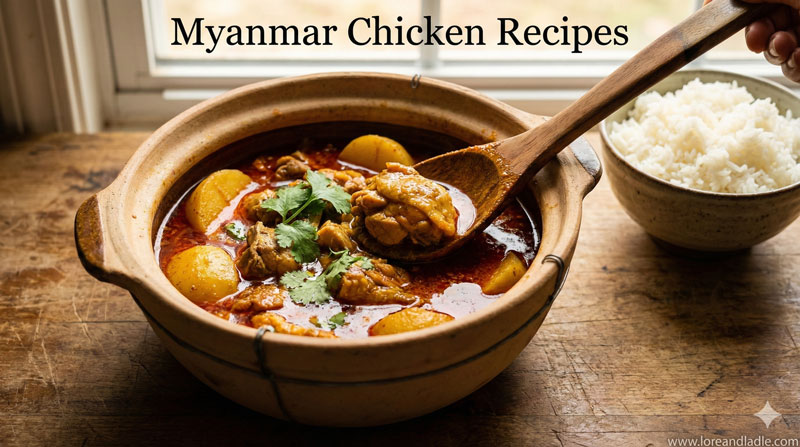
Welcome to the Ultimate Guide to Myanmar Chicken Recipes for U.S. Home Cooks
This piece introduces a flavorful journey. The Ultimate Guide to Myanmar Chicken Recipes for U.S. Home Cooks highlights the cultural value and culinary significance of Burmese chicken dishes. It invites U.S. cooks to explore, honor, and enjoy Myanmar’s kitchen traditions right in their own homes.
A doorway into Burmese flavors
Myanmar’s chicken dishes tell a warm, everyday story. They show how families balance bright herbs, mellow spices, and rich umami. The aroma of garlic, shallots, lemongrass, and herbs fills the kitchen. Fresh lime, chili, and a touch of fish sauce often finish a dish with a bright, memorable lift. This guide helps readers notice those small but meaningful details that make Burmese food feel both comforting and alive.
What this guide teaches about culture and technique
The guide celebrates two ideas at once: culture and craft. It explains how meals center around sharing and hospitality. It also shows how cooks layer flavors over time. First, they build a flavor base with aromatics. Next, they add chicken, then balance salty, sour, and sweet notes. Finally, they finish with a fresh lift from herbs or citrus. The result is a dish that tastes like Myanmar’s daily life—open, generous, and satisfying.
Core ingredients that tell a story
Key ingredients carry stories of season and place. Chicken acts as a reliable canvas for flavor. Aromatics like garlic, shallots, and ginger form the foundation. Lemongrass and possibly kaffir lime leaves bring brightness. Turmeric, coriander, and optional chili offer warmth and depth. Fermented or salty elements, such as fish sauce or a Burmese paste, add savory umami. Fresh herbs, cilantro, and lime finish the plate with freshness. Together, these ingredients show how Burmese Home Cooking builds flavor with balance and care.
Techniques that honor tradition
The techniques in this guide are practical for home kitchens. They emphasize moisture and tenderness for tender chicken. Slow braises unlock deep flavors. Quick stir-frying preserves brightness and texture. Toasting spices awakens aroma before adding liquids. Marinating a little can deepen flavor without complicating the process. Each technique respects the dignity of the ingredients and the cook’s time, making traditional flavors accessible to U.S. home cooks.
Regional notes: Myanmar on a plate
Myanmar’s regions shape its chicken dishes in subtle ways. Coastal areas may use coconut milk and brighter sour notes. Inland regions might rely on earthier spice blends and smoky accents. Hillside communities favor fresh herbs and lighter broths. This variety shows how a single protein can reflect different landscapes. The guide helps readers notice these regional nuances while keeping recipes approachable.
Cooking at home in the United States
The guide offers practical steps for U.S. kitchens. It suggests accessible substitutes when certain ingredients aren’t available. It also provides clear timing, equipment tips, and mindful plating ideas. The goal is confidence: readers should feel capable of producing flavorful Burmese chicken dishes with familiar tools and pantry staples. Active voice and crisp sentences guide readers from planning to plating.
Serving and savoring: hospitality in Burmese meals
Sharing is a core value in Burmese dining. Chicken dishes often appear at family meals, casual gatherings, and celebrations. They pair with steamed rice or soft noodles. Fresh herbs, lime wedges, and a bright sauce or chutney invite conversation and communal tasting. The guide emphasizes not just flavor, but the joy of hospitality—the way a well-made dish invites people to sit, talk, and enjoy together.
Quick tips for success
- Start with a simple flavor base: garlic, shallots, and a touch of ginger.
- Use lemongrass or citrus zest to brighten the dish at the end.
- Taste as you go, adjusting salt and sourness with lime or a mild fish sauce.
- If you can’t find a Burmese fish paste, a small amount of soy sauce or miso can provide umami without overpowering the dish.
- Keep chicken pieces uniform for even cooking, and rest the meat briefly after cooking for juiciness.
- Fresh herbs finish the dish and lift the aroma. Add them just before serving.
Final reflections
The Ultimate Guide to Myanmar Chicken Recipes for U.S. Home Cooks offers more than recipes. It opens a window into Burmese culinary culture, where the home kitchen becomes a space for learning, sharing, and celebrating flavor. The dishes invite respect for tradition while welcoming modern home cooks to experiment confidently. By embracing these chicken preparations, readers honor the beauty of Myanmar’s food culture and enrich their own cooking repertoire.