
A Taste of Non Bread: An Invitation to Uzbekistani Dumplings & Noodle Plates
Welcome to a journey through a table where texture and aroma tell a story. A Taste of Non Bread – Uzbekistani Dumplings & Noodle Plates Flavor You’ll Love shows how the heart of Uzbek cooking rests in simple, well-made components. This dish centers on two beloved forms: dumplings and hand-pulled noodles, always paired with the warm, round bread called non. The result is a harmony of bite, bite, and broth that feels like a welcome from a friend.
The Cultural Value at the Core
In Uzbek kitchens, food is a daily act of hospitality. Sharing dumplings and noodles signals care and connection. The dough becomes a carrier of family history. Each fold and pinch carries a memory of hands that have shaped it for generations. Non bread frames the meal with a comforting aroma and a sturdy, communal bite. This trio—dumplings, noodles, and non—defines a way of eating that honors guests and strengthens bonds. It is practical, joyful, and deeply human.
Dumplings: Manty and Chuchvara as Art
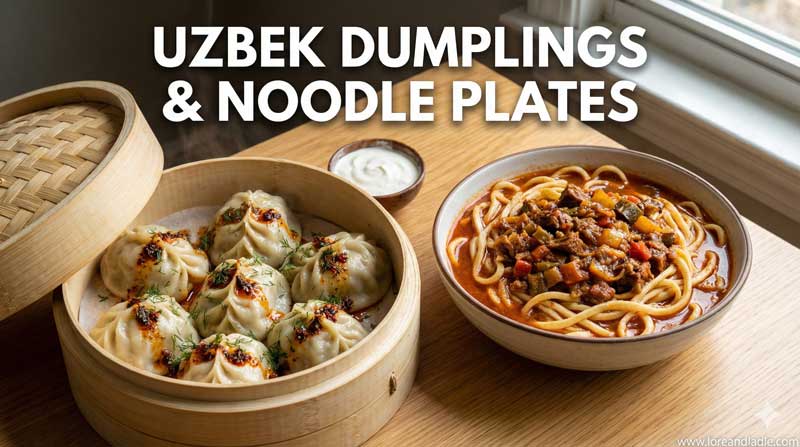
Dumplings stand at the center of the dish’s meaning. Manty are large, steaming warmly, filled with minced meat and onions. They arrive in a stack, each pocket inviting a careful bite. Chuchvara are smaller and delicate, boiled or fried, with a soft skin that yields to the filling. Both forms embody patience and skill. The dough remains supple yet firm, a sign of practiced hands and careful timing. These dumplings are not mere nourishment; they are small sculptures of flavor that speak to family dinners and festive gatherings alike.
Noodle Plates: Lagman and the Long, Lively Threads
Noodles carry equal weight in this flavor story. Lagman, with its long, lacy strands and vegetable-rich broth, offers another kind of conversation on the palate. The noodles invite stirring and tasting in several rounds. Each bite blends wheat aroma, herb brightness, and meatiness from the sauce. The act of pulling and shaping noodles mirrors the care that goes into assembling a table for loved ones. It is a tactile reminder that cooking can be both a craft and a communal ritual.
The Bread That Binds the Meal
Non bread is more than a side dish here. It is a warm, fragrant companion that invites diners to dip, tear, and share. The bread’s soft interior and crisp crust provide a comforting contrast to the tender dumplings and smooth noodles. In many homes, non is baked in a clay oven, letting the high heat seal in aroma. The result is a durable, flexible bread that pairs perfectly with every component on the plate. Eating non together with dumplings and noodles reinforces a sense of belonging around the table.
Techniques that Celebrate Craft
This meal highlights skill and care. Hands knead the dough until it glides softly. The dumpling wrappers are rolled to a precise thinness, then filled with seasoned meat and onions. Steaming manty preserves the juiciness inside, while chuchvara seek balance between wrap and filling. Noodles require patience in rolling and, for some homes, hand-pulling to achieve the right thickness. The cooking methods preserve the integrity of each ingredient, letting the flavors shine through without overpowering one another.
Flavor Profiles that Honor Local Harvest
The flavor palette honors the land. Fresh herbs like dill and cilantro brighten the dishes. Onions, garlic, and peppers add warmth and sweetness. Ground meat brings depth, and cumin or coriander seeds lend a whisper of earth and sunshine. Seasoning is never loud; it guides the natural sweetness of vegetables and the richness of meat. The result is comfort with complexity—a profile that feels familiar yet rewarding with every bite.
Social Tables and the Joy of Sharing
This dish is most meaningful when shared. The table becomes a stage for conversation and laughter. Guests can sample manty one by one, dip a piece of non into a sauce, and scoop noodles with a generous helping of broth. The act of passing a plate, offering a slice of bread, and complimenting a cook’s technique creates a warm, inclusive space. In Uzbek culture, meals like this reinforce generosity, patience, and attentiveness to others.
Pairings and Simple Delights
A cup of tea often accompanies the feast, cleansing the palate between bites. A yogurt-based drink or a light, fresh salad can balance the meal’s richness. The beauty of this dish lies in its adaptability: simple condiments, bright herbs, and a little acidity from pickled vegetables can elevate the flavors without overpowering them. The result is a satisfying whole that invites another helping and another conversation.
Experiences to Seek or Recreate at Home
If you wish to explore this cuisine, start with manty and lagman in a warming kitchen. Seek a place where non is baked to a golden crust and served alongside the dumplings and noodles. at Home, you can recreate the experience by making fresh wrappers, a meaty filling, and a light vegetable broth. Craft the noodles with care, and let the bread bake until its aroma fills the room. The process will feel like a celebration of everyday cooking.
A Gentle Invitation to Appreciate
A Taste of Non Bread invites you to slow down and savor the craft of Uzbekistani dumplings and noodle plates. It celebrates technique, seasonality, and hospitality. The dish stands as a quiet testament to how food can unite people around a shared table. It is inviting, respectful, and deeply rooted in tradition. Taste, and you will understand why this combination continues to enchant cooks and diners alike.
Closing Thoughts: The Beauty of Everyday Cuisine
in the end, the dish is a celebration of everyday beauty. Dumplings display the artistry of hands and family rhythms. Noodles reveal patience and a love for texture. Non bread provides warmth and a sense of home. Together, they form a culinary culture that values care, balance, and generosity. This is what makes A Taste of Non Bread more than a meal—it is a living ritual of flavor and fellowship.