
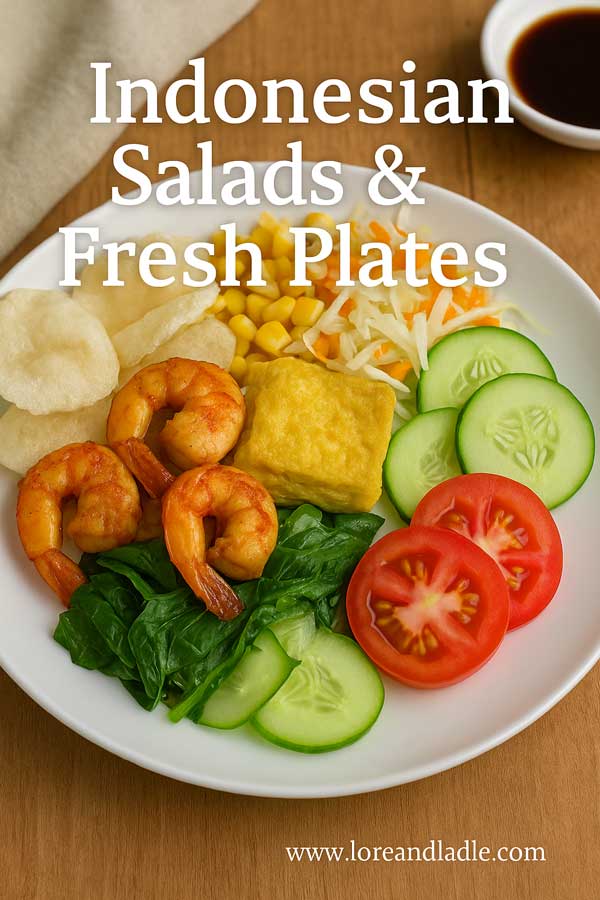
This blog introduces the dish collection titled “7 Indonesian Salads & Fresh Plates to Try If You Love Bold Indonesian Flavor.” It invites readers to explore how Indonesian salads and fresh plates express culture through ingredients, technique, and shared meals. These dishes celebrate the abundance of local markets, the skill of balancing flavors, and the joy of preparing food that is vibrant and nourishing. Each plate reveals how Indonesians honor seasonality, texture, and aroma while maintaining harmony among bold tastes. The collection showcases practical kitchen wisdom and a deep respect for regional variety, making these plates a meaningful entry point for anyone curious about Indonesia’s food culture.
Gado-Gado: A bright, communal heart on a plate
Gado-Gado centers on a rainbow of vegetables, soft boiled eggs, and tofu or tempeh, all brought together by a rich peanut sauce. The dish embodies balance: creamy, nutty sauce offset by crisp greens and fresh herbs. Culturally, it is a familiar sight at family meals and celebrations, often shared in generous portions. The peanut sauce itself is a study in flavor layering—roasted peanuts, garlic, lime, palm sugar, and a kiss of chili—creating a sauce that tastes both comforting and bold. Gado-Gado shows how Indonesian cuisine can transform simple produce into a memorable, nourishing experience.
Pecel: A peppery, herb-forward Javanese staple
Pecel mirrors Gado-Gado but places a stronger emphasis on the herbaceous and spicy notes. Fresh vegetables are dressed in a fragrant peanut-chili sauce that carries bright acidity and a hint of sweetness. The dish highlights Java’s love of fresh herbs like kencur, basil, and lime leaves, which infuse the plate with aromatic lift. Pecel is often enjoyed at casual meals and festive gatherings alike, where families gather to share a vibrant, colorful assortment of vegetables. It demonstrates how sauces can elevate crisp produce into a philosophy of flavor.
Karedok: Crunchy, raw beauty with a bold peanut bite
Karedok is a west Javanese raw-vegetable salad with a punchy peanut sauce. The vegetables stay crisp, offering a refreshing contrast to the creamy sauce. Its freshness is its signature, making it feel almost elevator music for the senses—bright, clean, and direct. Culturally, Karedok reflects a regional preference for raw textures that awaken the palate and celebrate garden produce. The dish emphasizes how simple ingredients, when paired with a dynamic sauce, can become a striking and satisfying experience.
Urap: Coconut-scented greens with a gentle, toasty note
Urap features steamed or boiled vegetables tossed with a seasoned coconut dressing. The coconut adds warmth and depth, while herbs such as kaffir lime and pandan brighten the mix. This dish is often served as part of larger meals, pairing well with rice and other plates. Urap teaches balance through texture and aroma: soft greens with a slightly chewy coconut coating that carries a delicate sweetness. It’s a reminder that Indonesian cuisine rewards patience in flavor development and careful seasoning.
Rujak: Fruit, spice, and sun-kissed tang
Rujak celebrates the fruit harvest with a tangy, spicy, and slightly sweet sauce. Mango, pineapple, papaya, and other seasonal fruits mingle with cucumber and other bite-sized vegetables, all dressed in a tamarind-palm-sugar dressing. Some regions add a dab of shrimp paste for depth, while others keep it purely fruit-forward. Rujak embodies the playful side of Indonesian flavors, where balance—sweet, sour, salty, and hot—creates a refreshing, street-food-inspired experience. It is a social dish, often shared at markets and gatherings, inviting friends to mingle over bold contrasts.
Asinan: Pickled fruit or vegetables with bright acidity
Asinan comes in two popular forms: fruit-based and vegetable-based pickles. A crisp bite meets a tart, slightly sweet brine, usually featuring vinegar, sugar, and salt. The result is a zesty, palate-cleansing plate that can accompany heavier dishes or stand alone as a bright, refreshing snack. Asinan reflects a culinary instinct for preserving harvests and enjoying lively contrasts in texture and acidity. It shows how Indonesian cooks transform simple preservation into a bright, palate-awakening experience.
Nasi Ulam: Herb-rich rice as a fresh, fragrant plate
Nasi Ulam is a fragrant herb rice dish that blends cooled rice with finely chopped herbs, shredded coconut, lemongrass, turmeric, and citrus leaves. The result is a cool, refreshing plate that bursts with herbal aroma and a gentle spice. Culturally, Nasi Ulam speaks to the Indonesian pantry’s depth—an ode to native herbs, garden greens, and kitchen-prepared spice blends. It is a flexible dish that invites personal variations, allowing families to honor what grows in their region while keeping the core idea of a bright, herb-forward plate alive. Nasi Ulam demonstrates how a simple grain can become a celebration of aroma, color, and balance.
Conclusion: Embracing bold Indonesian flavors at Home
This curated collection invites you to explore how seven salads and fresh plates express cultural value and culinary significance. Each dish centers on fresh ingredients, balance of textures, and the joy of sharing meals. By embracing these plates, you can experience how Indonesian flavors adapt to local markets and seasons while maintaining a consistent celebration of harmony and vitality. Start with one dish, then gradually try others. You will soon discover how these plates enrich gatherings and daily meals alike, enriching your understanding of Indonesia’s beautiful food culture.