
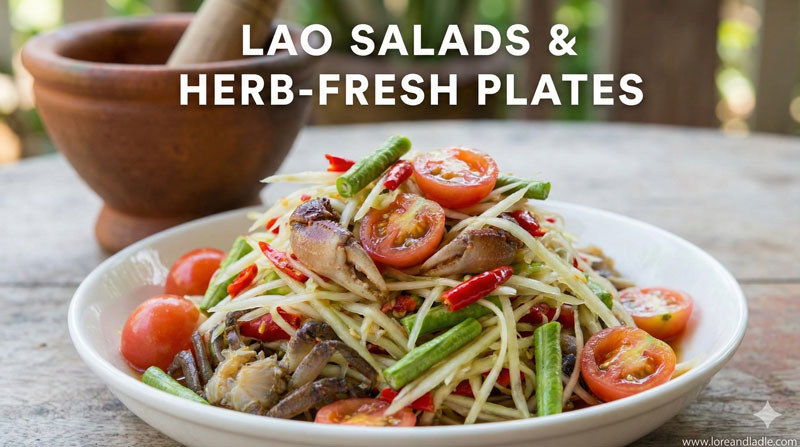
Introduction: Beginner-Friendly Lao Salads & Herb-Fresh Plates Anyone Can Cook
This dish invites you into Lao food culture with bright herbs and lively flavors. It is designed for cooks of all levels to explore a heritage rooted in balance and freshness. By focusing on approachable techniques, it reveals how Lao salads and herb-forward plates honor the land and the table. In short, this is a friendly doorway into a vibrant culinary tradition.
The Heart of Lao Salads: Fresh Herbs and Balanced Flavors
Lao salads center on fresh herbs and a careful balance of sour, spicy, salty, and a touch of sweetness. Lime juice, fish sauce, and chilies fuse with mint, cilantro, and Thai basil. Toasted rice powder adds a nutty crunch and a subtle savoriness. This trio of elements makes each bite lively and refreshing, not heavy.
Larb and Other Lao Salads: Cultural Significance
Larb, the signature Lao salad, is more than a dish; it is a season of sharing. Ground meat or mushrooms are seasoned with lime, fish sauce, and herbs, then tossed with a quick chop to release aroma. The act of mixing at the table echoes hospitality and communal meals. Other Lao salads follow the same philosophy: bright, quick, and highly edible with sticky rice.
Herb-Fresh Plates: The Role of Fresh Leaves in Lao Cooking
Herbs are not merely garnish; they carry aroma and balance. You will often see mint, cilantro, and Thai basil tucked into bowls, ready to fold in. The herbs brighten fatty or savory notes and invite you to savor the fresh edge of each bite. In Lao culture, herbs connect the eater to the garden and to seasonal produce.
Simple Steps for Beginners: How to Assemble a Lao Salad
First, choose your protein and cook it simply. Next, prepare a bright dressing with lime juice, fish sauce, and a touch of chili. Then, chop herbs and vegetables and toss them in. Finally, finish with toasted rice powder and adjust seasonings to taste. The result is a vibrant plate that balances heat, tang, and herbaceous freshness.
Core Ingredients and What They Mean
Lime offers brightness; fish sauce provides depth; chilies bring heat. Mint and cilantro deliver cool and clean notes, while Thai basil adds a peppery lift. Toasted rice powder gives texture and a hint of roasted aroma. Each ingredient serves a purpose, connecting the dish to daily life, markets, and home kitchens.
Plating and Sharing: A Reflection of Lao Hospitality
Plating favors a bright, open presentation: greens around, herbs layered, and the proteins sliced thin. The plates are meant to be shared, encouraging conversation and a sense of togetherness. Eating with sticky rice anchors the meal and invites gentle, hands-on enjoyment. This communal style is a quiet celebration of everyday life.
Seasonal and Regional Variations
Different regions highlight different herbs and proteins, yet the core idea remains shared and bright. In cooler months you might see more mint for a crisp bite; in harvest seasons, fresh cilantro and scallions shine. The dish adapts with local produce, while staying true to balance and freshness.
A Path to Respectful Cooking: Encouraging Everyone to Try
Start small. Let your palate guide you. With practice, you will learn to balance flavors instinctively. This approach makes Lao salads approachable and joyful.
Embracing the Culture Through Food
These dishes celebrate farmers, markets, and Home Cooks. They teach patience, precision, and care. They invite readers to cook with curiosity and gratitude for Lao cuisine.