
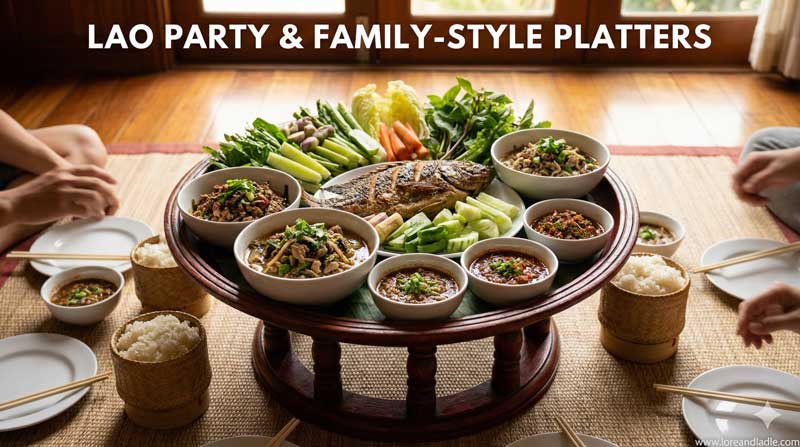
Welcome to Lao party and family-style platters
The idea behind Best Lao Party & Family-Style Platters to Try in the U.S. This Year is simple: large, shared plates that invite conversation, balance, and hospitality. In Lao dining, food is a bridge between people. The platter is more than a meal; it is a moment of togetherness, where flavors, textures, and aromas come together around a central bowl of sticky rice. This post looks at why these platters matter, what makes them delicious, and how they can be enjoyed across the United States this year.
What makes Lao party platters a celebration of communal dining
Lao platters center on sharing. A table becomes a small gathering place where guests sample a variety of dishes, each offering its own story of flavor. These platters emphasize balance: savory meets bright, hot mingles with cool, and herbal notes lift rich meats. The act of passing dishes, dipping into shared bowls, and building bite-sized combinations creates a rhythm of giving and receiving that feels welcoming and warm. The result is a dining experience that honors guests, hosts, and the season of eating together.
In addition, Lao platters highlight seasonal ingredients and local herbs. Restaurants and home cooks adapt the lineup to what is freshest, from fragrant herbs like cilantro and mint to peppers, herbs, and greens that provide crisp contrasts to tender proteins. This flexibility keeps the platter dynamic and responsive to the moment, which is a core strength of Lao culinary culture.
The core components of a Lao party platter
A successful Lao party platter usually centers around sticky rice (khao niaw), which acts as both a staple and a natural plate. The rice forms a neutral, comforting base that soaks up sauces and balances bold flavors. On top of this anchor, you’ll typically find a few key categories:
- Savory, seasoned proteins: delicate minced meats in a larb (laap) style, which pairs bright lime, fish sauce, herbs, and spices with a lean texture. Another common option is mok pa, a steamed fish dish wrapped in banana leaf to capture aroma and moisture. Grilled meats, such as chicken or pork, also appear, often grilled simply to let the spices speak.
- Fresh and fermented accompaniments: green papaya salad (tam mak hoong) provides a lively mix of crunch, heat, and tang. Fresh herbs—mint, cilantro, scallions—are scattered across the platter to brighten each bite.
- Dips and condiments: a few jeow-style dips (spicy chili pastes) offer heat and depth to complement the meats and greens. These dips are designed for scooping and balancing the platter rather than overpowering it.
- Crunch and color: crisp vegetables, cucumber rounds, shredded greens, and lettuce leaves for wraps. A few pieces of pickled or lightly fermented vegetables can add a surprising zing.
- Optional specials: sometimes a crispy rice salad (nam khao) or a grilled banana leaf-wrapped fish or meat dish appears. These items add texture and a festive feel to the spread.
Each platter aims to present a spectrum of flavors: bright citrus or lime, fresh herbs, earthy rice, moderate heat, and creamy or sour notes from the dips. The arrangement invites guests to consider contrasts in one cohesive bite.
Culinary techniques that shape Lao flavors on a platter
Several techniques stand out in Lao party platters and help explain their distinctive taste:
- Steaming and wrapping: Mok pa relies on steam and banana leaf wrapping to lock in moisture and aroma. This technique yields tender fish with delicate herbal fragrance.
- Pounding and mixing: Larb and similar salads use pounding or thorough mixing to release essential oils from herbs and spices. The result is a dish that delivers a clean, bright profile with a textural punch.
- Fermentation and fresh preparation: Papaya salad balances crispness with tanginess from lime and a mild acidity from seasoned fish sauce. Fermentation or long-standing spice blends deepen flavor, while fresh herbs keep the dish lively.
- Grilling and charring: Grilled meats bring smoky notes and a satisfying crust. Simple seasonings highlight natural meat sweetness and help the platter feel cohesive when shared.
- Dipping and sauce pairing: Dips are crafted to complement meats without overpowering them. The right dip enhances the salt of fish sauce, the brightness of lime, and the warmth of chilies.
These techniques work together to create a platter that feels both refined and welcoming. The same skills that make a single Lao dish memorable also elevate the whole spread when presented as a family-style meal.
The cultural value of Lao family-style meals
Lao party platters embody hospitality, generosity, and respect for guests. Sharing large plates signals that everyone is welcome to sample, compare, and savor. The host’s careful selection of items shows thoughtfulness and an intent to please, while guests respond with appreciation through slow, mindful tasting and appreciation of the variety before them.
The ritual of passing dishes, using fresh herbs to decorate each plate, and combining bites in small, personalized ways reinforces connection. This approach to eating emphasizes balance and harmony, both in flavors and in social interaction. Sticky rice, central to the platter, also carries meaning: it is a unifying staple that brings people together around a common center.
In many Lao homes and eateries, the platter serves as a bridge between generations and communities. Children learn to handle small portions and pick up bites with care. Friends and neighbors are invited to share, celebrate, and honor simple, well-prepared ingredients. The outcome is a meal that feels collaborative, respectful, and deeply rooted in everyday life.
Where to find Lao party platters in the U.S. this year
Across the United States, you’ll find Lao-inspired restaurants and pop-ups that showcase party-style platters. Cities with vibrant Southeast Asian dining scenes—San Francisco, Los Angeles, Seattle, Houston, Chicago, and Washington, D.C.—often feature places that highlight Lao flavors and communal dining formats. The platters emphasize balance, use accessible ingredients, and celebrate the communal spirit of Lao cuisine. In many venues, the platter menu is seasonal, reflecting local produce and the chefs’ favorite preparations.
Because Lao cooking is about sharing and adaptability, you can also find home cooks and local chefs creating at-home versions of these platters for gatherings and celebrations. When trying a platter in the U.S., notice how the lineup blends traditional elements with modern presentation, creating a bridge between the old and the new while keeping the focus on hospitality and togetherness.
How to enjoy a Lao platter like a seasoned guest
- Start with sticky rice: Use it as a universal base. Pinch a small portion and use it to scoop bites from the platter.
- Sample in rounds: Take a small bite of each category first, then go back for combinations you loved. This keeps flavors fresh and allows you to notice contrasts.
- Use herbs to rebalance: If a dish feels heavy, add fresh herbs to brighten the bite. If something feels light, a dab of a spicy dip can bring it forward.
- Respect the host’s rhythm: In a home setting, follow the host’s cues for pacing and for when to refill or pass dishes.
- Pair thoughtfully: A light beverage with citrus or a herbal note can cleanse the palate between bites without overpowering the flavors.
Building your own Lao platter at home
If you want to recreate the experience, start with a sturdy plan:
- Foundation: a generous portion of sticky rice (khao niaw) as the central element.
- Proteins: choose two to three options, such as larb (savory minced meat) and mok pa (steamed fish wrapped in banana leaf), plus a grilled option for variety.
- Fresh and crunchy sides: include tam mak hoong (green papaya salad) or a similar bright salad, plus crisp vegetables for wraps.
- Dips and herbs: offer one or two chili dips (jeow) and a fresh herb bouquet of mint, cilantro, and Thai basil if available.
- Finish with texture: a crispy element like nam khao or lightly fried components can contrast with tender items.
- Presentation: arrange the items around the sticky rice, with each dish clearly separated but still inviting to scoop from each other.
A well-balanced platter should feel cohesive yet diverse. The goal is not to overwhelm with one dominant flavor but to invite guests to explore and assemble bites that suit their preferences.
Regional flavors and modern twists
Lao cuisine shares borders and histories with neighboring culinary traditions, including Isan (northeastern Thai), central Lao, and hill-tribe influences. This informs the platter with subtle variations in spice, aroma, and texture. In the United States, chefs may adapt by adjusting heat levels, selecting locally sourced greens, and presenting dishes with contemporary plating while preserving the core communal philosophy. The result is a platter that feels both timeless and current—rooted in tradition yet accessible to a wide audience.
Etiquette and etiquette-friendly tips
- Serve in abundance but avoid waste. A good Lao platter celebrates generous portions without overwhelming the table.
- Allow guests to take small portions at first. This keeps flavors distinct and prevents any one dish from dominating the tasting.
- Use fresh herbs generously. They lift sauces and meat, making each bite vibrant.
- Be mindful of heat levels. Offer milder options alongside spicier components so guests of all preferences can enjoy the platter.
A respectful, inviting tone for every guest
Best Lao Party & Family-Style Platters to Try in the U.S. This Year invites readers to appreciate the artistry of Lao cooking in a gathering setting. The emphasis is on hospitality, balance, and the joy of sharing food with others. Each platter is a careful blend of techniques, textures, and flavors that together tell a story about care, community, and craft. By exploring these platters, you can discover a cuisine that values generosity and connection as much as taste.
Final note: celebrate the beauty of Lao flavors in the bustling U.S. dining scene
Lao party and family-style platters offer a vivid, welcoming window into Lao culinary culture. They demonstrate how a table can become a place for conversation, discovery, and comfort. As you encounter these platters in the United States this year, you’ll notice how the dishes invite you to participate in a shared experience—one that honors ingredients, teamwork in the kitchen, and the quiet joy of good company around a central bowl of sticky rice.
If you’re planning a gathering, consider building a Lao-style platter as a centerpiece. It’s more than a meal; it’s a practice of hospitality, a celebration of seasonal flavors, and a reminder that food can bring people together with warmth and respect.