
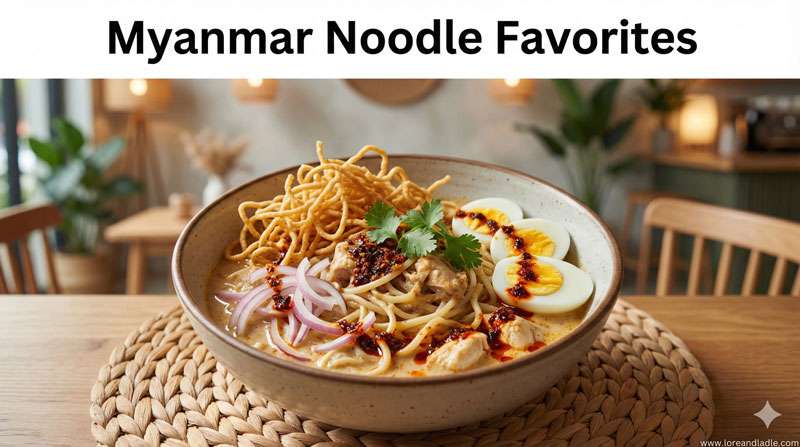
Welcome to a culinary journey through Myanmar noodles. These dishes invite friends to slow down and share in a flavorful moment. This post highlights the cultural value and culinary significance of the best Myanmar noodle favorites for sharing. You will discover how each bowl carries regional flavors, careful technique, and a spirit of hospitality. The focus remains on taste, texture, and togetherness.
The Spirit of Sharing at the Table
In Myanmar, a table is a circle for conversation. Noodles often stand at the center, easy to pass and easy to customize. A simmering pot meets the bowls as they circle the table. Toppings line up like small gifts for taste buds. Fresh herbs, lime, chili, fried shallots, and sesame add brightness and crunch. Sharing a noodle dish is an act of care. It invites everyone to add their touch and to savor each moment together. This practice shows how food can bind friends through simple, flavorful choices and warm, open exchange.
Mohinga: The Comfort of Morning Noodle Bowls
Mohinga is a fragrant fish noodle soup that greets dawn markets and family kitchens alike. The broth blends fish stock with lemongrass, garlic, shallots, and a hint of turmeric. Rice noodles soften in the warm, savory liquid. Fresh herbs, fried onions, lime, and a kiss of chili oil crown the bowl. Each spoonful carries a gentle balance of brightness and depth. Sharing mohinga means inviting friends to begin the day with savor and conversation. The aroma travels across the table and invites stories about ingredients and personal favorites. Mohinga embodies regional variety, as cooks adapt the recipe with available fish and greens. It remains a beloved starter for gatherings, always inviting another round.
Ohn No Khao Swe: Creamy Coconut Noodles for Gatherings
Ohn No Khao Swe is a creamy coconut noodle soup that brings cozy warmth to any gathering. A gentle, silky broth blends coconut milk with chicken stock, scented with garlic and ginger. Noodles soak up the comforting liquid, becoming tender and comforting. The dish is finished with toppings such as crisp fried noodles or delicate herbs, which add texture and contrast. Ohn No Khao Swe travels well from kitchen to table, making it ideal for friends who share a relaxed afternoon or a cheerful potluck. The balance of creamy sweetness and bright citrus or lime makes each bite inviting, easy to enjoy together, and ready to tailor to individual tastes.
Nan Gyi Thoke: A Colorful Noodle Salad to Pass Around
Nan Gyi Thoke offers a lively alternative for a noodle-focused gathering. Wide rice noodles are dressed in a rich sauce made with chickpea flour and a touch of turmeric, creating a warm, nutty base. Shredded chicken, sliced onions, and sesame seeds layer on top. A squeeze of lime and fresh herbs lift the flavors, inviting more rounds of tasting. The dish shines because each bite can be adjusted with extra lime, chili, or herbs. It travels beautifully on a shared platter and pairs well with cucumber pickles or crunchy vegetables. Nan Gyi Thoke turns a simple meal into a vibrant social event, encouraging guests to mix, match, and chat between servings.
Crafting a Noodle Table for Friends
to Make your noodle gathering memorable, consider these ideas:
– Offer variety. Include at least two noodle styles, with options for spice and creaminess.
– Keep the toppings ready. Small bowls of lime wedges, chopped herbs, fried onions, and chili oil invite personalization.
– Provide gentle pairings. Fresh cucumber salad or light pickles balance richer bowls.
– Encourage tasting together. Set a rhythm of small servings to share among friends and spark conversation.
– Respect shared space. Use a low table or shared platters that invite easy passing and connection.
In the end, Best Myanmar Noodle Favorites for Sharing with Friends celebrates more than flavor. It honors a culture where food becomes a bridge for conversation, laughter, and friendship. Each dish offers a doorway to regional techniques, seasonal ingredients, and the artistry of home cooks. When friends gather around these bowls, they do more than eat. They listen to aromas, compare notes on textures, and create a memory that tastes of warmth and welcome. This is the beauty of Myanmar noodles—simple, inviting, and deeply communal.