
Introduction
This post introduces the dish Best Taiwanese Noodle And Soup Bowls Ideas to Try in the U.S. It celebrates the cultural value and culinary significance of Taiwanese noodle bowls. You will discover how simmered broths, fragrant spices, and tender noodles come together to tell a story of care, craft, and shared meals. The goal is to invite you into a warm, respectful appreciation of this cuisine and its place in everyday dining.
The Cultural Value of Taiwanese Noodle Bowls
Taiwanese noodle bowls embody a culture of balance. They blend aroma, texture, and depth in each bowl. The care shown in slow simmering mirrors a philosophy of patience and reverence for ingredients. In Taiwan, meals are communal moments. A bowl is a small ceremony: broth first, then noodles, then toppings, all arranged for color, aroma, and bite. In the United States, these bowls offer a bridge to a tradition that values comfort and refinement in equal measure. Enjoying a bowl is a way to honor technique, seasonality, and the simple pleasure of a well-made broth.
Signature Techniques that Define the Craft
The heart of Taiwanese noodle bowls lies in the broth. It is built from bones, aromatics, soy, and sometimes tomato or herbs. Simmering is intentional and slow, letting collagen, minerals, and umami unfurl. The result is clarity with deepeness, a broth that coats the palate without overpowering the noodles. Noodles themselves matter: they should be springy, resilient, and able to absorb a kiss of broth without losing shape. Toppings—like braised pork, greens, and chilies—provide textural contrast and bursts of color. The craft is in balance: salt, sweetness, acidity, and warmth all meet in harmony. This balance is what keeps the bowls lively, even as temperatures cool or crowds grow.
Texture and Noodle Craft
Texture is a key ambassador of this cuisine. Noodles can be wheat-based, or slightly chewy with a bite that reminds you to slow down and savor. Chewiness, slipperiness, and absorbency all play a role. The right noodle picks up just enough broth to stay flavorful without turning soggy. Fresh vegetables add crispness; greens offer fresh relief between bites. The tactile moment of slurping is welcomed and its rhythm helps you appreciate the broth’s roundness and the meat’s tenderness. In short, texture elevates the experience from nourishment to a small art form.
Popular Bowls to Try in the United States
This section highlights several beloved Taiwanese noodle bowls you can seek out in U.S. cities. Each offers a flavor profile that showcases different techniques and ingredients.
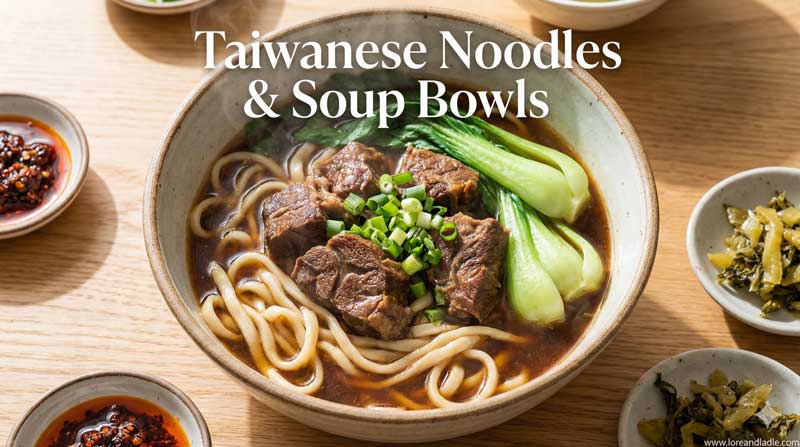
- Beef Noodle Soup (niu rou mian): A signature bowl with a robust, slowly braised beef, a deep savory broth, and chewy noodles. Expect star anise, cinnamon, and soy mingling softly with beef richness. It is comforting, hearty, and perfect for a satisfying lunch or dinner.
- Minced Pork Noodle Soup (rou gui mian version): Ground pork or small pork chunks provide a savory counterpoint to the noodles. The broth leans toward a lighter, savory profile with gentle sweetness from aromatics and a touch of soy.
- Tomato Beef Noodle Soup: A brighter, slightly tangy variation where tomatoes brighten the broth and lift the dish. This version shows how versatile traditional techniques can be when paired with fruit-forward acidity.
- Seafood Noodle Bowls: Fresh shrimp or white fish in a clear or lightly seasoned broth with greens and herbs. The emphasis is on freshness and a clean finish, letting seafood sweetness shine without overpowering the noodles.
- Braised Pork Belly Noodle Bowl: Slow-braised pork belly delivers a rich, silky bite. The glaze on the meat and the fat’s depth pair beautifully with a savory, well-balanced broth.
Toppings, Garnishes, and the Visual Feast
Garnishes matter as much as the broth. Pickled vegetables, fresh herbs, sliced scallions, cilantro, and a drizzle of chili oil add color, brightness, and heat distribution. A handful of greens or bok choy offers a crisp counterpoint to the tender meat. These elements create a visual and sensory ramp that invites you to explore the bowl with your eyes and palate before your first bite.
How Restaurants Bring Taiwan to the Plate in the United States
In the U.S., skilled cooks translate tradition with care. They source quality bones, use precise simmering times, and cultivate broths that express both purity and depth. Restaurants adapt to local preferences, offering lighter broths or bolder spice levels while preserving core techniques. The result is a respectful culinary dialogue: a dish that feels familiar yet new, anchored by technique and bright, seasonal ingredients. The experience emphasizes hospitality—serving bowls that are generous in portion, balanced in flavor, and welcoming to a wide audience.
A Guide to Enjoying Taiwanese Noodle Bowls
- Start with the aroma: inhale the fragrance of broth and herbs as you approach the bowl.
- Listen to texture: the first bite should give a firm, springy noodle and tender meat or topping.
- Notice balance: savor how saltiness, umami, and a gentle sweetness support rather than overpower the ingredients.
- Use accompaniments thoughtfully: chili oil, pickles, and herbs can elevate flavors when added gradually.
- Pair with tea or a light, crisp beverage to cleanse the palate between bites.
Sourcing Tips for Home Preparation
If you wish to recreate the essence at Home, seek reliable broth bases or use a simple simmer method with bones, aromatics, and soy for a soulful foundation. Choose noodles that match your preferred texture, and stock a few greens or herbs for garnish. Freshness and patience yield the most authentic results, even when cooking in a home kitchen.
Conclusion
Best Taiwanese Noodle And Soup Bowls Ideas to Try in the U.S. celebrate a cuisine that masters balance, depth, and comfort. Through slow, thoughtful technique, vibrant ingredients, and inviting presentation, these bowls offer more than sustenance. They offer a story of care, craft, and shared meals. Whether you are exploring a city’s vibrant dining scene or cooking at home, these bowls invite you to pause, savor, and appreciate the beauty of Taiwanese culinary culture.