
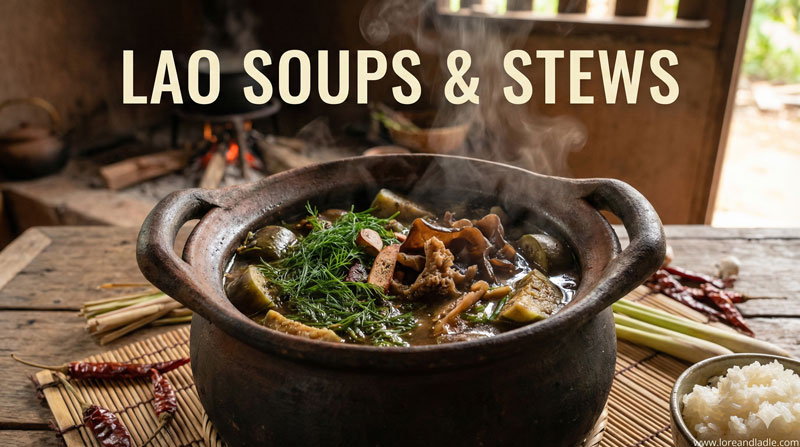
A Warm Welcome to Classic Lao Soups & Stews
Welcome to a savory journey through Classic Lao Soups & Stews for First-Time Lao Food Fans. This collection invites you to explore the cultural value and culinary significance of Lao bowls that comfort the heart and spark the senses. Each soup and stew tells a story of place, season, and shared meals. You will feel how Lao cooks honor fresh ingredients, balance bold flavors, and create meals that family and friends savor together.
The Soul of Lao Flavor: Balance, Freshness, and Hospitality
Lao food sings with balance. The soups and stews blend sour, salty, spicy, and herbal notes to create a harmonious bowl. Fresh herbs play a leading role, offering brightness that lifts the other flavors. Sourness often comes from lime or tamarind, salt from fish sauce or fermented pastes, and heat from chilies. This thoughtful balance mirrors Lao hospitality: a bowl shared around a table, inviting conversation and connection. The cuisine celebrates seasons, rivers, and markets, where ingredients arrive bright and ready to become part of a communal meal.
Core Ingredients That Define Lao Soups
What makes Lao soups instantly recognizable? Simple, high-quality ingredients used with care. Sticky rice anchors the meal, while the broth carries the soul of the dish. Lemony tang, fish sauce’s savory depth, and a chorus of herbs like cilantro, dill, and mint create a living aroma. Vegetables such as morning glory, eggplant, and leafy greens appear in traditional stews, adding texture and color. A key flavor booster is jeow, a Lao chili paste that brings a gentle, peppery heat. When fish or pork enters the pot, the meat absorbs the broth’s warmth, becoming deeply comforting.
A classic emblem you may encounter is or lam, a slow-simmered Lao stew. Or lam blends vegetables, herbs, and meat into a hearty, warming dish. It embodies the Lao skill of layering flavors, where each ingredient adds a fold of fragrance and texture. Even without naming every dish, you can sense how these components come together to tell a regional and seasonal story.
Techniques That Elevate Lao Stews and Soups
Lao cooking shines through technique as much as ingredient choice. Gentle simmering draws out sweetness from bones and meat while preserving the bright notes of herbs. Layering flavors happens in stages: a quick sauté of aromatics, a long simmer for depth, and a finish of fresh herbs just before serving. This sequence preserves delicate aromas and prevents bitterness from overpowering the bowl.
To finish a soup or stew, many cooks fold in fresh greens at the last moment and drizzle lime juice for a crisp lift. The use of acid, salt, and heat is deliberate—no single element overwhelms the others. The result is a bowl that feels both comforting and alive, a reflection of Lao care in the kitchen.
Regional Echoes: Northern to Southern Lao Traditions
Laos offers a tapestry of regional influences, expressed vividly in soups and stews. In the north, cooks often weave greens, mushrooms, and mountain herbs into sturdy stews that stand up to cooler nights. Central Lao bowls lean on citrus and river fish, balancing bright tang with savory depth. In the south, coconut elements appear more frequently, and the heat tends to linger with cheerful resilience. Across regions, the common thread remains: fresh ingredients, careful simmering, and a hospitality-forward approach that invites sharing.
Pairing and Serving: How to Enjoy with Sticky Rice
A Lao soup or stew shines when paired with sticky rice. The rice’s slight sweetness and chewy texture provide a perfect counterpoint to tangy broths and herbaceous notes. Serve bowls in clear or simple ceramic, with a platter of fresh herbs on the side for guests to customize their bowls. A small dish of jeow or a light chili paste can welcome newcomers to a gentle kick. A squeeze of lime at the table awakens flavors just enough, inviting another spoonful.
A Beginner’s Guide: First-Taste Dishes to Inspire
If you are new to Lao soups and stews, begin with two or three approachable flavors. Start with a bright, sour fish soup to notice how acidity brightens a bowl. Next, try a hearty pork or chicken stew that carries earthier notes and a comforting texture. Finally, sample or lam if available, a slow-cooked stew that reveals the beauty of multi-ingredient harmony. With each bowl, observe how aroma, texture, and balance invite you to a deeper appreciation of Lao food culture.
Why This Collection Matters for First-Time Lao Food Fans
This collection matters because it reveals how Lao cuisine uses simple ingredients to create meaningful meals. The soups and stews demonstrate respect for seasonality, regional diversity, and communal dining. They show that cooking can be an act of care—each simmer, stir, and finish step chosen to honor every guest at the table. For a first-time fan, these dishes are not only delicious but also a gateway to understanding how Lao people live with gratitude for food, nature, and community.
In Conclusion: Embracing the Beauty of Lao Bowls
Classic Lao Soups & Stews for First-Time Lao Food Fans offers more than recipes. It presents a cultural practice built on balance, freshness, and hospitality. The bowls invite curiosity, teaching that good food grows from thoughtful technique and shared moments. As you savor these soups and stews, you join a long tradition of cooks who honor ingredients, seasons, and the joy of gathering. Welcome to a flavorful doorway into Lao food culture.