
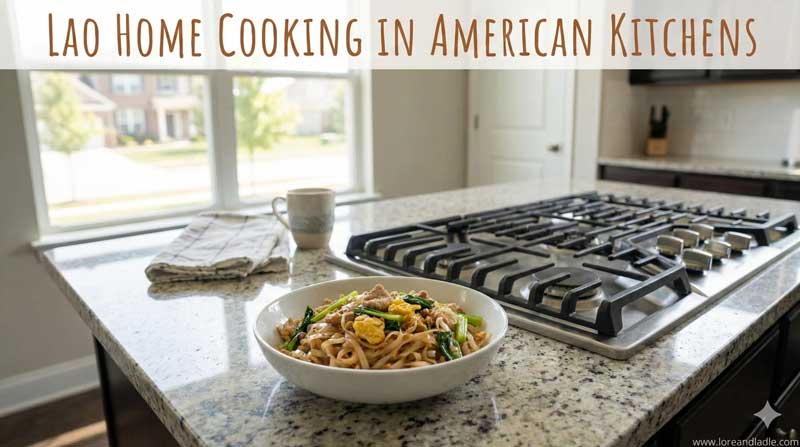
Introduction
Easy Lao Home Cooking in American Kitchens for Busy Weeknights invites readers to explore a cuisine that celebrates clarity, balance, and everyday grace. This approach brings Lao flavors into the heart of a modern home. It honors simple ingredients, precise techniques, and a pace that respects busy schedules. In short, it shows how flavor, aroma, and color can turn a weeknight into a small festival.
The guiding flavors of Lao home cooking
At the core of Lao cooking are four guiding notes: bright lime, salty fish sauce, spicy chilies, and fresh herbs. These elements dance with sour, salty, hot, and herbal tones. This harmony shapes rice bowls, soups, and salads. It is a language of everyday meals that feels both fresh and comforting. The result is meals that feel light in the moment, yet satisfying after a long day. Moreover, the flavors invite careful balance, so each bite feels harmonious and complete.
Ingredients and techniques you’ll often use
Common ingredients show up in every Lao kitchen: jasmine or sticky rice, fresh garlic and shallots, lemongrass, galangal or ginger, cilantro, mint, Thai basil, and a splash of fish sauce. Lime or a touch of tamarind adds sourness. For many American kitchens, these items are easy to find at supermarkets or Asian groceries. Techniques focus on quick stir-fries, light braises, and rapid sauces. The goal is to finish with bright herbs at the end of cooking, ensuring fragrance lingers on the plate.
Weeknight adaptations that keep the flavor intact
Easy Lao Home Cooking in American Kitchens for Busy Weeknights emphasizes efficiency without sacrificing depth. Mise en place helps, and pre-chopped vegetables speed things up. One-pot or one-pan methods reduce cleanup, while a slow cooker or pressure cooker can handle longer flavors while you attend to other tasks. Finish with fresh herbs to lift aroma and color. In addition, you can build a flexible template: start with a savory base, add a bright sauce, and finish with herbs for a pop of brightness.
Cultural value and culinary significance
These meals reflect a culture that cherishes balance, freshness, and everyday pleasure. The ritual of washing greens, pounding a small chili paste, or slicing a lime becomes mindful cooking. Meals often pair with sticky rice as a comforting anchor and a touchstone of everyday life. Even a weekday dish can celebrate color, texture, and scent. The approach is inclusive: flavors invite conversation and curiosity around the table, turning routine dinners into moments of shared delight.
Serving ideas and how to present Lao flavors
It is common to serve Lao dishes with a mound of sticky rice, which acts as a palate cleanser and a versatile base for sauces. A bright larb or a tangy jeow can accompany the meal, and fresh herbs add aroma and crunch. A light vegetable side, pickles, or a cucumber salad complements the heat. The result is a balanced plate that respects texture and taste, welcoming guests to linger a little longer over good food.
Substitutions that keep the soul of the dish
Within Easy Lao Home Cooking in American Kitchens for Busy Weeknights, readers learn simple substitutions that keep Lao flavor intact. If lemongrass is hard to find, use lemon zest and a dash of zest. If fish sauce is too strong, use a milder salt and a splash of lime. These tweaks maintain the essence of Lao cooking while making it accessible to every kitchen.
Closing reflections
This dish invites families and friends to slow down for a moment, savor fresh ingredients, and share a table. It demonstrates how traditional flavors can thrive in modern routines. By layering herbs, lime, and gentle heat, it becomes a bright, comforting option any night of the week. Welcome this journey into Easy Lao Home Cooking in American Kitchens for Busy Weeknights.