
Introduction
Easy Party Platters Built Around Myanmar Soups & Stews celebrates a vibrant way to Share flavors. It centers on bowls of comforting broth, bright herbs, and tender ingredients. The idea is simple: create a platter where each small portion invites tasting and conversation. This approach highlights the beauty of Myanmar soups and stews and shows how they shine on a party table. Expect a gathering that feels warm, generous, and easy to enjoy.
A Cultural Palette in a Bowl
Myanmar soups and stews stand at the heart of many meals. They echo the country’s geography, from riverbanks to coastal markets. Fragrant broths arise from lemongrass, garlic, and turmeric. Coconut milk enriches some dishes, while lime and fish sauce brighten others. Noodles or rice provide comforting texture. The flavors are layered, balanced, and inviting. When these soups and stews are shared, they tell a story of daily life and seasonal ingredients. A party platter turns that story into a social experience. Guests learn to savor contrasts: silky liquids, chewy noodles, crisp vegetables, and fresh herbs. The result is a celebration of patience, skill, and hospitality expressed at the table.
The Heart of Myanmar Soups & Stews
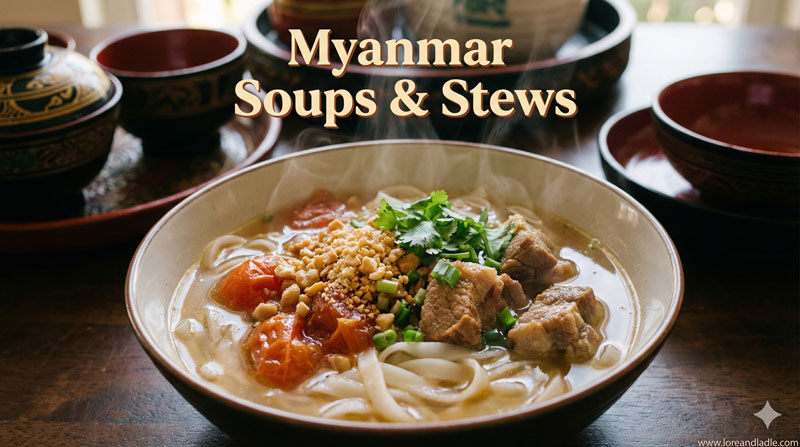
Mohinga is a famous example that many diners enjoy. It is a fragrant fish broth with a tang of lime and a gentle kiss of spices, often served over noodles. Ohn No Khao Swe is a coconut-based noodle soup that brings sweetness, warmth, and a comforting creaminess. Other stews rely on slow-simmered meats and vegetables, yielding rich, hearty bowls. Across these dishes, you’ll find bright aromatics and a careful balance of salt, sour, and sweetness. The culinary value lies in how the same ingredients sing in different ways. A platter lets each soup or stew speak in its own voice. Guests can compare textures, savor the finish of each bowl, and appreciate the craft behind the stock, the spice blend, and the timing.
Building Easy Party Platters: A Practical Guide
First, choose 2–3 soups or stews that complement one another. Aim for variety in texture and intensity. Next, prepare small, individual bowls for tasting. Use a mix of clear broth bowls and a couple of creamier stews. Place them on a shared, accessible surface so guests can rotate and sample freely. Layer in accompaniments that enhance rather than overwhelm. Fresh herbs, lime wedges, pickled vegetables, crispy onions, and toasted sesame provide brightness and crunch. Offer a simple dip or sauce that echoes the flavor notes of the soups. Finally, arrange the platters with color and rhythm. Alternate bowls with small plates of noodles or rice and a few vegetables. The result is eye-catching and easy to navigate.
Core Ingredients to Highlight
- Broth base: fish, chicken, or vegetable stock form the backbone.
- Aromatics: lemongrass, garlic, shallots, and ginger give warmth and clarity.
- Spices and herbs: turmeric for depth; coriander and cilantro for brightness; lime for a clean finish.
- Coconut milk or tomato-tinish bases: add richness and a gentle sweetness.
- Starches: rice noodles or steamed rice provide comfort and structure.
- Fresh elements: greens, bean sprouts, and herbs offer color and crunch.
- Textural contrast: crisp fried onions, sesame, and pickles balance smooth broths.
Pairings, Textures, and Garnishes
- Texture: combine silky broths with chewy noodles and crisp toppings.
- Color: bright greens, pale broth, and golden edges create visual appeal.
- Garnish ideas: fresh dill or cilantro, lime wedges, crushed peanuts, and sliced chiles.
- Sauces: a light fish sauce-dill dip or a tangy chili-lime condiment can accompany spoonfuls.
- Serving tips: keep hot soups hot with small, insulated bowls. Use wide plates for salad-like accompaniments.
Cultural Value in Gatherings
Sharing Myanmar-inspired platters fosters hospitality and belonging. Guests slowly discover each bowl, motivated by curiosity and appetite. The practice rewards conversation and listening as flavors unfold. Such platters honor seasonal ingredients and local markets. They celebrate the artistry of balancing spice, sweetness, acidity, and salt. In this setting, cooking becomes a bridge between cooks and guests. The dish teaches patience and generosity. It invites everyone to explore a landscape of familiar comfort and new aroma.
Tips for Hosts: Making It Smooth and Delightful
- Plan ahead: select soups that reheat well and scale easily.
- Keep it simple: offer two clear options and one celebratory feature.
- Use labeled bowls: small cards help guests follow flavors without confusion.
- Consider dietary needs: include a light broth, a coconut-based option, and a vegetarian choice.
- Create flow: place ladles, spoons, napkins, and bowls within easy reach.
- Enhance fragrance: a gentle mist of fresh herbs near the platter adds vitality.
The Experience of Taste and Tradition
This approach invites guests to explore Myanmar flavors in a friendly format. Each bowl offers a story of ingredients, technique, and care. The party platter becomes a shared ritual of tasting and listening. It honors the skill of home cooks and market cooks alike. Above all, it celebrates the beauty of a well-made soup or stew. In that spirit, Easy Party Platters Built Around Myanmar Soups & Stews is not just a recipe idea. It is a celebration of food culture, memory, and the joy of gathering around a flavorful table.
Conclusion
A well-designed party platter brings Myanmar soups and stews into a welcoming center stage. It blends aroma, texture, and color into a single, social experience. The approach is practical, respectful, and endlessly adaptable. It invites hosts to showcase regional flavors with clarity and warmth. in the end, the platter becomes more than food. It becomes a living tribute to a treasured culinary tradition shared with friends and family.