
Introduction
Easy Homemade Non Bread – Uzbekistani Dumplings & Noodle Plates Flavor You’ll Love invites readers into a kitchen where texture, aroma, and tradition meet. This dish centers on non, the soft, fragrant bread that frames many meals in Uzbekistan. You will notice how dumplings and noodle plates pair with non to form a table that feels warm, welcoming, and deeply rooted in everyday cooking. The recipe becomes a bridge between simple techniques and a rich culinary heritage.
The Heart of Uzbek Table: Non Bread
Non is more than bread. It is a symbol of hospitality and daily life in Uzbek culture. Bakers craft it in brick ovens, shaping rounds with care and scoring patterns that catch the eye. When placed at the center of the table, non invites sharing. It holds together bites of dumplings and noodles, catching sauces and broths with a soft, sturdy bite. The result is a meal that feels complete, balanced, and respectful of generations of Home Cooks who perfected this dough.
Dumplings and Noodle Plates: A Dance of Textures
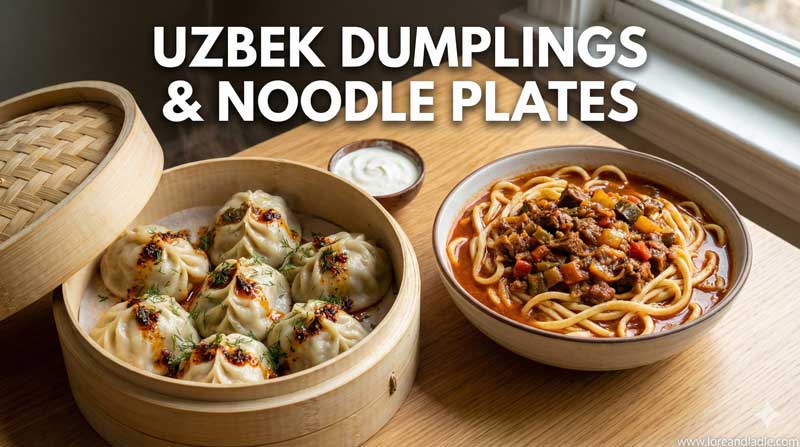
Dumplings, or manti, bring a savory, succulent contrast to the light non. They offer a delicate balance of filling and wrapper, with aromatic onion and tender meat. Noodle plates, such as lagman-inspired offerings, contribute their own springy chew and bright vegetable notes. Together, dumplings and noodles celebrate variety within unity. The non serves as a gentle vessel, absorbing the goodness of the fillings and broths while keeping the rhythm of the dish intact. This harmony reflects a culinary philosophy that values balance, sharing, and thoughtful preparation.
Techniques for Easy Homemade Non
To make non at home, start with a simple dough of flour, water, salt, and a touch of oil. Knead until the dough is smooth, then rest briefly so the gluten softens. Roll into rounds and flatten to a thickness that yields a tender yet sturdy bite. Bake in a hot oven until the tops are lightly blistered and the edges are golden. Cool on a rack, then serve fresh or lightly warmed. The ease of these steps makes it possible to enjoy non as the centerpiece of a comforting meal, not just a backdrop for filling dishes.
Flavor Fundamentals: Spices, Herbs, and Enough Warmth
Uzbek flavors come to life through a balanced set of spices and herbs. Cumin seeds, coriander, black pepper, and dill brighten dumplings and noodle plates without overwhelming the dough. A dab of garlic or onion in the filling, plus a whisper of chili or paprika, can lift the dish while preserving its soulful simplicity. The aroma of toasted seeds and fresh herbs enhances the non, making every bite feel inviting and complete. This flavor compass helps home cooks recreate authentic profiles with confidence.
Serving Traditions: Hospitality in Every Slice
Serving this dish is a small ritual of care. Slice the warm non and lay it beside plates of steaming dumplings and noodles. Offer a pot of tea or a light broth to accompany the meal, inviting conversation and mindful eating. Sharing a loaf in the center of the table reinforces connection and togetherness. The practice echoes a culture that values thoughtful preparation, cheerful presentation, and the pleasure of eating with others.
Final Note: The Cultural Flavor You’ll Love
Easy Homemade Non Bread – Uzbekistani Dumplings & Noodle Plates Flavor You’ll Love stands as a celebration of food culture and culinary craft. It honors the harmony between bread, dumplings, and noodles while inviting everyone to participate in a time-honored kitchen practice. With simple steps and vivid flavors, this dish offers a welcoming portal into Uzbek cooking—where every bite tells a story of warmth, skill, and shared joy.