
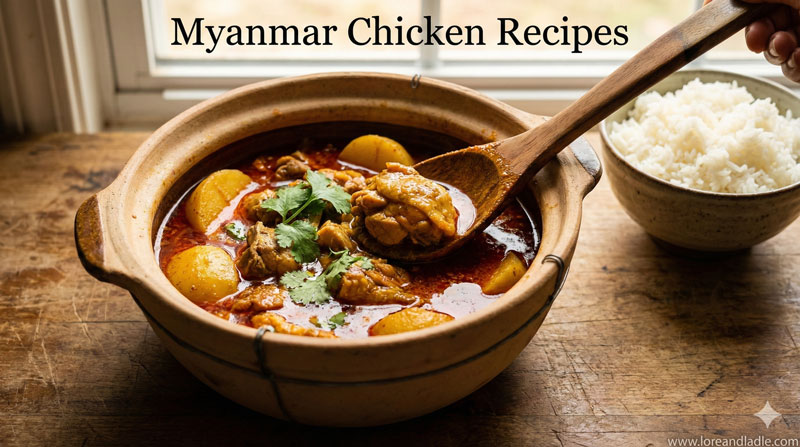
Flavor-Packed Myanmar Chicken Recipes Dishes to Impress Guests
This dish is a bright window into Myanmar’s kitchen, where chicken serves as a canvas for bold aromatics and comforting textures. Fresh herbs, spicy chilies, and tangy citrus mingle with creamy elements to create layers of flavor. The aim is clear: delight guests with aroma, balance, and a presence that feels both refined and welcoming. In Myanmar, a well-crafted chicken dish travels beyond the plate to tell a story of home, markets, and family kitchens.
A Window into Hospitality and Everyday Life
In Myanmar, chicken dishes sit at the heart of gatherings. Families prepare them for guests with care, letting the kitchen’s scent guide conversations. Sharing a fragrant bowl or platter signals warmth and respect. This dish embodies courtesy, patience, and joy in the kitchen. Each bite invites guests to linger and connect, turning a meal into a memorable moment of togetherness.
Key Techniques that Elevate the Dish
Core techniques lift the dish from ordinary to memorable. Marinate the chicken to absorb spices and salt. Sear or brown pieces to deepen flavor, then simmer in a light sauce that may include coconut milk for creaminess. Build aromatics with garlic, shallots, ginger, lemongrass, and turmeric. Finish with a squeeze of lime, a touch of fish sauce, and a final garnish of roasted peanuts or fried onions for texture. The result is a fragrant plate with tender meat, a silky sauce, and a bright finish.
Regional Influences and Market Freshness
Myanmar’s regions offer tasty variations that celebrate local markets. Coastal areas favor coconut milk, lime, and fish seasonings for a bright, ocean-kissed profile. Inland regions experiment with different herbs, chili blends, and tangy notes from lime or tamarind. The same dish can shift from creamy and mellow to lively and zesty, depending on the local produce and family tradition. Across towns and villages, this versatility highlights how a single dish can reflect the season and the stall-fronts where ingredients are bought.
Building a Balanced Flavor Profile
The dish thrives on balance. Sweet touches may come from palm sugar or caramelized onions. Sour accents arrive through lime juice or tamarind, while saltiness comes from fish sauce or soy-based seasonings. Heat comes from chilies and pepper, carefully controlled to support rather than overwhelm. Umami notes arrive from roasted peanuts, slow-cooked aromatics, and a well-timed simmer. The harmony of sweet, sour, salty, and spicy makes the dish inviting to a diverse table.
Plating and Serving for Guests
Present the chicken in a shallow, warm bowl or on a shared platter with steamed jasmine rice. Garnish with fried onions, chopped cilantro, and a few green chilies for color. A light dusting of toasted sesame seeds adds a subtle aroma. Offer lime wedges on the side so guests can adjust brightness. The serving scene should feel generous and calm, inviting conversation as much as appetite.
Quick Tips for Home Chefs
- Use fresh aromatics: garlic, shallots, ginger, and lemongrass heighten fragrance.
- Marinate 20–30 minutes for the best flavor absorption.
- Toast spices lightly to awaken their oils before adding them to the dish.
- Balance heat with acidity and a touch of sweetness for harmony.
- Finish with fresh herbs and a final squeeze of citrus to refresh the palate.
Conclusion: Honoring Myanmar’s Culinary Roots
This dish stands as a celebration of Myanmar’s culinary artistry. It honors the country’s love of bold, accessible flavors and the joy of sharing a well-made meal with guests. With its bright aromatics, creamy undertones, and thoughtful texture, it invites diners to pause, savor, and appreciate the beauty of Myanmar’s kitchen.