
A Tasting Journey Through Flavor-Packed Myanmar Salads
Flavor-Packed Myanmar Salads & Tea Leaf Dishes offer a vivid introduction to Myanmar’s culinary world. These dishes showcase bright herbs, crisp textures, and bold seasonings. They invite guests to explore a harmony of sour, salty, and spicy notes. Each bite celebrates freshness and balance, making the dining table feel welcoming and alive.
The Heart of Tea Leaf Dishes
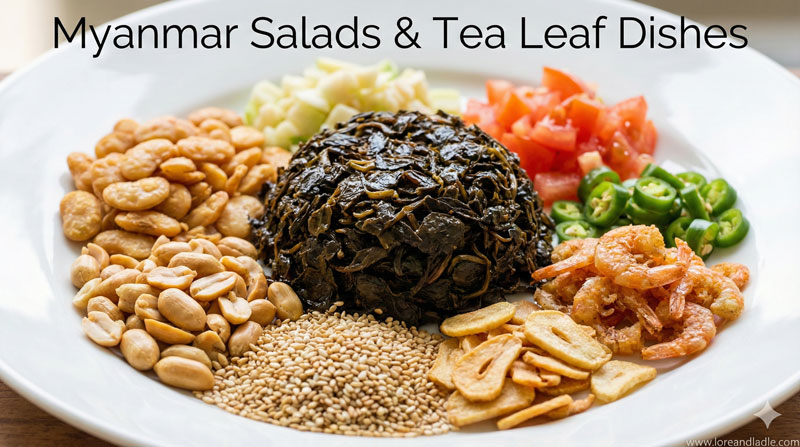
Tea leaf dishes center on fermented tea leaves, or lahpet, a beloved ingredient in Myanmar. Lahpet thoke, the tea leaf salad, blends softened tea leaves with roasted peas, sesame seeds, garlic, chili, and lime. The result is a lively mix of crunch and zing. Dried shrimp and oil-soft peanuts join the mix for depth. This combination creates a distinctive aroma and a memorable tongue-tingle that many guests remember long after the meal.
Textures and Flavors: A Skillful Balance
The magic lies in balancing textures. Crunch from roasted peas and peanuts contrasts with the soft tang of fermented tea leaves. Bright acidity from lime or vinegar cuts richness. Salt from fish paste or a light sauce rounds everything, while chili brings warmth without overpowering the dish. Myanmar cooks layer these elements with care, so aroma, color, and taste evolve with every mouthful.
Key Ingredients and Techniques
- Fermented tea leaves (lahpet) as the base
- Roasted peanuts and sesame seeds for crunch
- Garlic, fresh herbs, and chili for aroma and heat
- Dried shrimp paste (ngapi) or a light fish sauce for savoriness
- Lime or tamarind for bright acidity
- Fresh vegetables and sometimes tomato for color and contrast
In practice, cooks toast seeds, finely chop herbs, and mix ingredients gently to preserve texture. They season gradually, tasting as they go. The technique respects the ingredients, letting each one shine.
Impressing Guests: Presentation and Pairings
Presentation matters. Serve on a large platter or woven banana-leaf tray to evoke warmth and hospitality. Place lahpet thoke beside other salads to show variety. Pair with light soups or steamed rice to let flavors breathe between bites. Fresh herbs, lime wedges, and colorful chili slices heighten visual appeal and invite conversation.
The Social Role of Salads in Myanmar Cuisine
Salads act as a bridge between meals and gatherings. They accompany Main Dishes and also stand alone as shared appetizers. The act of passing bowls, offering a taste to others, and balancing flavors at the table reflects a culture of hospitality and generosity. Rich flavors are celebrated with restraint and care, inviting guests to linger and enjoy.
A Glimpse of Everyday and Festive Tables
On everyday tables, these dishes appear as bright, accessible flavors that brighten any meal. For special occasions, cooks may elevate lahpet thoke with additional crunch or a touch of aromatics, making the dish feel festive yet familiar. In all settings, the goal remains the same: to delight the palate while honoring tradition.
Final Thoughts: A Living Tradition
Flavor-Packed Myanmar Salads & Tea Leaf Dishes offer more than taste. They embody a culinary language of freshness, texture, and balance. They celebrate ingredients grown close to home and techniques refined through generations. For guests, these dishes offer an inviting path into Myanmar’s rich food culture, one bite at a time.