
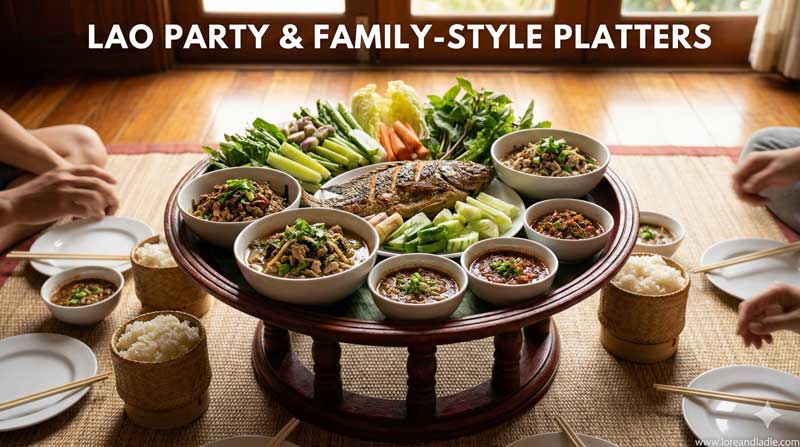
Celebrating Balance in Lao Cuisine
Balanced Lao cooking centers on harmony. It honors seasonal vegetables, hearty grains, and bright herbs, all arranged to welcome everyone to the table. This approach invites mindful sharing and quiet appreciation for how flavors meet textures. When a platter brings together veggies and grains with care, it becomes more than food—it becomes a language of hospitality. In Lao culture, meals are moments of connection. People gather, chat, and savor small contrasts that together feel complete. The beauty lies in the attentive balance: crisp greens against soft grains, tangy bites against mellow notes, and an aroma that invites a second helping.
The Platter Concept: Veggies and Grains
This dish concept highlights two foundations: vegetables that glow with color and grains that provide comforting body. Start with a base of sticky rice (khao niaw) or a light brown Rice for variety. Layer in an assortment of fresh, crunchy vegetables—carrots, cucumbers, green beans, and cucumber ribbons—along with leafy greens and herbs. Add grains such as quinoa or millet as colorful, textural accents when you want a modern touch, always pairing them with traditional staples. The idea is to present a balanced, accessible spread where guests can scoop, dip, and mingle. By design, the platters encourage exploration and self-assembly, which is a cherished way to share in Lao dining.
Flavor, Color, and Texture in Harmony
A well-balanced Lao platter plays with contrast. Bright herbs like mint and cilantro lift each bite, while lime or tamarind notes brighten the palette. A touch of fish sauce or a light sesame oil can bring a salty-sour depth without overpowering the vegetables. Crunch meets softness, and warm meets fresh. The color palette matters, too: emerald greens, sunny oranges, and pale beiges create a feast for the eyes as well as the palate. In this balance, every element has room to shine, and none overwhelms the others. The result is a platter that feels cohesive, inviting, and emotionally satisfying.
The Social Heart of Lao Dining
Food becomes a convivial ritual when shared in a party or family setting. Lao tables often center on communal platters where guests serve themselves and trade bites with neighbors. This practice nurtures conversation, laughter, and a sense of belonging. It also teaches patience and attentiveness—watching how others arrange their plates, tasting new combinations, and offering a favorite green or sauce to someone else. The platter becomes a map of relationships, a edible thread that connects everyone around the table. In this way, the dish is more than sustenance; it is a cultural gesture of welcome and care.
Practical Ideas for Building Your Platters
- Choose a centerpiece grain: sticky rice or brown rice as a foundation, with additional grains used as color and texture accents.
- Build veggie rails: crisp cucumbers, shredded cabbage, carrot ribbons, cherry tomatoes, and blanched greens arranged in vibrant rows.
- Add herbal brightness: mint, cilantro, Thai basil, and a few edible flowers for fragrance and visual appeal.
- Include dips and sauces: a mild chili-lime dip, a bean-based paste, or a light citrus dressing to tie the vegetables together.
- Create texture contrasts: roasted seeds, crushed peanuts, or fried shallots sprinkled atop for crunch.
- Keep portions generous but approachable: small piles of each item invite sampling and sharing.
A Sample Platter Plan
- Base: a warm mound of sticky rice surrounded by small bowls of citrus-herb dressing and a mild sesame-soy drizzle.
- Veggie layer: cucumber ribbons, shredded purple cabbage, steamed green beans, and sliced radishes for color.
- Grain accents: cooked quinoa folded with chopped herbs, lightly seasoned with lime zest.
- Fresh herbs: a handful of mint and cilantro scattered across the platter.
- Crunch and finish: toasted sesame seeds and crushed roasted peanuts for a gentle crunch.
- Optional dip: a small bowl of tangy lime-chili sauce to awaken flavors as needed.
Elevating Everyday Meals with Balance and Beauty
In daily life, these Lao-style platters offer a graceful template. They make healthy choices easy by pairing vegetables with grains in appealing formats. They also encourage mindfulness: guests slow down to savor each bite, notice textures, and appreciate the artistry behind simple ingredients. The approach is flexible, so you can tailor the platter to what’s fresh at the market, what grows in your garden, or what your guests love. By keeping the focus on veggies and grains, the platter remains accessible, nutritious, and deeply comforting.
Respect, Hospitality, and Tradition at the Table
Hosting with care communicates respect for guests and for the food itself. The plate becomes a shared story, where each bite connects people to tradition and to one another. The beauty of this dish lies not in complexity alone, but in generosity—the readiness to offer a generous spread, the patience to let flavors mingle, and the pride in presenting a well-balanced, colorful table. When you serve Balanced Lao Party & Family-Style Platters with Veggies and Grains, you honor a cuisine that values harmony, community, and the simple joy of eating together.