
Introduction
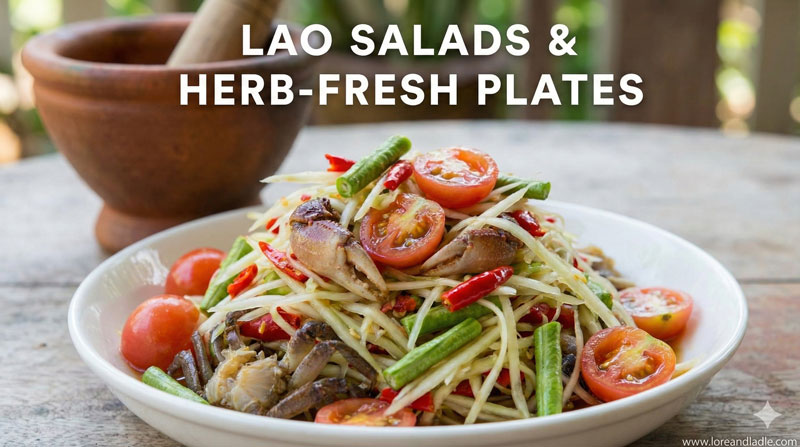
Flavor-Packed Lao Salads & Herb-Fresh Plates with Fresh Herbs presents a bright and inviting face of Lao cooking. This collection highlights how fresh herbs, citrus notes, and balanced salty, sour, and spicy elements come together on one plate. The dish is more than food; it is a way to share memory, season, and skill through everyday meals and special gatherings. Each bite celebrates clarity of flavor and the joy of everyday hospitality.
Cultural Value
In Lao dining, herbs take a central role. Mint, cilantro, Thai basil, and dill wake the dish with life. Meals emphasize balance: sour lime, salty fish sauce, fresh heat from chilies, and a gentle crunch from roasted rice powder. Sharing plates invites conversation, laughter, and connection. The salads reflect a love of seasonal ingredients and careful kitchen craft. This harmony of ingredients mirrors a mindful approach to daily life and community meals.
Culinary Significance
The strength of Lao salads lies in technique and timing. A quick pound in a mortar releases essential oils from herbs and spices. Roasted rice powder adds texture and a nutty note. The dressing blends lime juice, fish sauce, and a hint of palm sugar. The result is bright, lively, and well balanced. This balance is a hallmark of Lao cooking: fresh, sour, salty, and hot in harmony. The plates teach how small adjustments can elevate a simple ingredient into something memorable.
Key Ingredients and Flavor Profile
Herbs anchor the flavor: mint, cilantro, Thai basil, and dill. Vegetables provide light crunch and color. Core flavors include lime juice, fish sauce, and chopped chilies. A touch of palm sugar rounds the acidity and heat. Crunch comes from toasted rice powder and crisp vegetables. The dish is versatile: it can cradle grilled meat, seafood, or tofu. Each bite offers a chorus of fresh, tart, savory, and aromatic notes.
Techniques and Craft
Craft begins with a sturdy mortar and pestle. The herbs are gently pressed to release aroma. Then the mixture meets meat or vegetables in a quick toss. The dressing is whisked and folded in, allowing the flavors to mingle. Finally, herbs are added last to preserve brightness and color. This sequence preserves texture and scent. The result is a plate that feels lively, clean, and expressive.
Regional Expressions
Lao salads vary by region, and each area adds its own touch. in the north, dill and mint may lead the herb lineup. In central areas, lime, fish sauce, and roasted rice powder tie flavors together with confidence. In the south, chilies and tangy sauces may stand out a touch more. Regardless of variation, the core idea remains the same: fresh herbs, precise seasoning, and quick preparation. These plates adapt to local markets and seasonal produce while keeping a shared spirit.
Serving and Pairings
Serve Lao salads on a bed of sticky rice or with crisp lettuce leaves for wrapping. Pair them with jeow, a tangy dipping sauce that echoes the same bright profile. These plates shine at family meals, markets, and festive gatherings. Sharing a plate invites everyone to taste and discuss textures and balance. The practice of serving and sampling fosters warmth and connection.
A Modern Table
Flavor-Packed Lao Salads & Herb-Fresh Plates with Fresh Herbs travel well into today’s kitchens. They fit easily into casual lunches and lively dinners. The herb-forward profile remains inviting across seasons and settings. Chefs and home cooks alike celebrate the clarity of ingredients and the joy of precise seasoning. In contemporary dining, these plates bridge tradition with new flavors and techniques.
Conclusion
This dish stands as a vibrant bookmark in Lao culinary culture. It shows how herbs lift flavor and how careful balance brings joy to the table. By focusing on fresh ingredients and respectful technique, cooks honor tradition and invite new guests to taste Lao artistry. The plate remains a celebration of hospitality, craft, and the beauty of everyday eating.