
Introduction
Welcome to a celebration of taste and tradition. The dish Authentic Lao Seafood Specials You Can Make at Home invites you to explore Laotian flavors that flow from the Mekong and reach the table with warmth. This cuisine centers on fresh seafood, bright herbs, and precise balance. Home cooking becomes a bridge to a culture where meals are shared with care and guests are welcomed with generous spirit. By bringing these seafood specialties into your kitchen, you honor both the river’s bounty and the people who have refined these techniques over generations. The result Is a colorful, inviting experience that speaks through aroma, texture, and harmony.
The Flavor Philosophy of Lao Seafood
Lao cooking follows a simple yet powerful idea: each dish should balance a range of flavors. You will often sense sour, salty, spicy, and fresh herbal notes in harmony. Lime juice and tamarind bring brightness; fish sauce adds depth and saltiness; chilies provide warmth without overpowering the dish; and herbs like dill, mint, cilantro, and green onions lift every bite. This balance is not just a taste preference; it reflects a philosophy of equilibrium that guides how Lao cooks season seafood. The approach makes each dish feel light, clean, and lively, even as it delivers bold character. In this style, seafood shines with minimal fuss and maximum clarity, highlighting the natural sweetness of the fish and the vibrancy of the surrounding herbs.
Signature Lao Dishes: Mok Pa and More
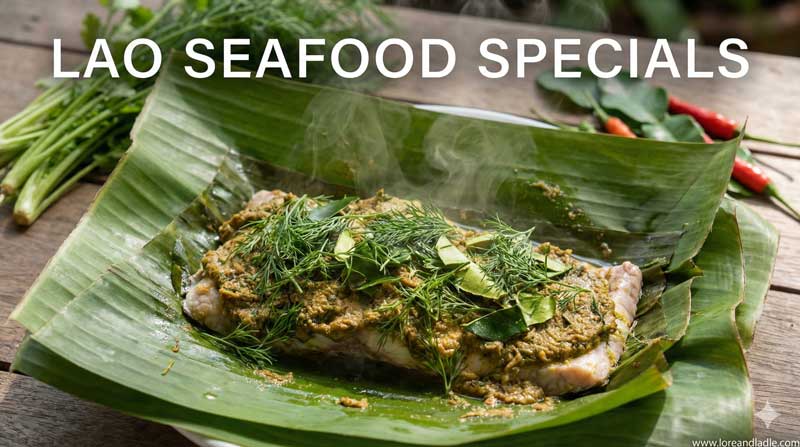
A cornerstone of Lao seafood cuisine is Mok Pa, a fragrant, steamed fish wrapped in banana leaf. The technique seals in moisture and aromas, producing a tender, aromatic finish. A paste made from lemongrass, dill, garlic, green onions, and kaffir lime leaves adds depth without masking the fish’s purity. The steam carries those herbaceous notes right into every slice. Another popular preparation is grilled river fish, brushed with a bright mixture of lime juice, fish sauce, garlic, and fresh herbs. This method emphasizes the char and the crisp herbal finish that Lao cooks prize. Both dishes show how Lao seafood treats texture and aroma as essential parts of the dining experience. They invite you to savor a single, clean bite that reveals layers of flavor built from simple ingredients.
At-Home Techniques for Lao Seafood
You can recreate Authentic Lao Seafood Specials You Can Make at Home with tools and ingredients common in most kitchens. Start with a fresh whole fish or fillets for Mok Pa. Prepare a herb paste: lemongrass, dill, garlic, shallots, green onions, and kaffir lime leaves. Add a dash of fish sauce, lime juice, and a touch of chile oil to brighten the mix. Rinse the fish and pat it dry. For Mok Pa, spread the herb paste inside and outside the fish, then wrap it in a banana leaf or parchment paper. Steam gently for 15 to 20 minutes, until the fish is just cooked and the aromas bloom. If you cannot find banana leaves, foil or parchment will still trap the steam and flavors nicely. For grilled preparations, marinate the fish briefly in a similar mixture and grill over moderate heat, turning once, until the flesh flakes easily. Always finish with a sprinkle of fresh herbs and a squeeze of lime to wake the flavors. Serving suggestions include a bright dipping sauce of lime, fish sauce, garlic, and a hint of sugar to balance acids. This approach keeps the cooking approachable while preserving the dish’s essential character.
Cultural Value and Hospitality in Lao Seafood
Seafood is more than sustenance in Lao culture; it is a way to welcome guests and celebrate community. River life shapes the menu, and the Mekong’s seasonal bounty informs what is served and when. Shared dishes encourage conversation and togetherness, turning meals into trusted moments of connection. The careful balance of flavors mirrors a respect for balance in daily life—honoring the fish, the herbs, the fire, and the hands that prepare them. Hospitality shines through generous portions, careful plating, and thoughtful accompaniments. In this way, Authentic Lao Seafood Specials You Can Make at Home become a portrait of Lao warmth: a dish that invites others to come close, to listen, and to enjoy the river’s gifts together.
Simple Pairings and Serving Ideas
Pair Lao seafood with sticky rice or steamed jasmine rice to anchor the meal. A light cucumber and tomato salad with lime juice provides a crisp contrast. Fresh herbs on top—dill, mint, cilantro—lift every bite and carry fragrant notes to the palate. For a dipping sauce, combine lime juice, fish sauce, garlic, a touch of sugar, and sliced chilies for a bright, accessible finish. If you wish, add a side of lightly pickled vegetables to introduce a gentle acidity that complements the fish. Keep the portions modest, allowing the flavors to breathe. The goal is a clean, vibrant plate that reflects Lao cuisine’s emphasis on balance, freshness, and hospitality.
Sourcing and Sustainability in Lao Seafood
Seek fresh, responsibly sourced fish from reputable markets. Whole fish often delivers the most flavor and enables you to utilize the skin and bones for stock or additional meals. If you cannot access local Lao fish varieties, choose a similar fresh white fish or river fish from trusted suppliers. Fresh herbs, lemon or lime, and good quality fish sauce are essential, and they travel well in a pantry. Consider seasonal choices to preserve the integrity of taste and texture. By selecting sustainable options and handling seafood with care, you honor the producers, the river, and the meal you present at home.
Conclusion
Authentic Lao Seafood Specials You Can Make at Home offers more than a tasty dish. It opens a window into a culture that values balance, hospitality, and a deep connection to the river’s bounty. With simple techniques and fresh ingredients, you can bring Mok Pa and its vibrant companions into your kitchen. Each plate becomes a moment of sharing—of flavors, stories, and the beauty of Lao food culture. Welcome the dish into your home, and let the river’s spirit shine in every bite.