
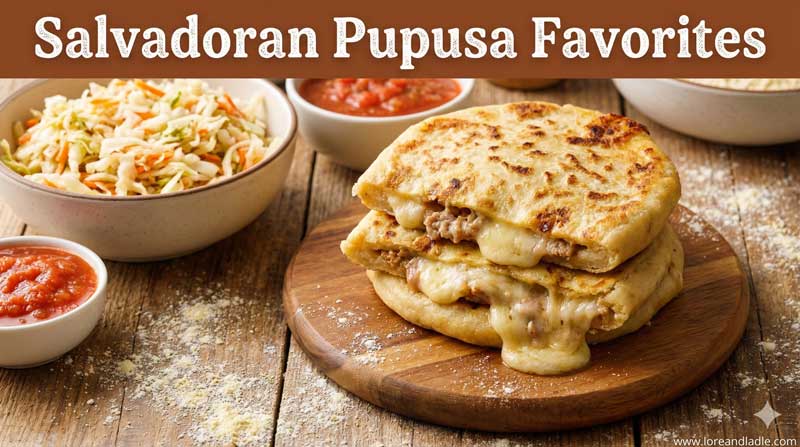
Discover loroco and cheese pupusas: a Salvadoran treasure
Loroco and cheese pupusas shine as a beloved emblem of Salvadoran cooking. This dish finds its heart in the masa, the soft corn dough, wrapped around a fragrant filling. The result is a warm, balanced bite that invites touch, scent, and conversation. In kitchens and restaurants across the United States, these pupusas celebrate flavor with grace. They connect people to a gentler sense of sharing and craft. The beauty lies in simplicity: a few components, expertly arranged, yielding a memorable meal.
The masa and fillings: a careful balance
The foundation is masa, a smooth, pliable dough formed from ground corn. Chefs mix it with water and a pinch of salt until it holds just enough shape. The filling blends loroco with cheese, sometimes queso fresco or a mild, melty cheese. Each pupusa encases a generous spoonful of this duo and is sealed with careful hands. Then the dough rounds are pressed into discs and cooked on a hot comal or skillet. The technique highlights restraint and balance, letting the flavors speak clearly.
Loroco: a fragrant, distinctive star
Loroco is a greenhouse treasure from Central American gardens. Its buds release a fresh, green aroma with hints of herbs and florals. That scent carries into the filling and lingers as the pupusa cooks. Loroco brings a gentle earthiness that pairs beautifully with cheese. Its presence marks a unique culinary signature of this regional cuisine. When warmed, loroco adds depth without overpowering the other ingredients. This is why many cooks seek out fresh loroco for the best flavor.
The cheese: creaminess that harmonizes
Cheese in pupusas provides warmth and melt. A mild queso fresco or similar white cheese yields a soft, creamy center. The cheese melts into the loroco and masa, creating an inviting, stringy texture as you bite. The cheese balance keeps the dish comforting and approachable. The result is a cohesive bite where each element supports the others.
Crafting pupusas: technique and texture
Pupusa making blends art and technique. The dough is formed into round pockets, filled, and sealed with care. Gentle pressure flattens the disk into a thick, even circle. As it cooks, a light crust forms, while the center stays tender and juicy. The process rewards patience and practice, producing consistently appealing results. The texture invites a satisfying chew and a lingering aroma.
Serving: curtido and salsa rojas
Pupusas are often enjoyed with curtido, a bright cabbage slaw with a tangy bite. A quick salsa roja adds a touch of warmth and color. The accompaniments lift the dish, offering contrast in acidity and spice. Together, they create a balanced plate that refreshes the palate.
A culinary beacon across the United States
Across the United States, loroco and cheese pupusas appear in homes and eateries with warmth. They showcase Salvadoran flavors in a way that is generous and inviting. Home cooks savor the practice of shaping and filling, while chefs highlight the dish on vibrant menus. The result is a respectful bridge between kitchens and communities, inviting everyone to savor a shared, comforting tradition.
Embracing the dish at home
If you are curious to try, gather fresh loroco, mild cheese, and good masa. Follow a simple rhythm: prepare the filling, shape the dough, seal, and cook until the crust is light and the center is soft. Serve with curtido and a gentle sauce. The experience honors a tradition that values craft, aroma, and the pleasure of eating together.