
Discovering Must-Try Lao Home Cooking in American Kitchens in American Kitchens
This dish opens a welcoming door to Lao flavors right in the heart of American homes. It celebrates fresh ingredients, balance, and the quiet artistry of home cooking. The focus is on warmth, shared meals, and the beauty found in simple, seasonal elements. Expect bright herbs, soft textures, and a harmony of taste that speaks softly of Lao culinary value.
Core flavors and techniques
The heart of Lao home cooking lies in a few bright building blocks. Sticky rice anchors the meal, offering a gentle chew that carries the season’s flavors. Fresh herbs—mint, cilantro, and sometimes dill—bring fragrance and lift. Lime, fish sauce, chili, and garlic create a lively, well-rounded profile. Textures matter, too: a tender meat or mushroom salad contrasts with crisp vegetables and a smooth jeow, a dipping sauce or relish that ties the plate together. In American kitchens, you can build these layers with accessible tools: a mortar and pestle for pounding aromatics, or a sturdy blender for quick blends that still preserve freshness.
The plate as a cultural focal point
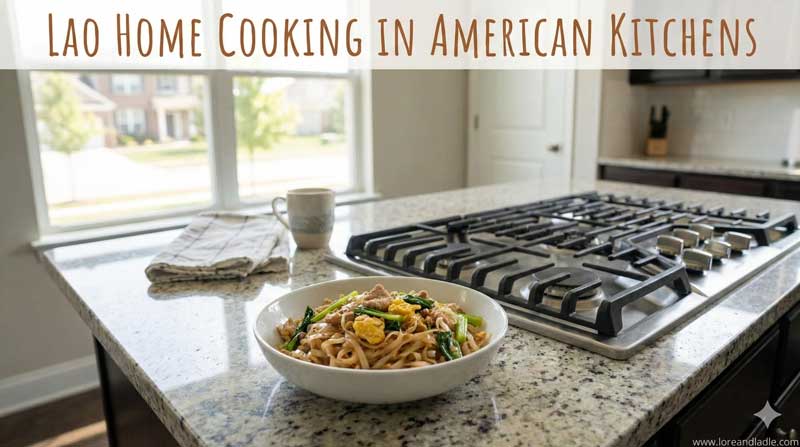
Lao home cooking is more than technique; it is a daily ritual of care and sharing. Meals are occasions to gather, listen, and celebrate the season. The dish highlights how simple ingredients become expressive when prepared with attention. A plate arrives with a chorus of colors: emerald herbs, pale sticky rice, and the warm glow of cooked proteins or mushrooms. This visual harmony invites guests to slow down and savor each bite. In homes across the United States, these plates become small cultural moments—quiet, respectful, and delicious.
Components that travel well in American kitchens
- Sticky rice: the backbone of the meal, serving as a neutral partner to spicy, bright toppings.
- Larb-style salads: minced protein or mushrooms tossed with lime, fish sauce, chili, and herbs.
- Jeow or dipping sauces: a fresh, tangy complement that brightens each bite.
- Fresh vegetables and herbs: produce like cucumbers, herbs, and greens add crunch and fragrance.
These components are designed to be flexible. You can switch proteins, adjust heat, or slide in seasonal produce while keeping the dish coherent and vibrant.
Balance, seasonality, and accessibility
The culinary significance lies in balance. Sour, salty, spicy, and fresh notes meet in harmony, often with a light, crisp finish from herbs. Local produce shines in American kitchens, making it easier to highlight seasonality. This approach respects tradition while inviting home cooks to explore. It also demonstrates how Lao flavors can thrive in everyday cooking, offering excitement without complexity.
Practical tips for home cooks
- Start with sticky rice you can steam or boil, ready to scoop and dip.
- Build sauces in steps: combine lime, fish sauce, and chili, then adjust to taste.
- Prep a small herb bundle: mint, cilantro, and green onions for quick finishing.
- Use a mortar and pestle for a fragrant base, or pulse briefly in a blender to save time.
A welcoming invitation to try
Must-Try Lao Home Cooking in American Kitchens in American Kitchens invites curious cooks to honor flavor, technique, and tradition. It offers a gentle, satisfying culinary path that fits busy schedules while elevating everyday meals. Try it, share it, and let the plate tell its story through color, aroma, and taste.