
Introduction: A warm doorway into Myanmar party dining
The Beginner’s Roadmap to Cooking Myanmar Party & Family-Style Platters at Home is more than a cooking plan. It is a celebration of how Myanmar kitchens bring people together. It honors color, aroma, and texture on a shared table. It invites Home Cooks to explore the beauty of Myanmar flavors in a friendly, accessible way. The focus is on culture, care, and craft. The result is inviting platters that feel like a festival at home.
The cultural value of Myanmar party-style platters
Myanmar meals often center on gathering. A wide platter becomes a stage for variety. Each dish tells a story of season, market, and family memory. Guests move from plate to plate, tasting contrasts in sweetness, sourness, saltiness, and heat. The arrangement itself asks for conversation and connection. Hosting such platters honors guests with generous portions and careful detail. The practice reinforces hospitality as a daily art. It is a gentle way to share tradition across generations and among friends.
Culinary significance: flavors, textures, and techniques
Myanmar cooking blends bright herbs, fragrant spices, and bold fish sauces. Common threads include lime or tamarind brightness, toasted sesame or peanuts, and crisp textures alongside soft, warm grains. Fresh herbs like cilantro, mint, and dill wake the palate. Fermented ingredients add depth, while coconut and coconut milk provide mellow richness. The family-style approach encourages balance across many small dishes: tangy salads, aromatic curries, lightly pickled items, and comforting starches. This balance teaches a cook to read a table, adjusting salt, sour notes, and heat to keep every bite harmonious. The result is a vibrant, approachable portrait of Myanmar cuisine.
What the roadmap offers: a practical path for home kitchens
This guide presents a clear, beginner-friendly path. First, it explains how to plan a platter menu that suits a home table. Next, it suggests simple, reliable techniques for preparing multiple dishes ahead. It emphasizes pacing so food stays fresh when served together. It also notes how to present food attractively on a circular or rectangular platter, with color variety and accessible garnishes. In addition, the roadmap highlights essential pantry staples and flexible substitutions. The aim is to build confidence while honoring traditional flavors. The tone stays respectful and inviting, inviting cooks to experiment while keeping the spirit of sharing intact.
Ingredient ideas and seasonal harmony
Myanmar markets offer an array of fresh vegetables, herbs, and grains. For a party platter, consider a mix of greens, herbs, and crunch. Rice varieties, such as steamed jasmine rice or sticky rice, form a comforting foundation. Fresh herbs brighten each bite: cilantro, mint, dill, and scallions. Aromatics like garlic, shallots, and lemongrass lift flavors. Tamarind, lime, and small chilies add brightness and warmth. Coconut milk gives a gentle creaminess in curries, while roasted peanuts or sesame seeds provide a nutty finish. If local ingredients shift with the seasons, adapt by swapping greens, herbs, or pickled vegetables. The roadmap encourages flexibility, not rigidity, so cooks can celebrate what is fresh.
Plating, sharing, and hospitality on the table
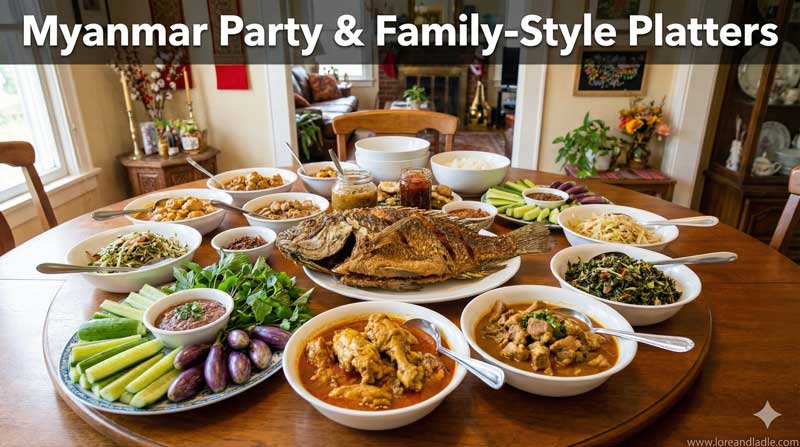
The beauty of Myanmar platters lies in the arrangement. Place several small bowls of condiments and sauces at the center. Surround them with colorful salads, fried bites, and aromatic curries. Offer a soft bed of rice or a long roll of flatbread as a canvas for flavors. Family-style dining invites guests to serve themselves, moving from dish to dish with care. A note of hospitality: keep utensils and napkins within easy reach. A simple garnish, like fried shallots or lime wedges, adds aroma and sparkle. The overall effect is warm, welcoming, and deeply communal.
Practical tips for home cooks: turning concept into dinner
- Start small: choose a core trio of dishes that represent different textures and flavors.
- Prep in stages: wash and chop greens early; assemble sauces and dressings ahead of time.
- Balance heat and sourness: taste frequently and adjust with lime, vinegar, or a touch of sugar.
- Use accessible substitutes: if a key ingredient is hard to find, swap in a regional alternative with similar flavor notes.
- Plate with care: use a large platter and multiple small bowls to create color contrast.
- Keep it fresh: finish delicate herbs and crisp elements just before serving.
- Invite conversation: a short note about each dish on the table can spark curiosity and appreciation.
Conclusion: inviting a journey through Myanmar flavor at home
The Beginner’s Roadmap to Cooking Myanmar Party & Family-Style Platters at Home invites you to honor flavor, hospitality, and shared meals. It celebrates a culinary culture where many tastes come together on one table. By focusing on balance, warmth, and accessibility, this guide helps any home cook create a memorable, respectful dining experience. Try a few dishes, observe how flavors mingle, and let the platter carry the conversation. In this way, cooking becomes a festival of community and culture inside your own kitchen.