
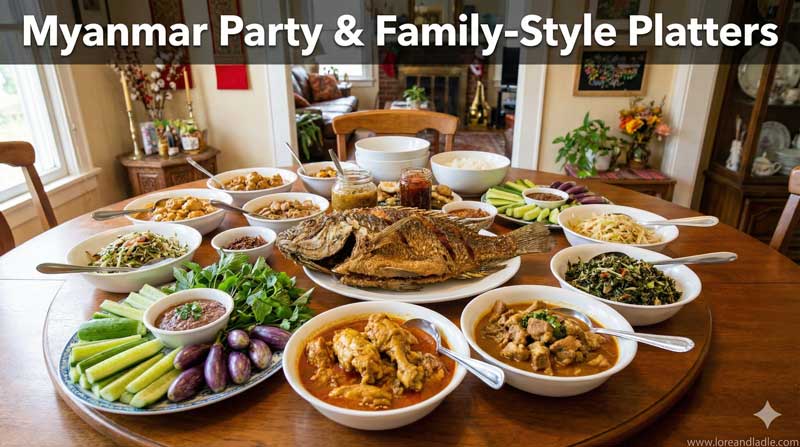
How to Serve Myanmar Party & Family-Style Platters for Weeknight Dinners
This guide introduces a way to bring Myanmar flavors to your table through party and family-style platters. The idea is simple: share a variety of small and medium dishes on one large spread. The result is a warm, inviting meal that feels both celebratory and familiar. The platter approach mirrors a tradition of generosity and togetherness that lies at the heart of Burmese dining. It is a flavorful invitation to slow down, sample, and connect.
The spirit of Burmese sharing at the table
Myanmar meals center on community. Families and friends gather, pass dishes around, and savor a balance of tastes and textures. Platter-style service honors this exchange. It invites conversation as guests reach for a bite, compare flavors, and choose what to try next. The act of sharing turns dinner into a social ritual—one that teaches patience, joy, and gratitude. When you present a well-curated assortment, you honor the cooks, the seasonal produce, and the guests who come together to eat.
Core elements for a well-balanced Myanmar platter
A thoughtful platter blends flavors, colors, and textures. Think of it as a small map of Myanmar’s cooking, compact and easy to navigate. Essential elements include:
- Steamed rice or a soft, fluffy grain as the anchor.
- A couple of curries or slow-simmered dishes that provide warmth and comfort.
- A bright salad or two that offer acidity and crunch.
- Fermented or pickled accents for tang and depth.
- Fresh herbs or greens to lift the dish with fragrance.
- A light, cooling element to balance heat.
When you assemble, place the mild dishes near the center and surround them with bolder flavors. Use bowls of different sizes for variation, and add a few small spoons or tongs so guests can serve themselves easily. The goal is a visually inviting spread that feels abundant without being overwhelming.
Plating tips for weeknight dinners
Weeknights call for efficiency without sacrificing beauty. Here are practical tips to streamline plating while keeping the Myanmar spirit intact:
- Plan for 4–6 core dishes plus rice and a bright salad. This keeps the platter manageable while offering variety.
- Group items by flavor: one curry, one vegetable dish, one tangy pickle, one fresh salad, and one herb topping.
- Use color to guide the eye. Place greens, red chilies, and yellow citrus in separate spots to create visual contrast.
- Keep hot items warm in covered dishes or warmed trays. This preserves aroma and texture as guests serve themselves.
- Label each component briefly with a small card or simple tag. It helps guests learn and appreciate unfamiliar flavors.
- Prepare components ahead of time. A quick reheat or a fresh squeeze of lime can finish a dish just before serving.
Signature Burmese flavors to highlight on the platter
Myanmar cuisine thrives on a balance of bright, savory, and subtle notes. To evoke this on a platter, emphasize:
- Fresh herbs: cilantro, dill, and mint add perfume and lift.
- Sour brighteners: lime or tamarind bring tang that brightens richer dishes.
- Umami and salt: fish sauce or ngapi-based condiments provide depth.
- Heat and aroma: dried chilies, fresh jalapeño-style peppers, garlic, and shallots create warmth without overwhelming.
- Textural contrasts: crisp pickles meet tender curries, while crunchy salads contrast with smooth curries.
A thoughtful platter plays with these sensations, giving guests a syllabus of flavors to explore. It’s not about one dominant dish; it’s about a tapestry of tastes that harmonize on the table.
Seasonal and regional variations to consider
Myanmar’s fresh produce and regional ideas influence platter choices. Adaptability is a strength of the family-style approach. Consider:
- Green season: use cucumbers, tomatoes, fresh herbs, and leafy greens for crisp salads and cooling sides.
- Fish-heavy regions: a light fish curry or a fish-dish with lime and chili can anchor the platter.
- Plant-forward options: roasted or stir-fried vegetables with garlic and pepper offer vibrant color and aroma.
- Pickles and ferments: a small bowl of pickled vegetables or a lahpet-inspired leaf salad adds tang and texture.
These variations keep the platter lively across seasons and showcase the diversity of Myanmar’s flavors without changing the essential spirit of sharing.
A sample weeknight platter plan
This practical plan creates a complete Myanmar-inspired experience in one areawide spread:
- Base: a mound of steamed jasmine rice or short-grain rice as the foundation.
- Main flavors: a coconut-based chicken or fish curry for warmth; a vegetable curry or stir-fry for brightness.
- Accompaniments: a bright cucumber-tomato salad with lime; a tangy pickled vegetable side.
- Fresh aroma: a small dish of chopped herbs and fried garlic oil to drizzle.
- Signature notes: a light lahpet-style tea leaf salad or a simple herb-packed sesame-drenched salad for texture.
- Finish: a fruit-based dessert or a sweet-sour condiment to cleanse the palate.
Assemble in stages if needed. For weeknights, choose items that can be prepped ahead and finish with a quick finishing touch before serving. This approach keeps dinner approachable while preserving the authenticity and warmth of the platter.
The cultural value in every bite
A Myanmar party and family-style platter embodies hospitality. It demonstrates generosity through abundance and variety. Each bite invites curiosity and connection. Guests are encouraged to explore, discuss flavors, and share recommendations. The platter becomes a conversation starter, a way to honor cooks, and a method to teach younger family members about care, balance, and seasonality. Through this shared dining, the meal becomes more than sustenance—it becomes a gentle, enduring tradition.
Final thoughts: inviting beauty on the table
Serving Myanmar party and family-style platters for weeknight dinners invites beauty, balance, and belonging. The approach respects the craft of Burmese home cooking and the joy of communal eating. By focusing on harmony among flavors, textures, and colors, you create a table that feels both special and accessible. The result is a meal that nourishes the body and gladdens the heart, a true celebration of Myanmar cuisine in the comfort of your home.