
Welcome to a Cozy Celebration of Myanmar Salads and Tea Leaf Dishes
This post invites you to explore a soulful collection that many call Comfort Food for evenings. The set of Myanmar salads and tea leaf dishes blends bright freshness with warming, satisfying flavors. It is a window into a culture that loves sharing plates, balancing textures, and honoring seasonal ingredients. The tone remains welcoming and respectful as we walk through the culinary ideas that light up a quiet, cooling night.
Lahpet Thoke: The Heart of Tea Leaf Dishes
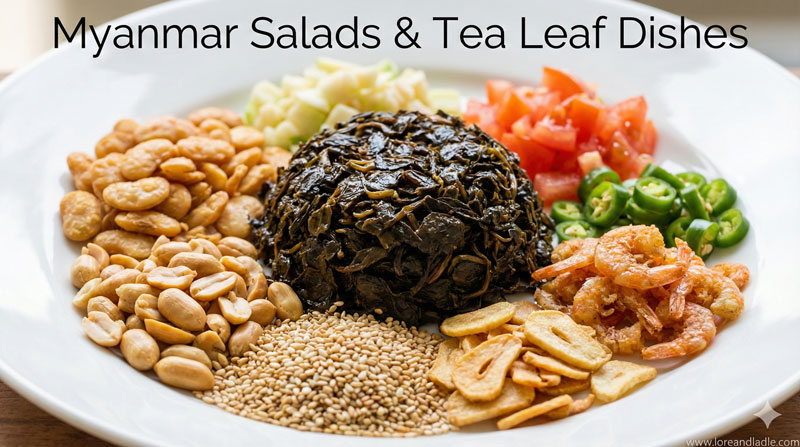
Lahpet Thoke, or tea leaf salad, sits at the center of Myanmar’s tea leaf dishes. It is a bowl of contrasts: tender, seasoned tea leaves echo with crisp crunch from nuts and seeds, and a lively note of citrus and chili wakes the palate. The dish is generous with texture and aroma. First, salted, fermented tea leaves provide a deep, savory base. Then add shredded vegetables, roasted peanuts or sesame, fried garlic, and sometimes dried shrimp. Finally, a bright squeeze of lime or lemon and a hint of chili brighten the mix. This dish exemplifies balance: earthy, tangy, nutty, and gently sweet at once. It is a social dish too—shared from small trays, making conversations linger a little longer as friends pass around the spoons.
A Symphony of Textures: What Makes These Dishes So Comforting
These salads and tea leaf preparations feel comforting because they play with texture as deftly as with flavor. First, you get the tender leaves. Next, you notice the crisp bites of peanuts or sesame. Then you detect the soft warmth of aromatics like garlic and shallots. Finally, the bracing tang of lime ties everything together. This texture range mirrors a familiar rhythm in Burmese meals: light, hearty, bright, and quietly nourishing. The result is a plate that feels inviting on cool evenings and easy to Share with family and friends.
The Cultural Value of Sharing and Hospitality
In Myanmar, food is a language for hospitality. Dishes are laid out for guests with care, and everyone contributes a little from their own kitchen. Lahpet and other salads become a way to welcome, to celebrate, and to nurture conversation. The act of gathering around a colorful platter embodies a spirit of togetherness. Even in everyday meals, the balance of flavors invites a moment of pause, a chance to savor the day before moving on. This tradition of warm, communal eating is a cornerstone of the culture surrounding these dishes.
Nga Pi Thoke: A Savory Heritage Within the Family of Dishes
Nga Pi Thoke, a beloved variation that centers on fermented fish paste, shows how Myanmar builds flavor layers through regional ingredients. This dish blends the rich, umami of ngapi with onions, tomatoes, chilies, and herbs. The result is bold yet balanced, offering a different but complementary path to the same comforting experience as lahpet thoke. Together, these salads highlight how diverse ingredients create a shared language of taste, one that families and neighbors recognize and celebrate.
Regional Varieties and Seasonal Freshness
Regional markets bring different herbs and greens into these salads. Fresh cilantro, mint, and lemongrass often appear, along with fragrant citrus leaves when available. In some regions, cooks accent the dish with a splash of palm sugar for a gentle sweetness or with a touch of sesame oil for extra fragrance. The seasonal greens and herbs keep the dishes lively year-round and remind us that comfort in Myanmar cuisine comes from adapting with the land. This flexibility makes the dishes feel timeless yet always alive.
Serving Steamers, Teas, and Tempting Pairings
These salads are frequently enjoyed with a steaming bowl of soup or a light curry, and they pair beautifully with a hot, fragrant cup of Burmese tea. The tea itself is part of the ritual—presenting warmth and a moment of calm accompaniment to the bright flavors on the plate. When served beside soft rice or warm flatbread, the salads become a complete, comforting experience that suits an evening meal or a casual family gathering.
A Home Kitchen Guide: Recreating the Comfort
Bringing these dishes into your kitchen is accessible and rewarding. Start with high-quality pickled tea leaves if you can find them, or begin with well-seasoned greens and a touch of tangy dressing. For lahpet thoke, aim for a balance of tangy citrus, salty-savory notes, and a gentle crunch. Add roasted nuts or seeds for texture. If you try Nga Pi Thoke, focus on a harmonious blend of umami and brightness, keeping the fish paste aroma inviting rather than overpowering. Finally, taste as you go and adjust lime, salt, and chilies to your preference. The goal is a plate that tastes like a warm welcome and a fond memory.
The Beauty of Burmese Salads in Everyday Life
Beyond their flavors, these dishes carry a quiet elegance: they honor simple ingredients, celebrate craft, and welcome all ages to the table. The colors—green leafy tones, tan from nuts and seeds, and ribbons of red from chili—create a dining scene that feels soothing and uplifting. In this way, Comforting Myanmar Salads & Tea Leaf Dishes That Warm Up Any Evening becomes more than a menu; it is a cultural expression of care, connection, and the joy of shared meals.
Closing Thoughts: A Invitation to Explore
If you seek a meal that feels both comforting and culturally rich, these salads offer a gentle, flavorful invitation. They show how Burmese cuisine can warm an evening with brightness, balance, and heart. Whether you are trying a home version or sampling a restaurant plate, you are experiencing a piece of Myanmar’s culinary soul—an enduring testament to hospitality, family, and the beauty of everyday cooking. Welcome the aromas, savor the textures, and relish the sense of belonging that comes with a well-shared bowl.