
Introduction
Flavorful Myanmar Salads & Tea Leaf Dishes Ideas with Simple Spices invites you into a colorful world of texture, brightness, and harmony. This cuisine centers on fresh ingredients, crisp textures, and bright seasonings. Every bite reveals care, balance, and a deep respect for shared meals. The focus here is on cultural value and culinary significance, celebrating how Myanmar salads and tea leaf dishes enrich daily life and festive tables alike.
The Cultural Value of Myanmar Salads
Myanmar salads are more than food; they are social rituals that bring people together. In homes, markets, and tea shops, these dishes spark conversation and create connection. Fresh vegetables, herbs, and modest spices become a language that speaks of season, place, and hospitality. The act of gathering to prepare and share a bowl or platter reflects values of generosity, patience, and care. A well-made salad or tea leaf dish signals welcome to guests and warmth to the household.
In Myanmar cuisine, balance is a guiding principle. Bright acidity from lime or tamarind, gentle salt from fish sauce or soy, heat from chili, and toasty nuttiness from peanuts or sesame all work in concert. The result is not a single flavor, but a chorus that invites a second helping. These dishes teach the palate to appreciate contrasts—crunch versus tenderness, sour versus savory, fresh herb notes against roasted elements. The cultural value lies in the way a simple bowl becomes a shared memory, a small ceremony that marks kinship and daily life.
Signature Dishes: Lahpet Thoke and Tea Leaf Dishes
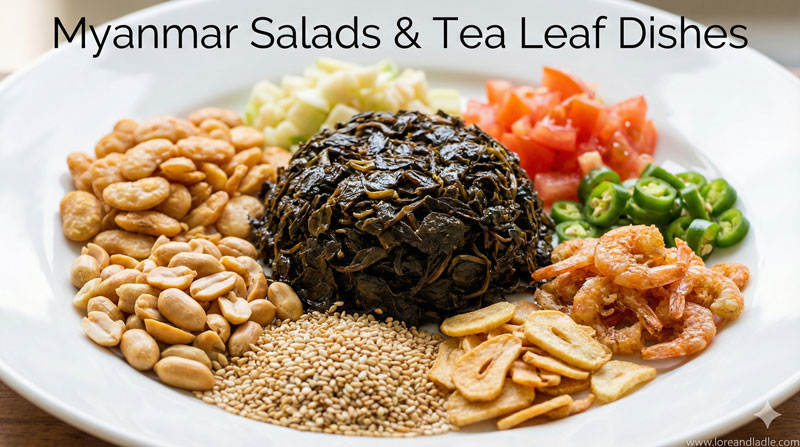
Tea leaf dishes hold a special place in Myanmar’s culinary landscape. Lahpet thoke, the iconic tea leaf salad, brings together pickled tea leaves with sesame seeds, roasted peanuts, dried shrimp, crunchy fried garlic, fresh tomato, chili, and lime. Each bite blends tangy, nutty, spicy, and fragrant notes in a lively harmony. The tea leaf itself carries aroma and texture, while the mix of ingredients offers layers of contrast: soft leaves, crisp nuts, and a zing of citrus. This dish embodies a cultural value of playfulness and balance, inviting diners to savor multiple textures in one mouthful.
Beyond lahpet thoke, tea leaf dishes appear in various forms. Some mixes favor sour accents from lime or vinegar, others lean into savory depth with toasted sesame oil or a splash of fish sauce. Herbs such as cilantro or green onion introduce freshness, while chili adds a gentle heat that lingers. The overarching idea is to honor the tea leaf as a versatile ingredient—not merely a flavor, but a memory of leaf, harvest, and traditional preparation. These dishes celebrate ingenuity in combining modest pantry items into memorable plates that people ask for again and again.
Simple Spices that Elevate Flavor
Great flavor often begins with simple spices and smart technique. Here are approachable spice ideas that elevate Myanmar salads and tea leaf dishes without complexity:
- Garlic and lime: A bright, zesty pairing that refreshes every bite.
- Chili and sesame: A warm, nutty kick that deepens the salad’s character.
- Coriander seeds with black pepper: A gentle earthy note that lifts greens.
- Turmeric and cumin: Subtle warmth that unites vegetables and leaves.
- Fish sauce or light soy: A savory depth that ties sweet, sour, and salty elements.
- Toasted peanuts or sesame: Crunch and a toasty aroma that linger on the palate.
- Fresh herbs (cilantro, mint, or Thai basil): Clean refreshment to balance richness.
If you prefer a lighter approach, use one or two of these blends at a time. For heartier versions, combine a small amount of each to create a balanced profile that respects the dish’s delicate contrasts. The goal is harmony, not heaviness, so start with modest amounts and adjust to taste.
Techniques for Texture and Balance
Texture matters as much as flavor. Here are simple techniques that help you achieve the characteristic balance of Myanmar salads and tea leaf dishes:
- Toast nuts and seeds lightly. A short, gentle toast brings out nutty aromas and a crisp bite.
- Press the tea leaves gently before mixing. This helps release fragrance without making the salad soggy.
- Balance acidity with a touch of sweetness or oil. A tiny amount of sugar or honey can round sharp lime, while a little sesame oil adds richness.
- Add crunchy elements last. Reserve fried garlic, peanuts, or fried peas for the final toss to maintain crispness.
- Slice vegetables evenly. Uniform pieces ensure each bite has the same texture and flavor distribution.
- Taste and adjust gradually. Small changes make a big difference in the final balance.
Regional Variations and Seasonal Inspirations
Myanmar’s regional cooking offers variations that highlight local produce and seasonal abundance. In river valleys, salads may lean toward lighter, citrusy notes with fresh herbs and green vegetables. In highland areas, you might find heartier combinations that pair roasted nuts with earthier spice tones. Seasonal ingredients—ripe tomatoes in warm months, crisp cucumbers in cooler seasons, and fresh herbs year-round—shape the character of each dish.
The beauty lies in adaptability. A tea leaf dish can showcase the same core concept with different regional twists: sometimes more sesame, sometimes more chili, sometimes a touch of sweetness from palm sugar. This flexibility reflects a community that values resourcefulness and the joy of discovering new ways to celebrate familiar flavors.
Serving Traditions and Pairings
Myanmar salads and tea leaf dishes shine at gatherings and everyday meals alike. They pair beautifully with steamed rice, light soups, or grilled vegetables. A crisp salad provides refreshing counterpoint to warm, savory mains. Tea leaf dishes often accompany a spread of small plates, allowing guests to mix and match flavors as the conversation flows.
Beverage pairing enhances the experience. A cup of jasmine tea or green tea complements the brightness of fresh herbs and citrus. Tart fruit drinks can echo the tang of lime, while a mild broth-based soup can set a comforting mood before the salads arrive.
Presentation matters too. A shared platter with a sprinkle of sesame, a scatter of herbs, and a few colorful vegetables invites guests to explore textures and flavors together. Simple, thoughtful plating reinforces the cultural value of hospitality and communal eating.
A Gentle Invitation to Explore
Flavorful Myanmar Salads & Tea Leaf Dishes Ideas with Simple Spices offers more than recipes. It invites you to slow down, notice textures, and appreciate the craft behind every bite. The dishes celebrate freshness, balance, and warmth. They honor everyday meals as moments of connection and joy. Whether you’re cooking for a family meal or hosting friends, these ideas provide a pathway to experience Myanmar’s culinary heritage with clarity and delight.
If you are new to this cuisine, start with lahpet thoke and a few supporting salads. Use a simple spice blend, focus on texture, and let fresh ingredients speak. Over time, you can explore regional twists and seasonal variations, always keeping the spirit of harmony at the center.
Conclusion
Myanmar salads and tea leaf dishes with simple spices embody cultural value through their shared nature, refreshing flavors, and thoughtful balance. They invite openness to new textures, celebrate hospitality, and honor the beauty of everyday cooking. By embracing these dishes, you invite a taste of Myanmar’s culinary significance into your home—enjoyable, respectful, and endlessly inviting.