
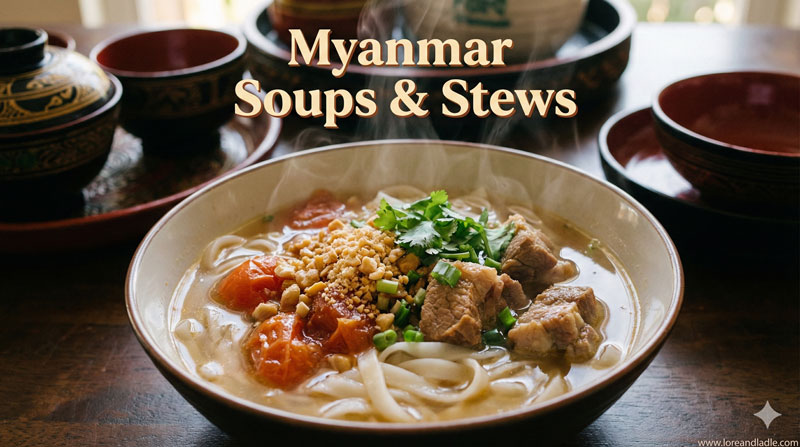
Introduction: A warm invitation to Myanmar’s soups and stews at home
Meet the dish Beginner’s Roadmap to Cooking Myanmar Soups & Stews at Home. This thoughtful collection opens a door to a living food culture. It centers on comforting bowls, bright herbs, and slow simmering that brings family and guests close. You learn to read a recipe as a cultural note, not just a set of steps. The goal is simple: to savor how Burmese home cooking uses broth, spice, and fresh greens to reflect everyday life. Welcome to a welcoming kitchen journey.
Cultural value: A bowl that gathers people
In Myanmar, soups and stews are more than nourishment. They are everyday rituals that bring people together. A pot on the stove signals care. The act of sharing a hot bowl mirrors hospitality and friendship. The dish invites you to observe how meals slip between seasons and communities. You will notice how broth carries memory—fragrant lemongrass, garlic, and turmeric, brightened with lime or fish sauce. This is cooking as a bridge between days, a small ceremony of warmth and connection.
Culinary significance: Techniques that honor flavor
This roadmap highlights how Burmese soups and stews balance aroma, texture, and depth. First, aromatics are layered. Sauté onions, garlic, and herbs to wake the kitchen. Next, spices like turmeric and coriander seeds weave warmth through the broth. Simmering tenderizes proteins and softens vegetables, releasing sweetness and depth. Finally, finishing touches—fresh herbs, a squeeze of lime, and a light salt lift—brighten the bowl. The result is a versatile toolkit: clear broths for delicate flavors, and heartier stews for comforting meals. Each technique mirrors a cultural habit of restraint, patience, and joy in simple ingredients.
The beginner-friendly roadmap: Steps you can trust
This guide is designed to empower home cooks. It offers a clear path from pantry to bowl:
- Start with a simple, flavorful stock. A gentle simmer forms the base.
- Build flavor by sautéing aromatics, then adding a light spice sweep.
- Add a protein choice (fish, chicken, or vegetables) and a seasonal vegetable set.
- Introduce a touch of coconut milk or a splash of fish sauce for depth.
- Finish with fresh herbs and a bright acid like lime juice.
- Serve with rice or flat bread to complete the meal.
The steps are modular. If you’re short on time, you can scale back the stock and still enjoy a satisfying result. If you want more depth, extend the simmer and layer more herbs. Either way, you honor Burmese culinary logic: balance, clarity, and warmth.
Regional flavors: A landscape of home cooking
Myanmar’s geography shapes its soups and stews. Coastal areas lean into fish, coconut milk, and tangy tamarind notes. Inland regions favor lighter broths with chicken, greens, and earthy roots. Highlands bring heartier textures and mushrooms, with herbs that thrive in cooler air. Temperature, rainfall, and local markets influence what greens and spices appear in a weekly pot. This diversity is a celebration, and the Beginner’s Roadmap makes room for regional color while keeping a beginner-friendly core.
Serving and sharing: A table that says welcome
Serving bowls become conversations. A hot pot invites guests to gather, dip, and discuss the day. In this culinary culture, meals often center on abundance and harmony—lots of texture, aroma, and bite-sized pieces that fit together in a single spoonful. Pair with rice or light bread, and let the broth’s aroma guide who serves first. The dish invites you to slow down, notice the sizzle, and enjoy the moment of gathering around food.
Closing: An invitation to explore with care
Beginner’s Roadmap to Cooking Myanmar Soups & Stews at Home offers a doorway into Burmese home cooking. It emphasizes cultural value, culinary technique, and the joy of sharing a meal. With each bowl you prepare, you honor a tradition that treats food as a quiet, generous art. Open the recipe, gather your ingredients, and begin—one mindful simmer at a time.